
Certified for Safety. Trusted by Leaders Worldwide.
Pls inquire to sales@danddhardware.com
\\: +86 139 2903 7292

 English
 Author: Site Editor Publish Time: 2026-02-26 Origin: Site


Patient safety, infection control, and emergency preparedness are non-negotiable priorities for healthcare facilities. While medical equipment and protocols often take center stage, one critical component frequently goes unnoticed: the door closer.
Hospital door closers play a vital role in maintaining secure, sanitary, and compliant environments. From containing airborne pathogens to ensuring fire safety compliance, these hydraulic devices do far more than simply close doors. They protect vulnerable populations, support infection control protocols, and help medical institutions meet stringent building codes.
This guide explores why door closers are essential for hospitals and medical facilities, what features to prioritize, and how to select the right hardware for different healthcare applications.
Medical institutions face unique challenges that make reliable door closers indispensable. Unlike standard commercial buildings, hospitals must balance accessibility with containment, privacy with emergency egress, and durability with sanitation.
Infection Control and Containment
Hospitals treat patients with contagious diseases daily. Properly functioning door closers ensure that isolation rooms, operating theaters, and infectious disease wards remain sealed when not in use. This prevents airborne pathogens from spreading through corridors and into other patient areas.
Automatic door closing is particularly crucial for negative pressure rooms, where maintaining a sealed environment prevents contaminated air from escaping. A malfunctioning door closer could compromise the entire containment system.
Fire Safety Compliance
Fire-rated doors are required throughout hospitals to create compartments that slow fire spread and provide safe evacuation routes. However, these doors only function as intended when they close fully and latch properly.
Fire resistance door closers tested to standards like UL 10C and BS EN 1634 ensure that fire doors close completely during emergencies. They're engineered to withstand high temperatures while maintaining their closing function, giving patients and staff precious extra minutes to evacuate safely.
Accessibility and Patient Mobility
Healthcare facilities serve patients with varying mobility levels, including those using wheelchairs, walkers, or medical equipment. Door closers must balance automatic closing with accessibility requirements.
Modern hospital door closers offer adjustable closing speeds and delayed action features. This gives patients adequate time to pass through doorways without struggling against closing pressure or risking injury from doors closing too quickly.

Not all door closers are suitable for healthcare environments. Medical facilities require specialized features that address their unique operational demands.
Hydraulic Control Systems
Quality hospital door closers use hydraulic mechanisms to control closing speed and force. The hydraulic system contains oil-filled chambers that regulate door movement through compression and release.
When a door opens, the hydraulic plunger moves, compressing springs and forcing oil through check valves. During closing, the compressed springs release energy gradually, providing smooth, controlled motion. This prevents doors from slamming while ensuring they close completely.
Adjustable hydraulic controls allow facility managers to fine-tune closing speed, latching action, and backcheck (resistance when doors are opened beyond 70 degrees). This customization ensures doors meet both accessibility standards and security requirements.
Fire Rating Certifications
Fire resistance door closers must meet rigorous testing standards. UL 10C certification requires closers to function properly after exposure to intense heat for specified durations. European standard BS EN 1634 includes similar fire resistance testing.
D&D Fire Rated Door Closer :
CE Door Closer - BS EN1154 500,000 cycles test, EN1634 Fire Rated 120/180mins, EN1670 Corrosion Resistance 96 hours.
UL Door Closer - UL Listed, UL 10C Fire Rated 3 Hours, UL File No.R40717
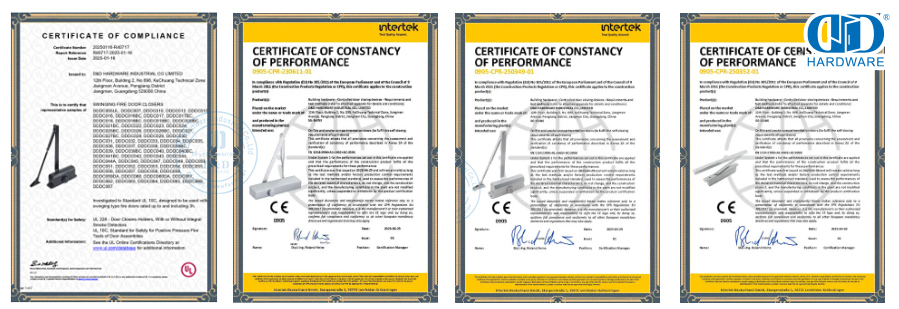
These certifications aren't just bureaucratic requirements. They guarantee that door closers will perform when lives depend on them. During inspections, fire marshals specifically verify that door closers on fire-rated doors carry appropriate certifications and function correctly.
Antimicrobial and Corrosion-Resistant Finishes
Hospital environments demand frequent cleaning with powerful disinfectants. Standard door closer finishes may corrode or degrade under repeated chemical exposure.
Medical-grade door closers feature finishes designed to withstand harsh cleaning protocols. Options include powder-coated aluminum, stainless steel, and antimicrobial coatings that resist bacterial growth. These finishes maintain their integrity and appearance despite daily sanitization.
Adjustable Mounting Options
Hospitals contain diverse door types, from single-action entrance doors to double-action emergency exits. Door closers must accommodate various mounting configurations.
Surface-mounted closers attach to the door face or frame, providing straightforward installation and maintenance access. Concealed closers install within the door or frame, offering a cleaner aesthetic for public-facing areas. Overhead models work for most applications, while floor springs suit heavy glass doors in lobbies or consultation areas.

Healthcare facilities contain numerous zones, each with distinct requirements. Selecting appropriate door closers requires understanding these specific needs.
Patient Rooms and Wards
Patient room doors balance privacy, accessibility, and infection control. Door closers in these areas should close gently to avoid disturbing patients while ensuring rooms remain properly sealed.
Look for closers with adjustable sweep speeds (the main closing motion) and latch speeds (final closing force). This allows staff to configure doors that close smoothly but latch securely. Hold-open features can be useful for staff monitoring multiple patients, though they should integrate with fire alarm systems to release automatically during emergencies.
Operating Rooms and Sterile Environments
Operating theaters require absolute environmental control. Door closers must close quickly to minimize air exchange between sterile and non-sterile areas, yet accommodate staff entering with equipment.
Heavy-duty closers rated for high-cycle use work best in these high-traffic areas. Backcheck features prevent doors from swinging open violently when staff push through with equipment carts. Some facilities opt for electromagnetic door holders that release during emergencies, allowing doors to close automatically via the closer mechanism.
Emergency Exits and Stairwells
Fire exits require closers that meet fire rating standards while supporting rapid egress during emergencies. These doors often feature panic bars or other emergency hardware that must work in coordination with the closer.
Fire resistance door closers for emergency exits should have strong closing force to overcome panic bar resistance. They must close fully and latch even when doors are opened forcefully during evacuations. Regular testing ensures these critical life-safety devices function reliably when needed most.
Exterior Entrances and High-Traffic Areas
Main entrances experience constant use and exposure to weather elements. Door closers in these locations must withstand temperature fluctuations, wind pressure, and intensive daily cycles.
Heavy-duty closers rated for door sizes and weights in these applications prevent premature wear. Wind-resistant features counteract pressure from gusts that might prevent proper closing. Adjustable backcheck protects doors and frames from damage when doors are opened forcefully against wind.
Even premium door closers underperform without proper installation and maintenance. Healthcare facilities should establish protocols for both.
Professional Installation
Door closers require precise installation to function correctly. Mounting location, arm attachment, and initial adjustments all affect performance. Slight misalignment can cause uneven wear, inadequate closing force, or excessive door speed.
Professional installers understand manufacturer specifications and local building codes. They ensure closers are mounted at correct heights, arms are attached at proper angles, and hydraulic adjustments are set appropriately for door weight and application.
Regular Inspection Schedules
Door closers are mechanical devices subject to wear. Hydraulic fluid can leak, springs can weaken, and adjustment screws can loosen over time. Regular inspections identify issues before they compromise safety or function.
Quarterly inspections should verify that doors close fully and latch properly, closing speeds remain appropriate, and no fluid leaks are present. Annual maintenance may include adjustment recalibration, replacement of worn components, and verification of fire door compliance.
Staff Training
Even well-maintained door closers fail if staff prop doors open inappropriately or force doors against closer resistance. Basic training helps staff understand proper door operation and recognize signs of closer malfunction.
Staff should know never to prop fire doors open with wedges or other objects, to report doors that don't close properly, and to avoid forcing doors open beyond their designed swing range. This awareness protects both the door hardware and facility occupants.

Healthcare facilities operate under extensive regulatory oversight. Door closers must meet various standards to ensure facility compliance.
The Americans with Disabilities Act (ADA) specifies maximum opening forces for accessible doors. Door closers must be adjusted so that opening force doesn't exceed 5 pounds for interior doors. This often requires careful adjustment of closing speed and force.
The National Fire Protection Association (NFPA) publishes life safety codes that govern fire door requirements. NFPA 80 specifically addresses fire door assemblies, including requirements for door closers. Compliance requires properly rated closers, correct installation, and documented maintenance.
Local building codes may impose additional requirements. Some jurisdictions mandate specific closer types for certain applications or require enhanced features beyond minimum standards. Facility managers should consult with local authorities having jurisdiction (AHJs) to ensure full compliance.
The door closer market includes numerous manufacturers, but not all meet the demands of healthcare environments. Several factors distinguish quality suppliers.
Look for manufacturers offering comprehensive testing and certifications. Products should carry relevant UL, ANSI/BHMA, and BS EN certifications. Third-party testing verification ensures closers meet claimed performance standards.
Product range matters for facilities with diverse needs. Manufacturers offering various closer types, sizes, and features allow facilities to source all hardware from a single supplier, simplifying procurement and maintenance.
Technical support and after-sales service distinguish professional-grade suppliers. Access to installation guidance, troubleshooting assistance, and warranty support prevents small issues from becoming major problems.
D&D Hardware manufactures door closers specifically tested to international industry standards, including BS EN 1154 and UL listings. Their product line suits education, healthcare, hotel, government, apartment, hospitality, and commercial applications, with finishes including matte black, antique brass, silver, and gold.
Door closers represent a relatively small line item in healthcare facility budgets, yet their impact on safety, compliance, and operational efficiency is substantial. Choosing appropriate door closers for medical institutions requires understanding the unique demands of healthcare environments.
From maintaining infection control protocols to ensuring fire safety compliance, hospital door closers serve as silent guardians of patient and staff wellbeing. Fire resistance door closers protect evacuation routes during emergencies. Hydraulic control systems provide smooth, accessible operation for patients with mobility challenges. Antimicrobial finishes support sanitation protocols.
By selecting certified products, ensuring professional installation, and maintaining regular inspection schedules, healthcare facilities create safer environments for everyone who walks through their doors.
For facilities evaluating door closer options, consulting with experienced manufacturers provides valuable guidance. Quality suppliers offer not just products, but expertise in healthcare applications, regulatory compliance, and long-term performance.
Click here for additional details on door closers.
Now contact us.
Contact information for David Jian
Contact number: 0086-139 2903 7292
Email address: sales@danddhardware.com


