
Certified for Safety. Trusted by Leaders Worldwide.
Pls inquire to sales@danddhardware.com
\\: +86 139 2903 7292

 English
 Author: D&D Hardware Publish Time: 2026-02-05 Origin: D&D HARDWARE


Your office is more than just a room with desks and chairs. It is the physical heart of your business, housing expensive equipment, sensitive data, and, most importantly, your people. When you lock up for the night, you need absolute certainty that your space is secure.
However, selecting the right hardware is about more than just security. It is about balancing safety with traffic flow, accessibility, and fire code compliance. A lock that works perfectly for a private executive suite might be a disaster if installed on a high-traffic lobby door.
Navigating the world of commercial hardware can be complex. From heavy-duty mortise locks to emergency panic bars, understanding the specific requirements for different areas of your building is essential. This guide breaks down the different types of door locks for office buildings to help you make informed decisions for your facility.
The main entrance is the most critical access point in any commercial building. It sees the highest volume of traffic and serves as the primary barrier against unauthorized entry. Consequently, the hardware used here must be durable and secure.
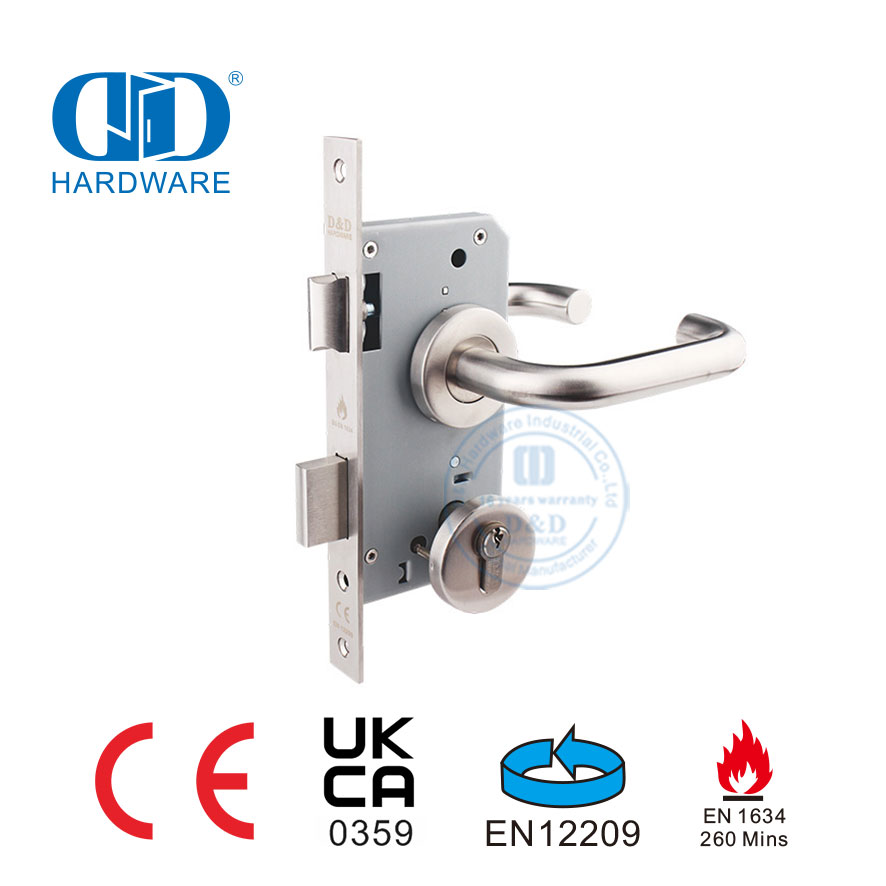
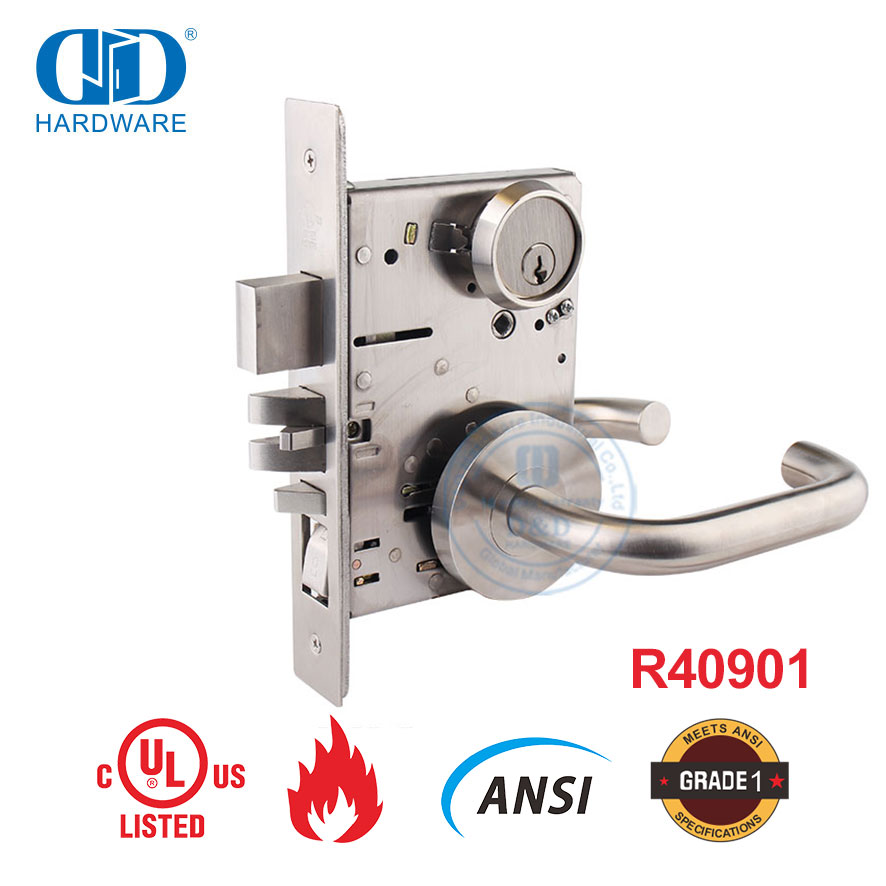
For main entrances, mortise locks are the industry standard for strength and durability. Unlike standard cylindrical locks, a mortise lock is installed into a pocket (or "mortise") cut into the door's edge. This design integrates the lock deeply into the door itself, providing superior resistance to forced entry.
Mortise locks are versatile and often feature a deadbolt integrated into the latch mechanism. They are ideal for high-traffic exterior doors because they can withstand millions of cycles of use without failing.
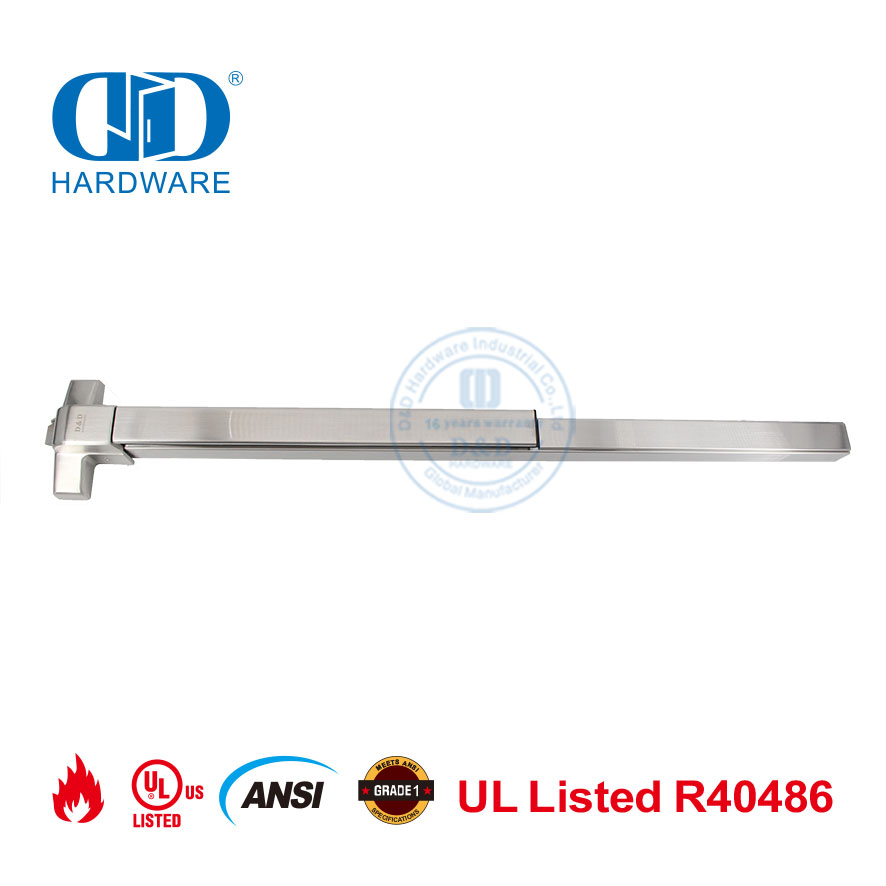
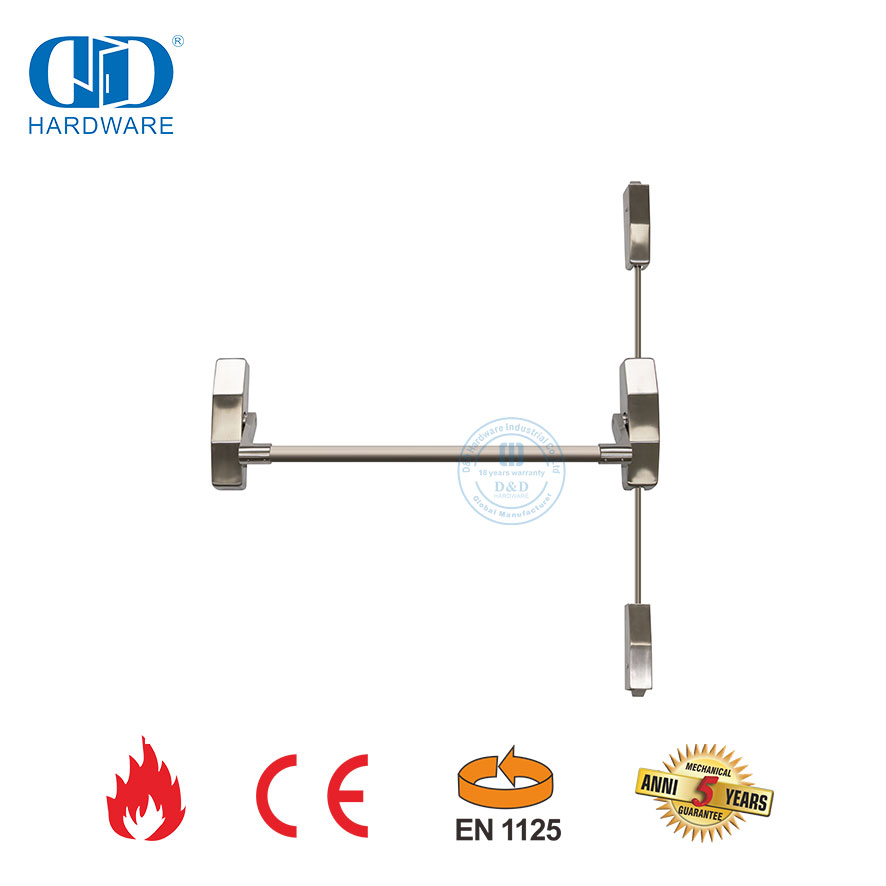
If you look at the main entrance of most large office buildings, you will likely see a horizontal bar across the door rather than a traditional knob or lever. These are known as panic bars or exit devices.
Safety codes often mandate these for any room or building with an occupancy limit over a certain number. The primary function is life safety: in an emergency, a crowd of people rushing the door should be able to open it simply by pressing against the bar, without needing to turn a knob or find a key.
While they allow free egress (exit) at all times, they can be locked from the outside to prevent unauthorized entry. High-quality panic bars, such as those manufactured by D&D Hardware, are rigorously tested to meet UL and ANSI safety standards.
Once inside the building, the security needs change. Internal doors generally require less resistance to physical attack than exterior doors, but they require more specific functionality based on the room's purpose.
The most common office door lock is the cylindrical lever. Levers are preferred over knobs in commercial settings because they are ADA (Americans with Disabilities Act) compliant. A lever can be operated without tight grasping or twisting, making the building accessible to everyone.
These locks come in three main grades (discussed later in this article), but for standard internal office doors, the focus is usually on the function of the lock.
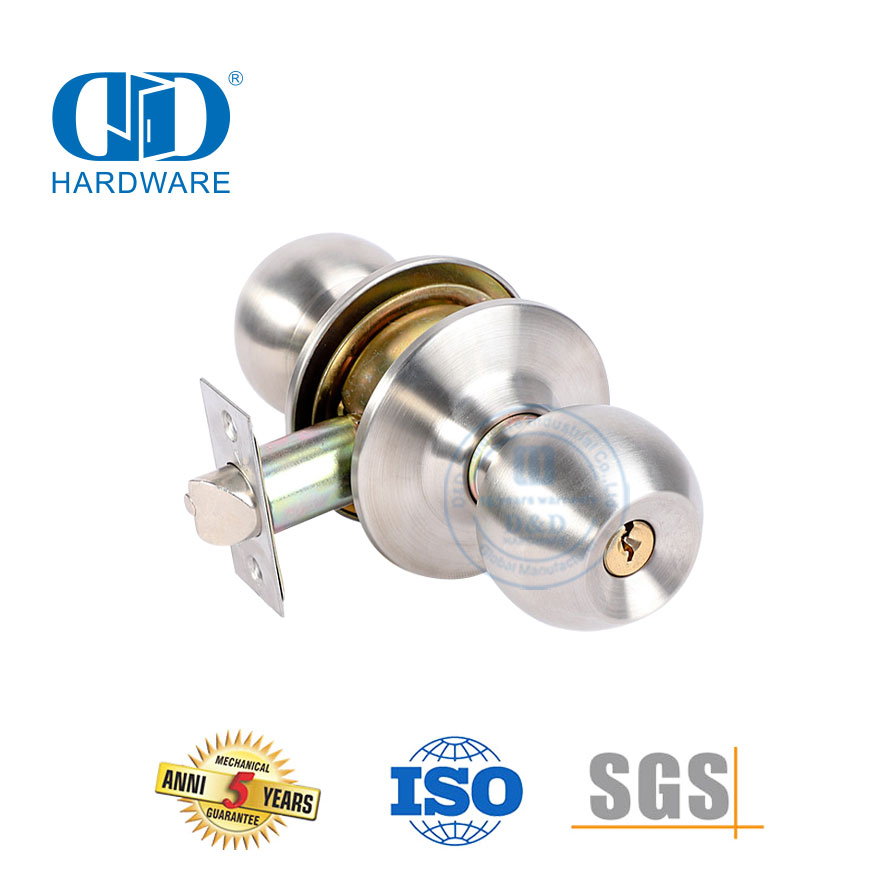
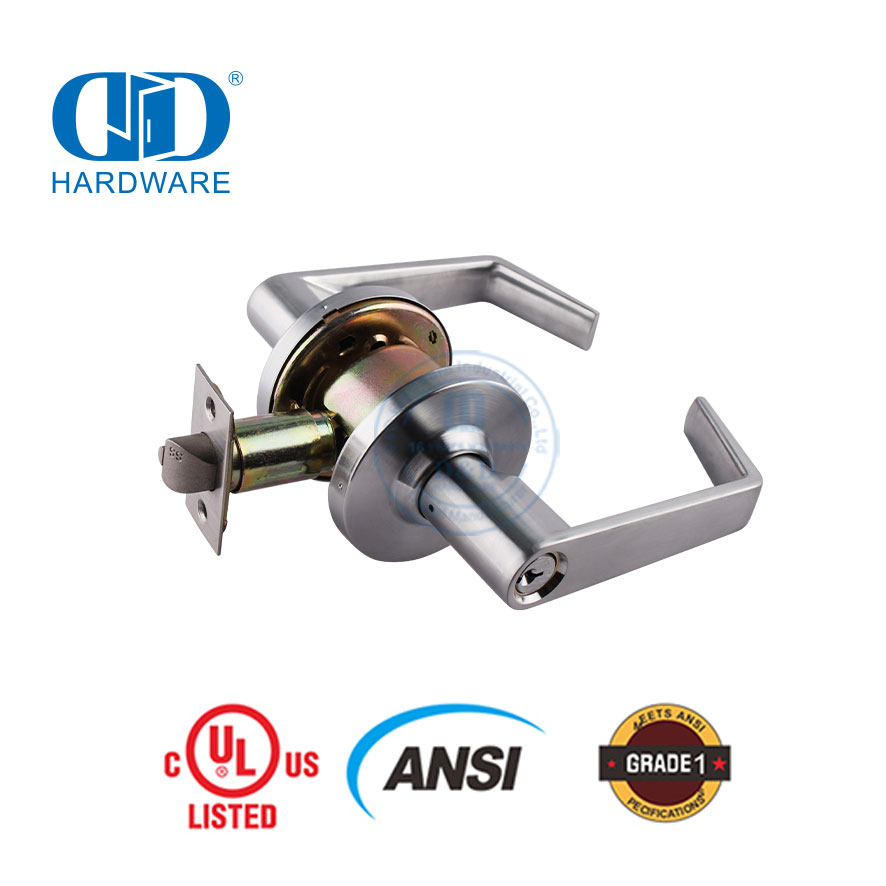
One of the biggest mistakes facility managers make is buying the wrong function for a door. A lock meant for a hallway closet shouldn't be used on a conference room door.
Here is a breakdown of the standard functions you will encounter when selecting hardware:
Function Type | Description | Best Application |
|---|---|---|
Passage | These latches do not lock. They simply hold the door closed and allow free movement from both sides at all times. | Hallways, general break rooms, closets requiring no security. |
Privacy | Can be locked from the inside (usually via a push button or turn piece) for privacy but has an emergency release on the outside. | Restrooms, nursing mother rooms, changing areas. |
Entry / Office | Locked from the inside by a button or turn piece. The outside requires a key to open when locked. The inside lever allows free egress. | Individual offices, executive suites. |
Classroom | The outside lever is locked or unlocked by a key. The inside lever is always unlocked for safety. This prevents someone from accidentally locking the door from the inside. | Conference rooms, shared workspaces, training rooms. |
Storeroom | The outside lever is always locked and requires a key to retract the latch every time. The inside lever is always free for exit. | Server rooms, supply closets, janitorial storage, mechanical rooms. |
Not all locks are created equal. In the commercial hardware industry, products are graded by the American National Standards Institute (ANSI) and the Builders Hardware Manufacturers Association (BHMA).
When purchasing door locks for office buildings, you must check the grade to ensure the hardware can handle the traffic volume.
Grade | Classification | Durability Cycles | Ideal Office Application |
|---|---|---|---|
Grade 1 | Heavy Duty Commercial | 1,000,000+ Cycles | Main entrances, high-traffic stairwells, security-sensitive areas. |
Grade 2 | Standard Commercial | 800,000 Cycles | Standard interior office doors, conference rooms, break rooms. |
Grade 3 | Residential | 200,000 Cycles | Not recommended for commercial office use. |
Installing a Grade 3 residential lock on a busy office door will result in mechanical failure, likely within months. It is always more cost-effective to invest in Grade 1 or Grade 2 hardware from a reputable manufacturer like D&D Hardware to avoid frequent replacements.
Every office has zones that require higher security than a standard key lock can provide. This usually includes server rooms, HR file rooms, or inventory storage.
Many modern offices are moving toward electronic access control. These systems often utilize an electric strike paired with a standard storeroom-function lock. Employees use a key card, fob, or biometric scanner to unlock the door.
The benefit here is audit capability. You can track exactly who entered a specific room and when. Furthermore, if an employee leaves the company, you can simply deactivate their card rather than re-keying the physical locks.
For rooms that require an extra layer of physical security when unoccupied (like a back office containing a safe), an auxiliary deadbolt is often added. A commercial deadbolt extends a solid metal bolt into the door frame, making it nearly impossible to kick in or pry open.
The safety of your building relies heavily on the quality of the manufacturing. When sourcing hardware, look for "full set certification." This means the products have been vetted by international bodies.
Key certifications to look for include:
UL (Underwriters Laboratories): Essential for fire-rated doors.
CE (Conformité Européenne): Indicates conformity with health, safety, and environmental protection standards.
ANSI/BHMA: As mentioned above, this verifies the durability and longevity of the mechanical parts.
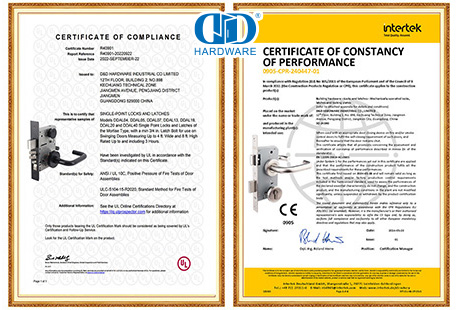
✔️ Door Lock-BS EN12209 200,000 cycles test, EN1634 Fire Rated 111mins/260mins, EN1670 Corrosion Resistance 240 hours.
✔️ Door Lock-UL 10C Fire Rated 3 Hours,File No.R40901
1
Choosing the right door locks for office buildings is a critical step in facility management. It requires a strategic approach that considers the flow of people, the need for security, and compliance with safety regulations.
From the panic bars on your main entrance door lock to the privacy levers on the restrooms, every piece of hardware plays a role in how your business functions. By understanding the different lock functions and adhering to ANSI grading standards, you can ensure your office remains a safe, accessible, and secure environment for everyone.
For those looking for certified, high-quality solutions, D&D Hardware offers a comprehensive range of hinges, locks, and panic devices tailored for commercial use. Investing in professional-grade hardware today prevents security headaches tomorrow.
Click here for additional details on door locks.
Now contact us.
Contact information for David Jian
Contact number: 0086-139 2903 7292
Email address: sales@danddhardware.com


