
Certified for Safety. Trusted by Leaders Worldwide.
Pls inquire to sales@danddhardware.com
\\: +86 139 2903 7292

 English
 Author: D&D HARDWARE Publish Time: 2026-01-29 Origin: D&D HARDWARE


Your office is more than just a room with desks and chairs. It is the physical heart of your business, housing expensive equipment, sensitive data, and, most importantly, your people. When you lock up for the night, you need absolute certainty that your space is secure.
However, choosing the right hardware isn't as simple as picking up the cheapest option at a local hardware store. Commercial environments have specific needs that residential locks simply cannot meet. From fire safety regulations to high-traffic durability, the requirements for an office door lock are rigorous.
With so many options on the market—ranging from traditional key systems to advanced biometric scanners—finding the right fit can feel overwhelming. Whether you are outfitting a brand-new corporate headquarters or upgrading the security of a single private office, understanding the different mechanisms available is the first step toward a safer workplace.
Before diving into specific models, it is vital to understand why an office door lock differs from what you use at home. Residential locks are designed for low traffic; a family might open their front door ten times a day.
In contrast, a door lock for Office building applications must withstand hundreds, if not thousands, of cycles daily. They are built with heavier materials and higher-grade internal components. Using a residential lock in a commercial setting often leads to mechanical failure, security vulnerabilities, and potential violations of building codes.

To help you navigate the landscape of commercial security, we have categorized the most recommended locking mechanisms used in modern office buildings.
Mortise locks are the gold standard for commercial security. These are recessed into the edge of the door rather than just sitting on the surface or passing through a hole like a standard knob lock. Because the mechanism is encased inside the door itself, they are incredibly difficult to force open.
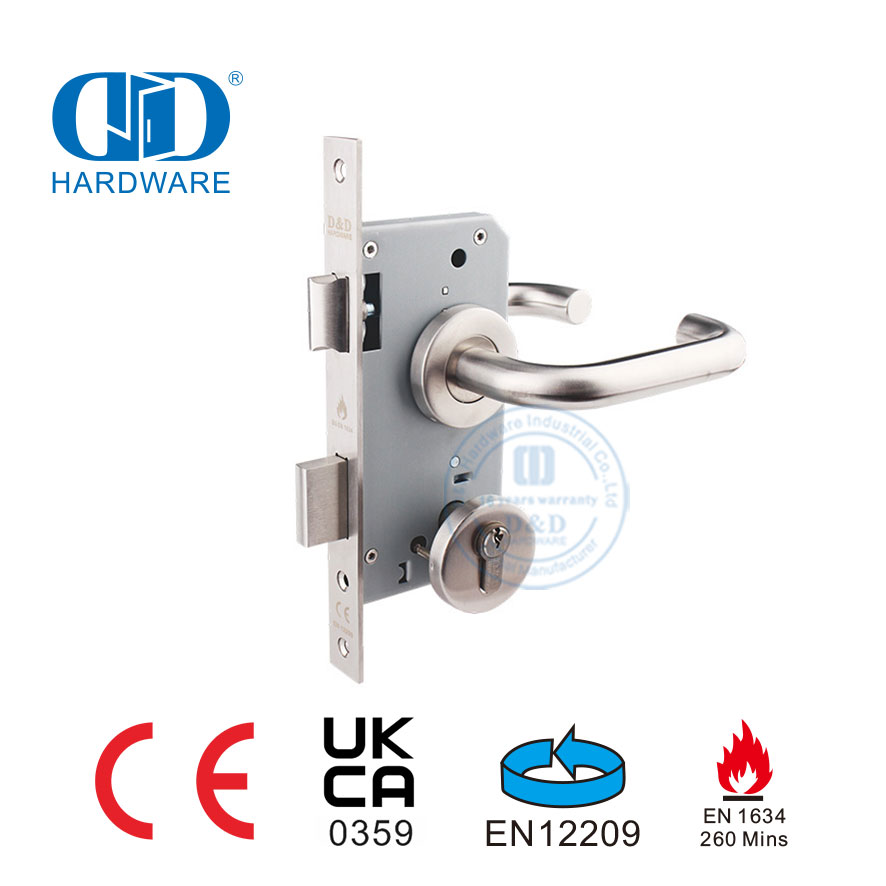
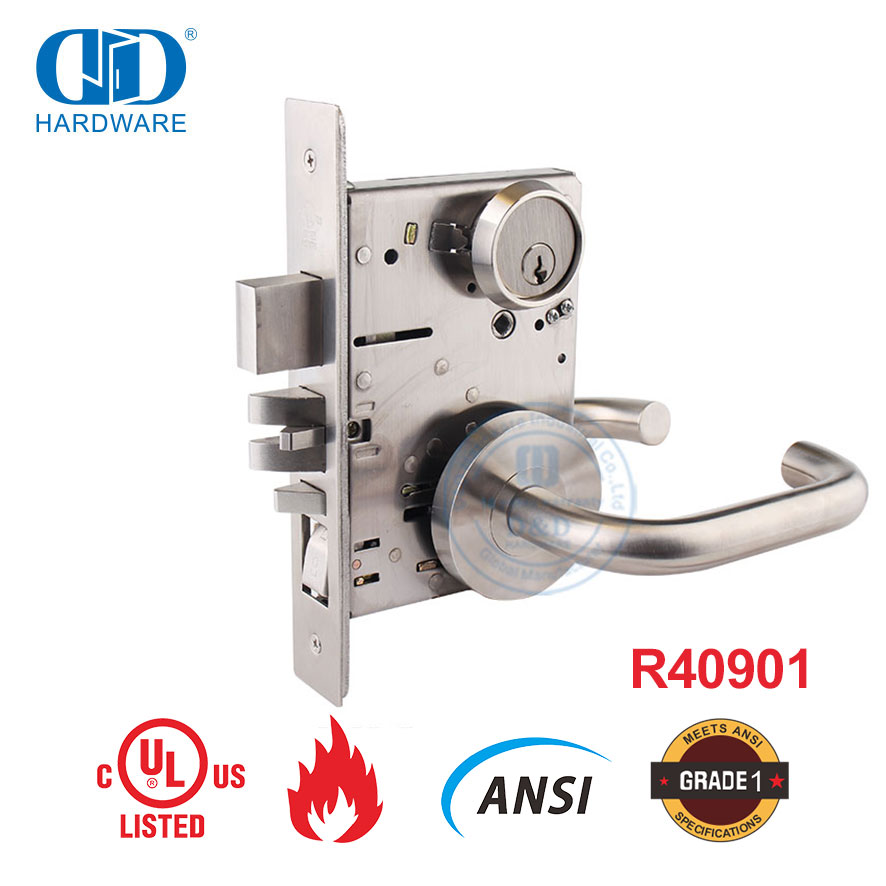
D&D Hardware, for example, offers the European Style BS EN12209 Fire Rated Main Door Mortise Sash Lock. These are ideal for exterior entrances or high-security internal rooms. They offer superior strength and are often compatible with various cylinders and levers.
These are the most common locks found in interior office settings. They are easier to install than mortise locks because they require standard bored holes in the door.
•Tubular Locks: Often used for interior applications where high security is less critical, such as a Bedroom Entrance Door Handle Tubular Lockset. In an office context, these work well for supply closets or individual low-risk offices.


•Cylindrical Knob/Lever Sets: These are heavy-duty versions of the tubular lock. An ANSI BHMA Tubular Lever Lockset is a solid choice for general office traffic, offering a balance between durability and ease of use.


1
For an entrance door lock, a simple latch is rarely enough. A deadbolt extends a solid metal bolt into the door frame, making it resistant to "jimmying" (using a credit card or tool to slip the latch). Many businesses opt for a Door Long Throw Hook Bolt Deadbolt Kit, especially for sliding doors or main entry points that require an extra layer of defense at night.


As technology evolves, so does access control. Smart locks eliminate the need for physical keys, which can be lost or copied. Options like the Modern Security Key Fingerprint Padlock Bluetooth or keypad levers allow you to grant access to specific employees and revoke it instantly without changing the locks.


Lock Type | Security Level | Durability | Best Application |
|---|---|---|---|
Mortise Lock | Very High | Heavy Duty | Main entrances, server rooms, high-security areas |
Cylindrical Lever | Medium - High | Medium - Heavy | Individual offices, conference rooms, break rooms |
Deadbolt | High | High | Exterior doors (used in conjunction with a latch) |
Tubular Lock | Low - Medium | Light - Medium | Storage closets, bathrooms, low-risk interior doors |
Smart/Biometric | High | Medium | Tech-forward offices, shared workspaces, restricted areas |

When selecting a door lock for Office building use, you aren't just looking for security; you are also looking for compliance. Commercial buildings are subject to strict fire and safety codes. If a fire occurs, people must be able to exit quickly without fumbling with complex locks.
You should look for hardware that meets recognized international standards.
Fire-rated locks are designed to keep a door closed during a fire to prevent the spread of smoke and flames, while still allowing the latch to function. For example, a High Security ANSI UL 10C Fire Rated Front Entry Door Lock ensures that your facility meets safety regulations.

These certifications test how many times a lock can be turned before it breaks.
Grade 1 (ANSI): The toughest locks, meant for high-traffic public buildings.
Grade 2 (ANSI): Excellent for general office doors.
Grade 3 (ANSI): Generally reserved for residential use; avoid these for main office areas.
1
Certification | Region/Body | What It Measures | Why It Matters |
|---|---|---|---|
UL Listed | USA (Underwriters Laboratories) | Safety & Fire Resistance | Ensures the lock won't fail during a fire emergency. |
CE EN12209 | Europe | Mechanical Durability | Guarantees the lock can withstand long-term physical use. |
ANSI/BHMA | USA | Performance & Security | Categorizes locks by grade (1, 2, or 3) for easy selection. |
BS EN1303 | UK/Europe | Cylinder Security | Measures resistance to drilling, picking, and snapping. |
An office is a collection of different zones, each requiring a different approach to security.
Your entrance door lock is your first line of defense. Here, you should invest in a high-grade Mortise lock or a heavy-duty smart lock system. For glass front doors, specifically designed Glass Door Hardware is required to secure the premises without shattering the pane. If the door is a designated fire exit, you may also need a Door Panic Bar rather than a traditional handle, allowing users to crash through the door from the inside during an emergency.
For these rooms, the goal is often privacy rather than fortress-level security. A Cylindrical Lever Lock with a privacy function (which can be locked from the inside but opened from the outside with a special tool in emergencies) is standard.
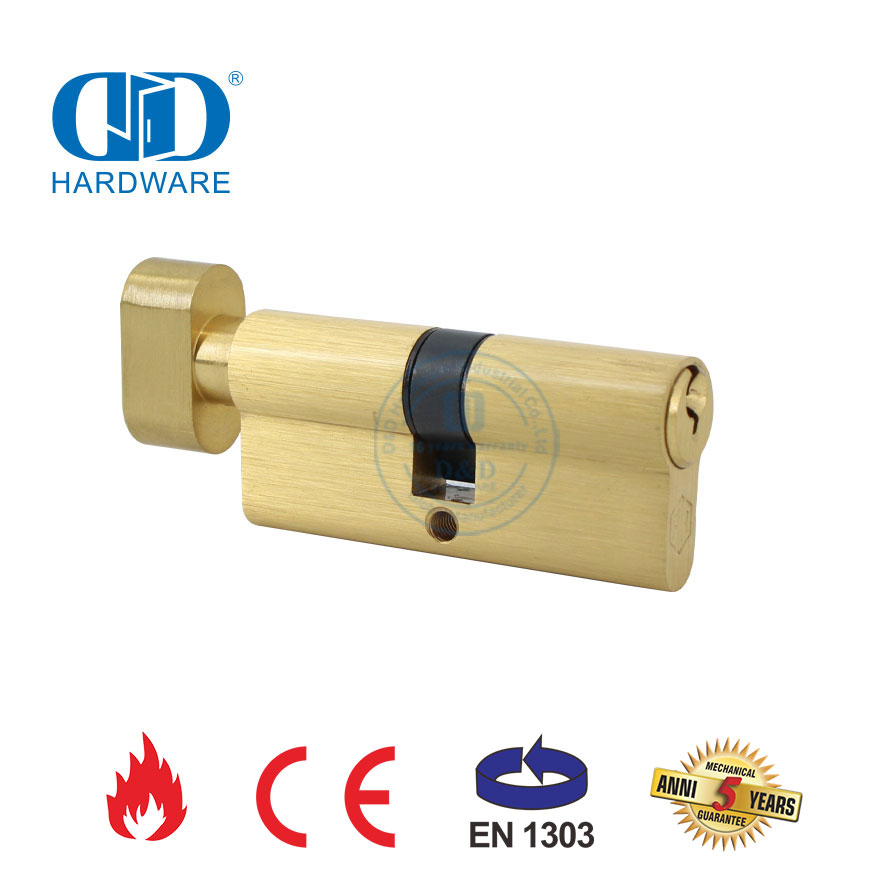
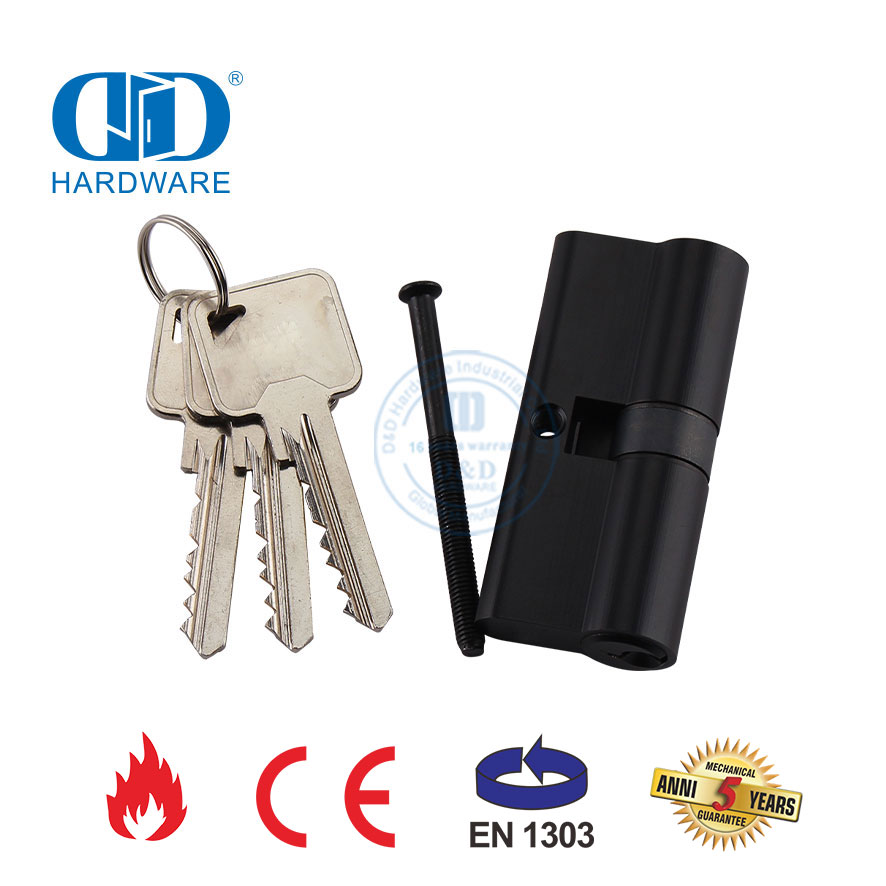
For rooms containing sensitive files or servers, upgrade to a lock that features a BS EN1303 Euro Double Open Lock Cylinder, which offers higher resistance to lock picking.
Passage functions are best here. These are handles that latch the door to keep it closed but do not lock. They ensure that traffic flows smoothly and that nobody accidentally locks themselves out of the breakroom or copy room.
While security is paramount, your office should also look professional. The hardware you choose contributes to the overall design language of your workspace.
Manufacturers like D&D Hardware provide finishes that match modern office aesthetics. Whether you prefer the clean look of stainless steel or the warmth of brass, ensure consistency throughout the office. A Residential Interior Door Cylindrical Knob Lock Set might look out of place in a sleek, glass-walled corporate boardroom. Choosing uniform levers (like the European Style BS EN12209) creates a cohesive, polished look that impresses clients and visitors.
Selecting the correct locking mechanism is a balance of security needs, traffic volume, safety regulations, and budget. While it might be tempting to cut costs on hardware, a failed lock can result in trapped employees, failed fire inspections, or a security breach.
By choosing certified, commercial-grade hardware—such as heavy-duty mortise locks for entrances and reliable cylindrical levers for interiors—you create a safe, functional environment. Whether you opt for a High Security ANSI UL 10C rated lock or a modern biometric solution, the investment in quality hardware is an investment in the longevity and safety of your business.
Click here for additional details on fire rated door hardware.
Now contact us.
Contact information for David Jian
Contact number: 0086-139 2903 7292
Email address: sales@danddhardware.com


