
Certified for Safety. Trusted by Leaders Worldwide.
Pls inquire to sales@danddhardware.com
\\: +86 139 2903 7292

 English
 Author: D&D Hardware Publish Time: 2026-01-22 Origin: D&D HARDWARE


There are few things more annoying than an exterior door that refuses to latch. You pull it shut, but it bounces back. You push it hard, and it scrapes against the frame. Not only is this frustrating, but it also poses a significant security risk and allows drafts to enter your building.
In most cases, the culprit isn't the lock itself—it’s the hinges. Over time, gravity pulls heavy doors down, screws loosen, and wood expands and contracts. This causes the door to sag, misaligning the latch with the strike plate.
If you are wondering how to fix this common issue, you are in the right place. This guide answers the most frequently asked questions about adjusting and tightening door hinges to get your entryway secure again.
Before grabbing a screwdriver, it helps to understand why the failure is happening. Exterior door hinges bear a tremendous amount of weight. Unlike lightweight interior hollow-core doors, exterior doors are often solid wood, fiberglass, or metal.
When the top hinge loosens, the door leans away from the jamb at the top and sags toward the handle side at the bottom. This misalignment means the latch bolt hits the strike plate too low or too high, preventing it from clicking into the hole.
Common causes include:
Vibration:Repeated slamming loosens screws over time.
Settling:The building frame shifts, changing the squareness of the doorway.
Stripped holes:The screws have chewed up the wood, leaving them nothing to grip.
Undersized hardware:The hinges installed aren't rated for the door's weight.

You don't need a contractor's workshop to fix a loose hinge. However, using the right tools prevents you from stripping the screw heads or damaging the finish on your hardware.
Recommended Tool List:
Tool | Purpose |
|---|---|
#2 Philips Screwdriver | For manual tightening (provides better control than a drill). |
Cordless Drill | For driving long screws or drilling pilot holes. |
3-Inch Wood Screws | To replace short factory screws and reach the wall stud. |
Wood Glue & Toothpicks | A DIY hack for filling stripped screw holes. |
Bubble Level | To check the plumb of the door. |
Cardboard Shims | For adjusting hinge depth (if necessary). |
If the wood inside the jamb is still solid, a simple tightening sequence might fix the issue immediately.
Open the door:Open the door to a 90-degree angle. Place a wedge or a few magazines under the bottom corner of the handle side. This takes the weight off the hinges while you work.
Inspect the top hinge:This is usually the source of the sag. Check if the screws sticking into the frame are loose.
Hand tighten:Use your manual screwdriver to turn the screws clockwise. Do not use a high-powered drill for this step initially, as you risk stripping the wood threads.
Check the alignment: Remove the wedge and close the door. If the latch clicks, you are done.
This is the most common problem with exterior door hinges. The manufacturers often install doors using short, 3/4-inch screws. These only bite into the decorative door jamb, not the structural stud behind it. Once that thin wood is stripped, the screw just spins.
The 3-Inch Screw Solution:
The most effective fix is to replace the center screw of the top hinge with a long, 3-inch screw.
Remove the middle screw from the top hinge (on the jamb side).
Insert a 3-inch wood screw.
Drive it in with a drill. This screw will pass through the jamb and bite deep into the 2x4 framing stud of the house.
Tighten slowly:As you tighten this screw, watch the door. You will actually see the door pull back toward the hinge side, lifting the latch side up.
Test the latch.

Yes, if you don't have long screws on hand, you can repair the wood to give the old screws fresh grip. This is known as the "toothpick method."
Step-by-step wood repair:
Remove the loose screws and pull the hinge leaf away from the jamb.
Dip wooden toothpicks or golf tees into wood glue.
Jam them into the stripped screw holes until they are packed tight.
Break off the excess wood so it is flush with the jamb.
Allow the glue to dry for at least an hour.
Drill a small pilot hole and re-drive your original screws. The fresh wood provides the necessary friction for a tight hold.
Sometimes, tightening isn't enough. If the metal itself is worn, bent, or rusted, no amount of adjustment will make the door latch smoothly.
Signs you need replacement hardware:
Symptom | Diagnosis | Solution |
|---|---|---|
Red Rust Dust | Metal fatigue grinding the pin. | Replace hinge immediately. |
Bent Knuckles | The hinge has been forced or overloaded. | Upgrade to heavy-duty hinges. |
Squeaking (after oiling) | The pin is warped inside the barrel. | Replace hinge. |
Door Drags on Floor | Hinge leaves have spread apart. | Replace with ball-bearing hinges. |
When replacing hardware, consider the environment. For commercial properties or apartment complexes, standard residential hinges often fail quickly. You should look for door hinges for high-rise buildings, which are designed to withstand higher wind pressures and frequency of use.

If you are managing a commercial building or a multi-family unit, tightening a loose screw might not be enough to meet code. Fire proof door hinges are a critical component of building safety.
A fire door must self-close and latch positively to prevent the spread of smoke and fire. If the hinges are worn and the door creates a gap, or if the friction prevents the closer from doing its job, the fire rating is void.
When selecting replacements for these applications, look for:
Ball Bearing Hinges:These reduce friction, allowing the door closer to latch the door firmly.
Steel or Stainless Steel:These materials have higher melting points than standard metals.
Certifications:Ensure the hardware meets UL or ANSI standards.
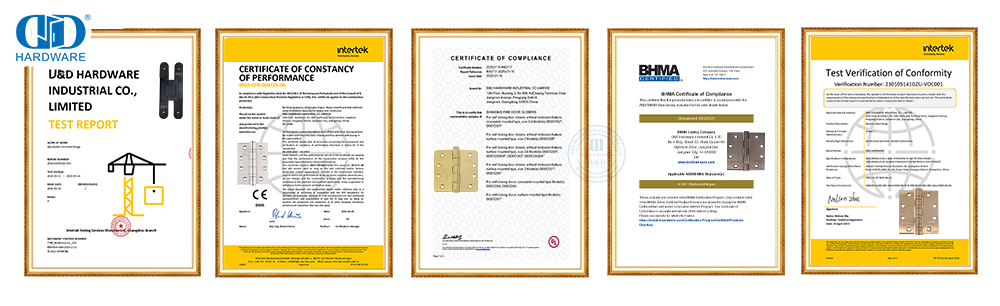
D&D Door Hinge Certification:
️✔ CE Door Hinge - BS EN1935 200,000 cycles test, EN1634 Fire Rated 192mins/260mins, EN1670 Corrosion Resistance 240 hours.
️✔ UL Door Hinge - UL/cUL Listed, UL 10C Fire Rated 3 Hours, File No.R38013
✔ BHMA Door Hinge - ANSI/BHMA 156.1 and ANSI/BHMA 156.18
✔ ANSI Door Hinge - ANSI Grade 1 2,500,000 cycles test, ANSI Grade 2 1,500,000 cycles test
✔ CE Concealed Hinge-BS EN1935 200,000 cycles test, EN1634 Fire Rated 132mins, EN1670 Corrosion Resistance 48 hours.
1
A door that won't latch is usually a cry for help from your hinges. By swapping out short factory screws for long 3-inch screws, you can pull the door back into alignment and ensure the lock engages smoothly.
However, if your hardware is rusted, bent, or simply undersized for the weight of the door, replacement is the only long-term option. Whether you need robust exterior door hinges for a home or certified fire proof door hinges for a commercial project, choosing the right hardware ensures safety and security.
For a comprehensive range of architectural hardware, including certified hinges designed for longevity and safety, reliable manufacturers like D&D Hardware offer solutions tailored to both residential and high-rise applications.
Click here for additional details on door hinges.
Now contact us.
Contact information for David Jian
Contact number: 0086-139 2903 7292
Email address: sales@danddhardware.com


