
Certified for Safety. Trusted by Leaders Worldwide.
Pls inquire to sales@danddhardware.com
\\: +86 139 2903 7292

 English
 Author: D&D HARDWARE Publish Time: 2026-04-16 Origin: D&D Hardware


In modern commercial architecture, doors are not merely access points—they are essential components of a building’s safety, durability, and operational efficiency. Among all door hardware elements, heavy-duty door hinges play a fundamental role in ensuring structural stability, smooth operation, and long-term reliability, particularly in high-traffic environments such as office buildings, hospitals, shopping malls, airports, hotels, and educational institutions.
For door manufacturers, hardware distributors, architects, and project contractors, selecting the appropriate hinge solution is critical to achieving compliance with international standards and ensuring the overall performance of fire-rated door assemblies. Inadequate hinge specification can lead to door misalignment, premature wear, safety risks, and even failure during fire emergencies.

This article provides a comprehensive guide to heavy-duty door hinges for high-traffic commercial doors, focusing on application-based selection, international certifications, and best practices for large-scale building projects.
Commercial doors are typically larger and heavier than residential doors, especially when constructed from steel, solid timber, or fire-rated composite materials. Heavy-duty hinges are engineered to support substantial door weights while maintaining precise alignment over time. Proper load-bearing capacity ensures:
· Smooth and consistent door operation
· Prevention of door sagging or misalignment
· Reduced stress on locks and door closers
· Extended service life of the entire door system
High-traffic environments require hardware that can withstand continuous and repetitive use. Hinges tested to 200,000 cycles under BS EN1935 standards demonstrate their ability to perform reliably in demanding commercial settings such as transportation hubs and retail centers.
In fire-rated door assemblies, hinges are critical to maintaining the integrity of fire compartments. Certified fire-rated hinges ensure that doors remain securely attached to the frame during a fire, preventing the spread of flames and smoke and enabling safe evacuation.
For global construction projects, hinges must comply with recognized certifications to facilitate approval by regulatory authorities and project consultants. Compliance not only ensures safety but also enhances the credibility of door manufacturers and hardware suppliers.

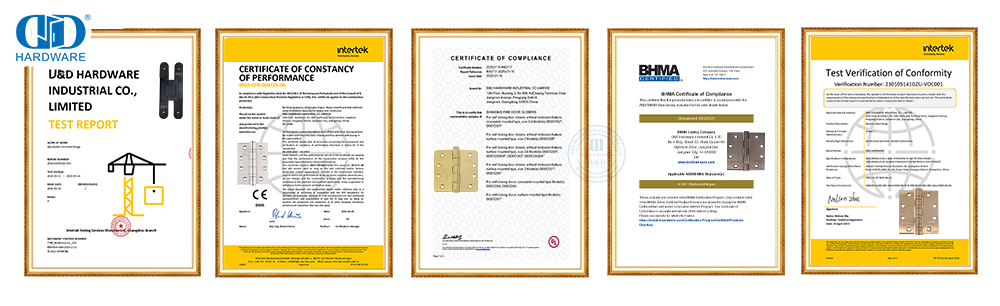
· Cycle Testing: 200,000 cycles, confirming durability for high-traffic applications.
· Load Classification: Ensures suitability for heavy commercial doors.
· Performance Grading: Provides clear guidance for architects and specifiers.
· Fire-rated performance of 192 minutes and 260 minutes, ensuring compatibility with various fire door assemblies in commercial buildings.
· 240 hours of corrosion resistance, making these hinges ideal for humid, coastal, or semi-exposed environments such as airports and transportation terminals.


· Provides a 3-hour fire rating, ensuring reliability under real fire conditions.
· File Number: R38013, offering traceability and confidence for project approval.
· Grade 1: Highest level of durability for heavy-duty and high-frequency use.
· Grade 2: Suitable for standard commercial applications while maintaining robust performance.
These certifications ensure compliance with NFPA 80, NFPA 101, and the International Building Code (IBC), facilitating acceptance in North American and international markets.


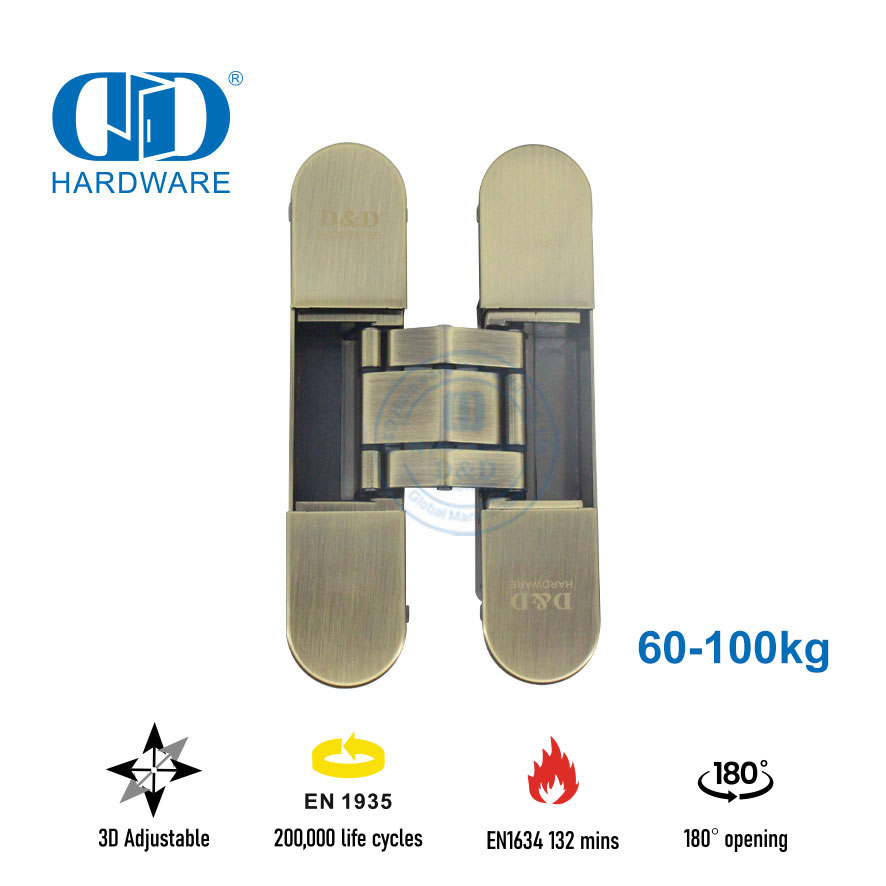
For projects requiring both aesthetic integration and fire safety, 3D adjustable concealed hinges provide an ideal solution:
· BS EN1935: 200,000 cycle durability
· EN1634: Fire-rated up to 132 minutes
· EN1670: Corrosion resistance of 48 hours
· 3D Adjustability: Allows fine-tuning in three directions for precise door alignment
· Concealed Design: Enhances architectural aesthetics in premium commercial interiors

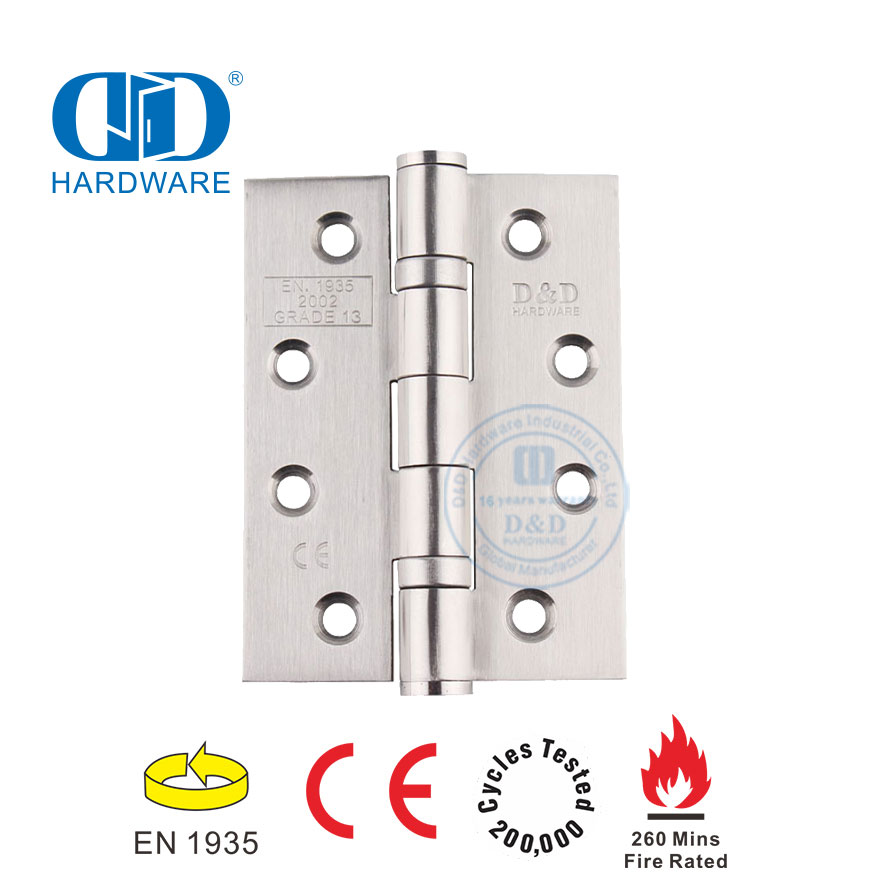
Butt hinges are the most widely used solution for fire-rated commercial doors. Their advantages include:
· High load-bearing capacity
· Compatibility with a wide range of door materials
· Ease of installation and maintenance
· Availability in stainless steel for enhanced corrosion resistance
These hinges are commonly specified for stairwells, service rooms, and main circulation areas.
Ball bearing hinges are designed to reduce friction and ensure smooth, quiet operation, making them ideal for high-frequency environments such as hospitals and hotels.
Key Benefits:
· Extended lifespan
· Reduced maintenance requirements
· Enhanced operational comfort
· Suitable for heavy and oversized doors
Concealed hinges are increasingly popular in high-end commercial projects where aesthetics are a priority. Their ability to remain hidden while providing fire-rated performance makes them suitable for:
· Luxury hotels
· Corporate offices
· Cultural and educational buildings
· Retail storefronts
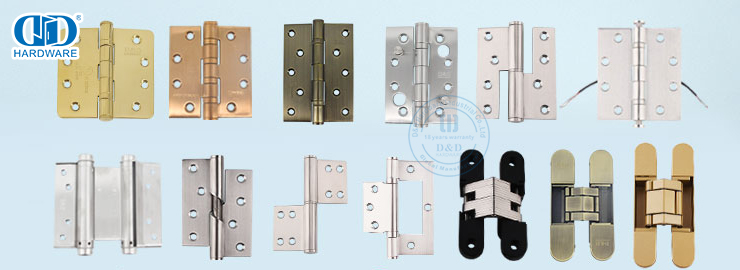
In office environments, heavy-duty hinges are essential for corridor doors, stairwells, and service areas. They ensure smooth operation and maintain fire compartmentation, contributing to a safe and efficient workplace.
Hospitals require hinges that support wide and heavy doors used for patient beds and medical equipment. Stainless steel hinges with corrosion resistance are particularly beneficial for maintaining hygiene and durability.
Retail environments demand hinges capable of withstanding constant pedestrian traffic. Fire-rated butt hinges combined with panic hardware ensure safe evacuation during emergencies.
Hotels require a balance between aesthetic appeal and functional reliability. Concealed hinges are often specified for guest room doors, while heavy-duty butt hinges are used in back-of-house and service areas.
Airports, railway stations, and metro terminals present extreme operational demands. Hinges in these environments must offer maximum durability, corrosion resistance, and fire-rated performance.
Schools, universities, museums, and libraries benefit from heavy-duty hinges that ensure long-term reliability and safety in buildings with diverse occupancy patterns.

· Simplified integration into fire-rated door assemblies
· Enhanced product value and market competitiveness
· Reduced risk of warranty claims
· Confidence in meeting regulatory and safety requirements
· Flexibility in design through various hinge types
· Availability of documentation for project approval
· Faster installation and inspection processes
· Reduced maintenance and lifecycle costs
· Improved project reliability and safety
· Ability to offer complete, certified solutions
· Increased acceptance in international tenders
· Strengthened brand reputation

The hinge must be selected based on the weight, width, and height of the door. Oversized or fire-rated doors often require three or more heavy-duty hinges.
Ensure that the hinge’s fire rating matches or exceeds the rating of the door assembly to maintain compliance with building codes.
For coastal or humid environments, hinges with EN1670 corrosion resistance (240 hours) are recommended to prevent rust and degradation.
High-traffic areas should utilize ANSI/BHMA Grade 1 hinges to ensure long-term durability.
Where design is a priority, 3D adjustable concealed hinges provide a seamless appearance while maintaining fire-rated performance.
Adjustable hinges allow for precise alignment, reducing installation time and facilitating maintenance during the building’s lifecycle.
Despite the availability of certified products, several issues can compromise hinge performance:
· Underspecified Load Capacity: Selecting hinges that cannot support the door weight.
· Mismatch of Fire Ratings: Using hinges with lower fire ratings than the door assembly.
· Improper Installation: Incorrect positioning or insufficient fasteners.
· Ignoring Environmental Factors: Failure to specify corrosion-resistant materials.
· Lack of Adjustability: Leading to long-term alignment issues.
Avoiding these pitfalls is essential for ensuring safety, compliance, and operational efficiency.
To maximize performance and compliance, B2B stakeholders should follow these best practices:
o Ensure compliance with BS EN1935, EN1634, EN1670, UL 10C, and ANSI/BHMA standards.
o Select hinges as part of a complete fire-rated door hardware system.
o Simplifies procurement, installation, and maintenance.
o Validates compatibility and performance before large-scale deployment.
o Periodic inspections and lubrication extend service life.
o Ensures access to technical documentation and project support.

Heavy-duty door hinges are a critical component of high-traffic commercial door systems, ensuring structural stability, smooth operation, and fire safety compliance. With certifications such as BS EN1935 (200,000 cycles), EN1634 fire ratings up to 192/260 minutes, EN1670 corrosion resistance of 240 hours, and UL 10C 3-hour fire ratings (File No. R38013) with ANSI/BHMA Grade 1 & 2, these hinges provide the reliability required for modern commercial construction.
Additionally, 3D adjustable concealed hinges offer an ideal solution for projects demanding both aesthetic excellence and fire-rated performance, making them increasingly popular in premium architectural applications.
For door manufacturers, hardware brands, architects, and contractors, adopting an application-driven and certification-focused approach to hinge selection ensures safer buildings, smoother project execution, and long-term operational success.
In the context of commercial construction, heavy-duty door hinges are not merely mechanical components—they are essential elements of a building’s life safety and structural integrity. By specifying certified, high-performance hinge solutions, stakeholders can confidently deliver projects that meet the highest standards of safety, durability, and design excellence.
Click here for additional details on door hinges.
Now contact us.
Contact information for David Jian
Contact number: 0086-139 2903 7292
Email address: sales@danddhardware.com


