
Certified for Safety. Trusted by Leaders Worldwide.
Pls inquire to sales@danddhardware.com
\\: +86 139 2903 7292

 English
 Author: D&D Hardware Publish Time: 2026-05-06 Origin: D&D Hardware


A Practical, Application-Driven Guide for Safe, Compliant, and High-Performance Healthcare Projects
Hospitals and healthcare facilities are among the most demanding building types when it comes to door hardware requirements. Unlike typical commercial environments, healthcare buildings must support life safety, infection control, accessibility, and continuous operation—all at the same time.
For door manufacturers, hardware brands, and construction contractors, specifying the right door hardware is not just about meeting standards—it directly affects patient safety, staff efficiency, and long-term building performance.

Healthcare buildings operate under unique conditions that combine high traffic, sensitive users, and strict regulations.
•24/7 operation with continuous door usage
•Movement of beds, wheelchairs, and medical equipment
•Strict fire and life safety requirements
•Infection control and hygiene standards
•Accessibility compliance (low opening force, easy operation)
Unlike other buildings, door hardware must perform reliably in both routine operations and emergency situations, without compromising patient care.

•A hospital door system is not defined by a single component—it is a fully integrated hardware configuration. Key components include:
•Fire-rated hinges for structural support
•Door closers for controlled and automatic closing
•Locks and latches for security and privacy
•Panic or exit devices for emergency egress
•Door handles designed for accessibility
•Sealing systems for fire, smoke, and hygiene control
•Each component must be durable, compliant, and compatible with the overall door assembly.
Fire safety is one of the most critical aspects of healthcare design.
•Automatic door closure to prevent fire spread
•Secure latching under fire conditions
•Safe evacuation through protected routes
•Compliance with standards such as EN and UL
•Hinges tested to EN1935 or UL 10C
•Door closers compliant with EN1154 (500,000 cycles)
•Locks compliant with EN12209
•Fire resistance ratings up to 120–180 minutes (EN) or 3 hours (UL)
In healthcare environments, fire-rated hardware is not optional—it is mandatory for patient safety and regulatory approval.

Hospitals must accommodate patients with limited mobility, disabilities, or medical conditions.
•Low opening force for easy door operation
•Lever handles instead of knobs
•Smooth and controlled closing speeds
•Delayed action closers for wheelchair and bed movement
Failure to meet accessibility standards can result in non-compliance and operational inefficiencies.
In healthcare environments, door hardware must support infection prevention strategies.
•Smooth, easy-to-clean surfaces
•Corrosion-resistant materials (e.g., stainless steel)
•Minimal crevices where bacteria can accumulate
•Compatibility with frequent cleaning and disinfectants
Door hardware in hospitals is exposed to intensive cleaning cycles, making durability and material selection critical.
A major advantage of the Project Application Site approach is defining hardware based on real usage scenarios.

Patient room doors must balance privacy, safety, and comfort.
•Fire-rated hinges (EN1935 / UL certified)
•Door closers with smooth, quiet operation
•Privacy or keyed locksets
•Lever handles for accessibility
Key focus:
Comfortable daily use + compliance with fire safety standards
Corridors are high-traffic zones connecting all departments.
•Heavy-duty hinges for frequent use
•Door closers with controlled closing speed
•Smoke seals for fire protection
•Durable handles for repeated operation
Key focus:
Durability + continuous operation reliability
These areas demand strict hygiene and controlled access.
•Stainless steel hinges and hardware
•Smooth, easy-to-clean surfaces
•Controlled closing systems
•Specialized sealing solutions
Key focus:
Infection control + reliability
Emergency exits must ensure fast and safe evacuation.
•Fire-rated hinges (high load capacity)
•Door closers ensuring automatic closure
•Panic hardware (EN1125 / UL305 certified)
•Smoke and fire seals
Key focus:
Immediate egress + fire containment
Back-of-house areas experience harsh conditions.
•Corrosion-resistant hinges (EN1670 tested)
•Heavy-duty closers
•Mechanical locks for security
•Fire-rated sealing systems
Key focus:
Durability + resistance to moisture and chemicals
For international healthcare projects, certification is critical for approval.
•EN1935 – Butt Hinges and Concealed Hinges
•EN1154 – Door closers
•EN12209 – Locks
•EN1634 – Fire resistance
•EN1670 – Corrosion resistance
•UL 10C – Fire-rated assemblies
•ANSI/BHMA Grade 1 – Heavy-duty performance

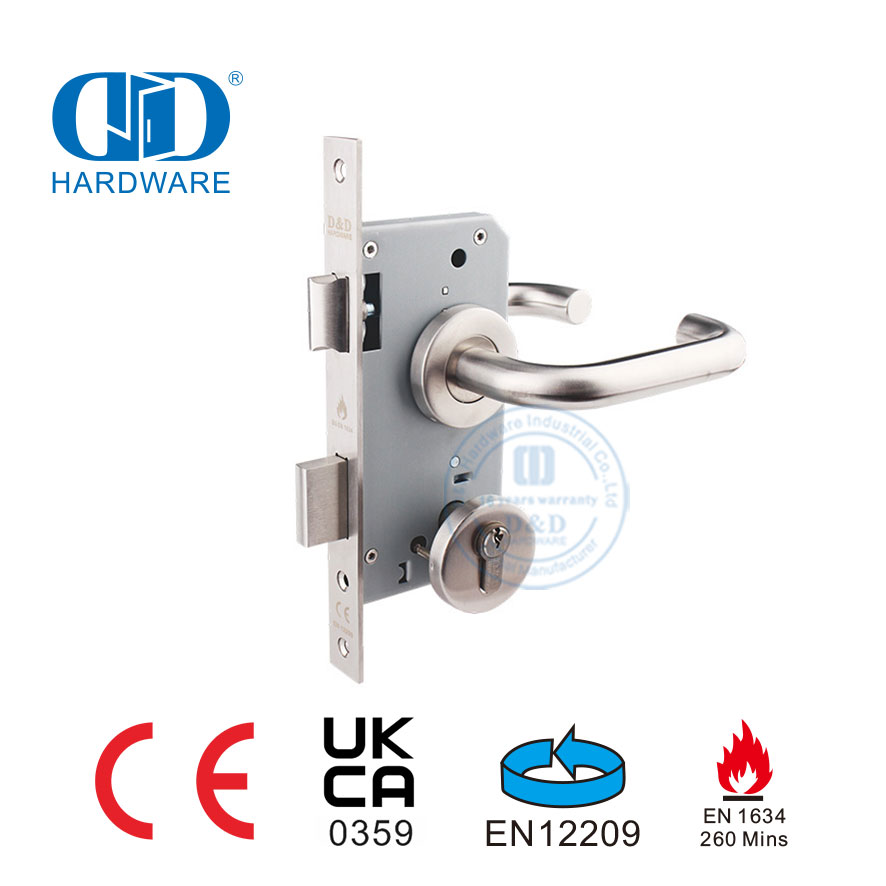


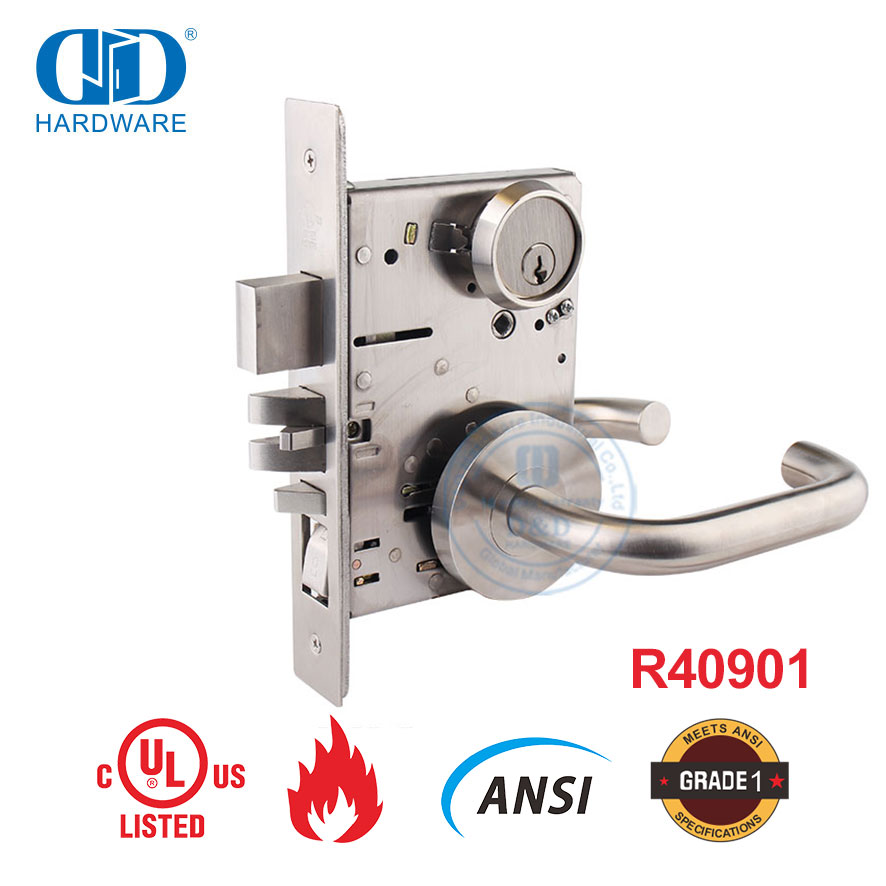
•Faster project approval
•Compliance with safety regulations
•Reduced risk during inspections
•Using non-certified hardware in fire doors
•Selecting hardware without considering usage frequency
•Ignoring accessibility requirements
•Choosing materials unsuitable for cleaning environments
•Mixing incompatible hardware components
•Project delays
•Increased maintenance costs
•Safety risks

1. Why is heavy-duty hardware necessary in hospitals?
Hospitals operate 24/7 with constant movement. Heavy-duty hardware ensures long-term durability and reliable performance under continuous use.
2. What is the most important hardware component for hospital fire doors?
The door closer is critical because it ensures the door closes automatically, maintaining fire compartment integrity.
3. Can standard commercial hardware be used in healthcare facilities?
Not always. Healthcare environments require higher durability, hygiene compatibility, and stricter compliance, making specialized hardware necessary.
4. Why are lever handles preferred in hospitals?
Lever handles are easier to operate for patients and staff, especially those with limited mobility, ensuring accessibility compliance.
5. How does corrosion resistance affect hardware selection?
Frequent cleaning and exposure to chemicals require hardware with high corrosion resistance (EN1670) to maintain performance and appearance.
6. Why is system compatibility important in hospital door hardware?
Fire doors are tested as complete systems. Using incompatible components can compromise safety and lead to inspection failure.
Click here for additional details on fire rated door hardware.
Now contact us.
Contact information for David Jian
Contact number: 0086-139 2903 7292
Email address: sales@danddhardware.com


