
Certified for Safety. Trusted by Leaders Worldwide.
Pls inquire to sales@danddhardware.com
\\: +86 139 2903 7292

 English
 Author: D&D Hardware Publish Time: 2025-12-10 Origin: D&D HARDWARE


Hidden doors, often seen in mystery novels or upscale homes, add a touch of intrigue and functionality to any space. Whether for a secret room, a discreet pantry, or a streamlined interior design, the key to a successful hidden door lies in selecting the right hinge. Hidden door hinges, also known as invisible or concealed hinges, allow doors to blend seamlessly into walls, creating a smooth, uninterrupted surface. This guide will explore the types of hinges available, factors to consider, and tips for installation, complete with a comparison table and FAQs for SEO optimization.


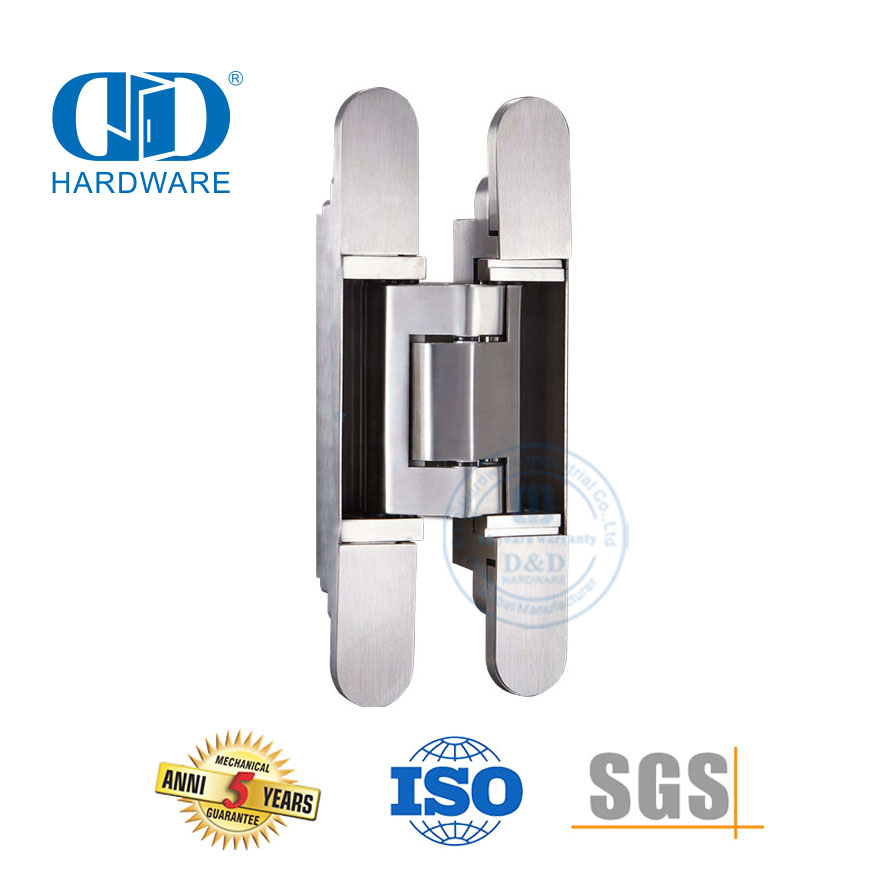
Hidden door hinges are engineered to remain unseen when the door is closed, providing a clean, minimalist appearance. They are ideal for modern interiors, secret bookcase doors, or spaces where traditional hinges would disrupt aesthetics. Unlike standard hinges, these are mounted within the door and frame, requiring precise installation. Their mechanisms vary, with some allowing full 180-degree rotation, while others support heavy loads for larger doors.
There are several types of hidden hinges, each suited for different applications. Here’s a breakdown of the most common varieties:
| Hinge Type | Best For | Visibility | Weight Capacity | Installation Complexity |
|---|---|---|---|---|
| Soss Invisible Hinge | Medium-weight interior doors | Completely hidden | Up to 150 lbs | High (requires mortising) |
| Pivot Hinge | Heavy or oversized doors | Minimal visibility | Up to 300 lbs | Medium to High |
| Concealed Cabinet Hinge | Cabinets and lightweight doors | Hidden when closed | Up to 50 lbs | Low to Medium |
| Euro-Style Hidden Hinge | Modern doors and panels | Partially concealed | Up to 100 lbs | Medium |
| Flush Door Hinge | Doors where gaps are minimized | Mostly hidden | Up to 120 lbs | Medium |
Soss Hinges: These are popular for residential hidden doors. They require a mortise (a recess cut into the door and frame) for installation, making them entirely invisible. Ideal for bookcase doors or room entrances.
Pivot Hinges: Mounted at the top and bottom of the door, these distribute weight evenly, suiting heavy doors. They offer a sleek look with minimal hardware visible.
Cabinet-Style Concealed Hinges: Often used for lightweight hidden doors in kitchens or closets. They are easier to install but may not support heavy loads.
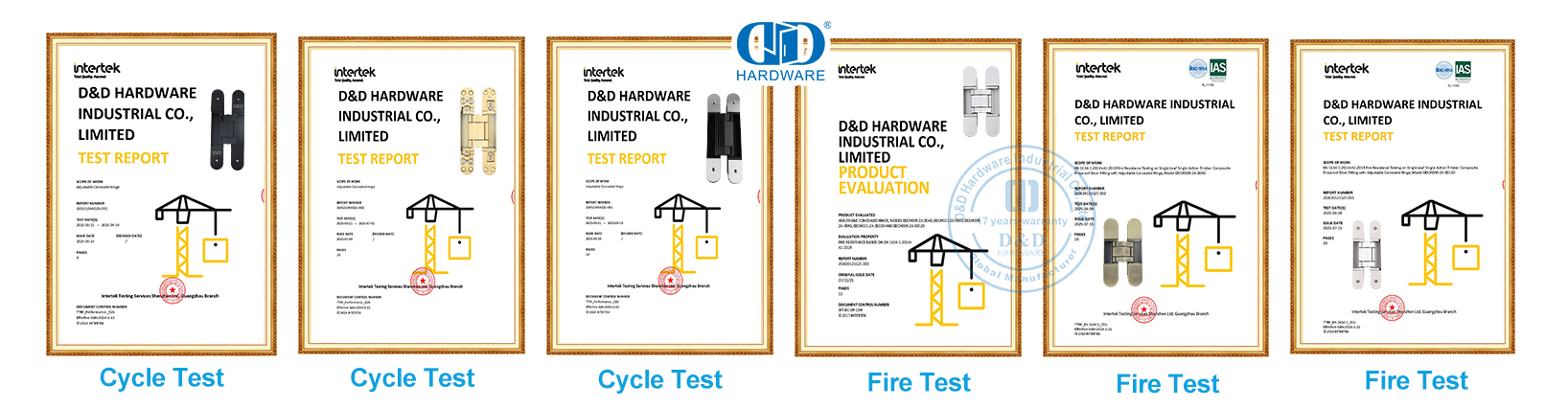
D&D concealed door hinge - BS EN1935 200,000 cycles test, EN1634 fire rated 132mins, EN1670 corrosion resistance 48 hours
Door Weight and Size: Heavier doors require hinges with higher weight ratings, like pivot hinges. Measure your door’s dimensions and weight before selecting.
Material and Finish: Hinges come in steel, brass, or stainless steel. Choose a durable material that resists corrosion, especially in humid areas.
Swing and Clearance: Consider the door’s swing direction and needed clearance. Some hinges allow full 180-degree opening, while others have limited arcs.
Installation Requirements: Hidden hinges often need professional installation due to precise mortising. Assess your DIY skills or budget for an expert.
Budget: Prices range from $20 for simple concealed hinges to $200+ for heavy-duty pivot systems. Invest in quality for long-term performance.
Accurate Measurements: Use a template or jig to ensure hinge placements align perfectly. Even minor errors can cause misalignment.
Reinforce the Door and Frame: Hidden doors may require additional support, like steel plates, to handle hinge stress.
Test Before Finishing: Install hinges and test the door’s swing multiple times before finalizing paint or wall coverings.
Consider Professional Help: If unsure, hire a carpenter experienced with hidden doors to avoid costly mistakes.

Hidden door hinges require minimal maintenance but benefit from periodic checks. Lubricate moving parts annually with a silicone-based lubricant to ensure smooth operation. Inspect for loose screws or wear, especially in high-use areas.
Q1: What is the most invisible hinge for a hidden door?
A: The Soss invisible hinge is the best for complete concealment, as it sits entirely within the door and frame when closed.
Q2: Can hidden door hinges support heavy doors?
A: Yes, pivot hinges are designed for heavy or oversized doors, with weight capacities up to 300 pounds or more.
Q3: Are hidden door hinges easy to install?
A: Installation complexity varies. Soss hinges require advanced woodworking skills, while some concealed cabinet hinges are DIY-friendly. Always follow manufacturer guidelines.
Q4: How much do hidden door hinges cost?
A: Prices range from $20 to over $200 per hinge, depending on type and quality. Budget for additional installation costs if professional help is needed.
Q5: Can I use hidden hinges on existing doors?
A: Yes, but modifications like mortising may be necessary. Assess the door’s structure and consult a professional to ensure compatibility.
Q6: Do hidden door hinges require special maintenance?
A: Regular lubrication and screw tightening are usually sufficient. Avoid using oil-based lubricants that attract dust.
Q7: Where can I buy hidden door hinges?
A: They are available at hardware stores, specialty woodworking shops, or online retailers like Amazon and Rockler.
Choosing the right hinge for a hidden door enhances both functionality and aesthetics. By considering factors like door weight, installation complexity, and budget, you can achieve a seamless hidden door that adds value and mystery to your space. Invest in quality hinges and proper installation to ensure durability. Whether for a secret room or a sleek interior, hidden door hinges offer a clever solution for modern living.
Click here for additional details on concealed door hinges.
Now contact us.
Contact information for David Jian
Contact number: 0086-139 2903 7292
Email address: sales@danddhardware.com


