DDAL07
D&D Hardware
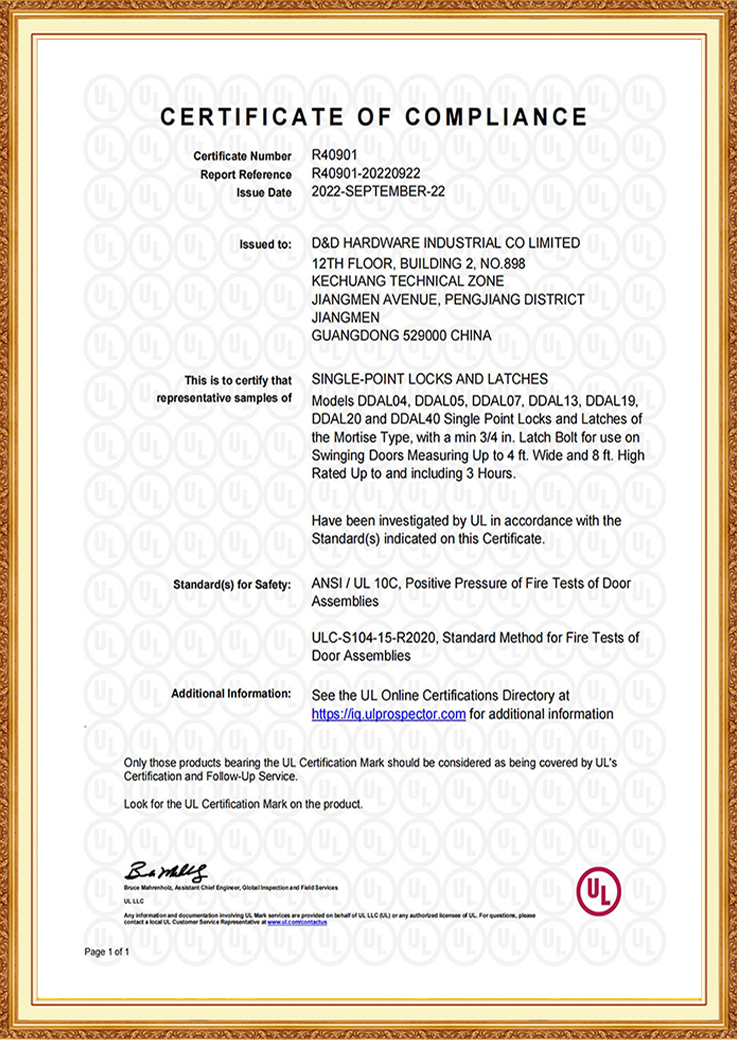
UL 10C fire rated 3 hours
Stainless Steel
Silver
Wooden Door, Metal Door
| Finish: | |
|---|---|
| Availability: | |
| Quantity: | |


Why: These rooms contain critical building systems (HVAC, electrical panels, elevator machinery) that must be secured against unauthorized access at all times.
How it works: The outside lever is always locked. Only authorized maintenance personnel with a key can enter. Inside, workers can exit freely at any time without a key, preventing accidental lock-ins.
UL Listing relevance: If the door is part of a fire-rated wall (required for mechanical rooms), the UL Listing ensures the lock maintains the fire barrier integrity.
Why: Cleaning supplies and chemicals must be secured, but staff need quick access.
How it works: Custodians use a key to enter. Once inside, they can exit freely by simply turning the inside lever, even with arms full of supplies.
UL Listing relevance: Many janitorial closets open onto corridors and require fire-rated doors. The UL Listed lock ensures compliance.
Why: Secures inventory, supplies, or equipment from theft or tampering.
How it works: The outside lever is always rigid. Only key holders can enter. The auxiliary dead latch prevents the door from being shimmed or forced open with a tool.
UL Listing relevance: If the storage room is interior and not fire-rated, UL Listing may not be required, but if the door is on a rated corridor, the lock must be UL Listed to match the door's fire rating.
Why: In some buildings, stairwell doors are locked on the stair side to prevent re-entry from stairs into floors, but must allow free egress from floors into stairs.
How it works: The outside lever (stair side) is always inoperative. Occupants exiting the floor into the stairwell push through freely. To re-enter the floor from the stairs, a key is required (or the door is designated as "no re-entry").
UL Listing relevance: Stairwell doors are almost always fire-rated. A UL 10C Listed lock is mandatory.
Why: Some exit doors must remain locked from the outside for security but must allow instant egress from inside (e.g., rear exits in retail, side doors in offices).
How it works: The outside lever is always rigid. Inside, the lever is free for immediate exit. If electronic access control is added, a key override is often required.
UL Listing relevance: Exit doors are typically fire-rated and must comply with NFPA 80. A UL Listed lock ensures the door assembly remains compliant.
Why: Medication rooms, sterile supply closets, or laboratories must be secured against unauthorized entry.
How it works: Only authorized medical staff with a key can enter. Inside, staff can exit freely, which is critical in emergencies.
UL Listing relevance: Healthcare facilities require strict fire and life safety compliance. UL Listed hardware is often specified.
Why: Secures maintenance closets, athletic equipment rooms, or AV storage.
How it works: Outside lever always locked. Key access for authorized staff. Free egress from inside prevents students from being accidentally locked in.
UL Listing relevance: Educational occupancies require corridor doors to be fire-rated. The lock must match the door's fire rating.
The auxiliary dead latch is critical for storeroom function locks because:
It prevents "loiding" or "credit card attack" (shimming the latch bolt).
It ensures that even if the outside lever is inoperative, the door cannot be forced open by manipulating the latch.
It enhances forced-entry resistance, which is essential for securing storage and mechanical rooms.
A UL Listed Fire Rated Mortise Lock with storeroom function must be:
Tested to UL 10C (positive pressure fire test)
Rated for the door's fire protection period (UL 10C 3 hours)
Marked with UL label on the lock case or packaging
Installed with matching fire-rated hinges, closers, and gasketing to maintain the assembly's rating
Why: These rooms contain critical building systems (HVAC, electrical panels, elevator machinery) that must be secured against unauthorized access at all times.
How it works: The outside lever is always locked. Only authorized maintenance personnel with a key can enter. Inside, workers can exit freely at any time without a key, preventing accidental lock-ins.
UL Listing relevance: If the door is part of a fire-rated wall (required for mechanical rooms), the UL Listing ensures the lock maintains the fire barrier integrity.
Why: Cleaning supplies and chemicals must be secured, but staff need quick access.
How it works: Custodians use a key to enter. Once inside, they can exit freely by simply turning the inside lever, even with arms full of supplies.
UL Listing relevance: Many janitorial closets open onto corridors and require fire-rated doors. The UL Listed lock ensures compliance.
Why: Secures inventory, supplies, or equipment from theft or tampering.
How it works: The outside lever is always rigid. Only key holders can enter. The auxiliary dead latch prevents the door from being shimmed or forced open with a tool.
UL Listing relevance: If the storage room is interior and not fire-rated, UL Listing may not be required, but if the door is on a rated corridor, the lock must be UL Listed to match the door's fire rating.
Why: In some buildings, stairwell doors are locked on the stair side to prevent re-entry from stairs into floors, but must allow free egress from floors into stairs.
How it works: The outside lever (stair side) is always inoperative. Occupants exiting the floor into the stairwell push through freely. To re-enter the floor from the stairs, a key is required (or the door is designated as "no re-entry").
UL Listing relevance: Stairwell doors are almost always fire-rated. A UL 10C Listed lock is mandatory.
Why: Some exit doors must remain locked from the outside for security but must allow instant egress from inside (e.g., rear exits in retail, side doors in offices).
How it works: The outside lever is always rigid. Inside, the lever is free for immediate exit. If electronic access control is added, a key override is often required.
UL Listing relevance: Exit doors are typically fire-rated and must comply with NFPA 80. A UL Listed lock ensures the door assembly remains compliant.
Why: Medication rooms, sterile supply closets, or laboratories must be secured against unauthorized entry.
How it works: Only authorized medical staff with a key can enter. Inside, staff can exit freely, which is critical in emergencies.
UL Listing relevance: Healthcare facilities require strict fire and life safety compliance. UL Listed hardware is often specified.
Why: Secures maintenance closets, athletic equipment rooms, or AV storage.
How it works: Outside lever always locked. Key access for authorized staff. Free egress from inside prevents students from being accidentally locked in.
UL Listing relevance: Educational occupancies require corridor doors to be fire-rated. The lock must match the door's fire rating.
The auxiliary dead latch is critical for storeroom function locks because:
It prevents "loiding" or "credit card attack" (shimming the latch bolt).
It ensures that even if the outside lever is inoperative, the door cannot be forced open by manipulating the latch.
It enhances forced-entry resistance, which is essential for securing storage and mechanical rooms.
A UL Listed Fire Rated Mortise Lock with storeroom function must be:
Tested to UL 10C (positive pressure fire test)
Rated for the door's fire protection period (UL 10C 3 hours)
Marked with UL label on the lock case or packaging
Installed with matching fire-rated hinges, closers, and gasketing to maintain the assembly's rating
Please note: Our certificates will be updated. To view the latest version of the certificate, please click on this link.

Please note: Our certificates will be updated. To view the latest version of the certificate, please click on this link.

Contact us:
David Jian
Tel / WhatsApp / Wechat:+86-13929037292
Email:sales@danddhardware.com
TEL:+86-750-3856396
FAX: +86-750-3856395
Address: 12th Floor, Building 2, No.898, KeChuang Technical Zone,Jiangmen Avenue, Pengjiang District, Jiangmen City, Guangdong, China 529000
Contact us:
David Jian
Tel / WhatsApp / Wechat:+86-13929037292
Email:sales@danddhardware.com
TEL:+86-750-3856396
FAX: +86-750-3856395
Address: 12th Floor, Building 2, No.898, KeChuang Technical Zone,Jiangmen Avenue, Pengjiang District, Jiangmen City, Guangdong, China 529000