
Certified for Safety. Trusted by Leaders Worldwide.
Pls inquire to sales@danddhardware.com
\\: +86 139 2903 7292

 English
 Author: D&D Hardware Publish Time: 2026-06-04 Origin: D&D Hardware


Hospitals are among the most demanding environments for fire door systems. Unlike office buildings or retail spaces, healthcare facilities operate 24 hours a day and accommodate patients who may not be able to evacuate independently during an emergency.
A fire incident inside a hospital creates unique challenges:
•Patients may have limited mobility
•Medical equipment occupies corridors and rooms
•Staff must continue providing care during evacuation procedures
•Smoke control becomes as important as fire containment
For these reasons, every component of a hospital fire door assembly must perform reliably. While fire-rated doors and door closers often receive significant attention, the locking system is equally important.
At D&D Hardware Factory, we have found that the performance of a fire door often depends on the reliability of the lock that keeps the door positively latched during both daily operation and emergency conditions.
This is where a UL Fire Rated Mortise Lock becomes a critical part of healthcare fire safety systems.

Many people view locks primarily as security devices. In reality, a fire-rated mortise lock performs a much more important function within a fire door assembly.
A fire door can only resist the spread of fire and smoke when it remains:
•Properly aligned
•Fully closed
•Securely latched
If the lock fails, the door may not stay closed during fire conditions.
This can allow:
•Fire penetration
•Smoke migration
•Loss of compartmentation
•Reduced evacuation safety
A properly designed UL Listed Mortise Lock helps maintain the integrity of the fire door assembly and supports overall fire door safety in hospitals.
Not every mortise lock is suitable for fire door applications.
A true UL Fire Rated Mortise Lock has been tested under fire conditions and evaluated as part of a fire door assembly.
Our mortise lock is certified:
UL 10C Fire Rated 3 Hours
File No. R40901
This certification demonstrates that the lock can continue supporting the fire door assembly under positive pressure fire testing conditions.
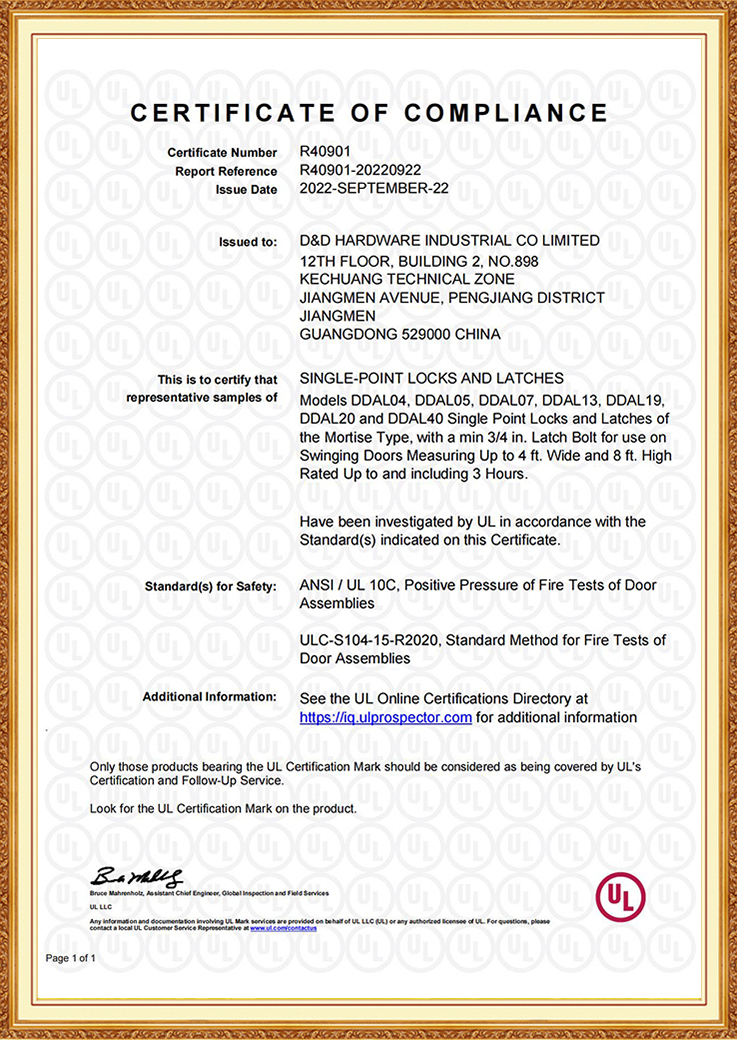
For hospital projects, this level of certification provides confidence that the locking system can contribute to life safety performance when it matters most.
Hospitals require hardware solutions that combine:
•Fire protection
•Durability
•Reliability
•Long service life
Compared with standard cylindrical locks, mortise locks offer a stronger internal mechanism and greater operational stability.
This makes them particularly suitable for:
•Patient room doors
•Hospital corridor fire doors
•Staff-only areas
•Pharmacy entrances
•Medical storage rooms
•Stairwell fire doors
Because healthcare facilities experience constant traffic, lock durability becomes just as important as fire performance.
A high-quality fire rated mortise lock provides both.
Hospital corridors serve multiple functions.
They are:
•Daily circulation routes
•Equipment transport paths
•Emergency evacuation routes
•Fire compartment boundaries
Fire doors installed along these corridors are designed to slow the spread of fire and smoke.
However, these doors can only perform effectively when the locking system maintains positive latching.
Our UL Fire Rated Mortise Lock helps ensure that corridor fire doors:
•Close securely after each use
•Maintain fire compartment integrity
•Support smoke control strategies
•Operate smoothly under high traffic conditions
This makes the lock an essential component of hospital fire safety design.
Positive latching is often overlooked during hardware specification.
Yet it is one of the most important requirements for fire door performance.
During a fire event:
•Heat causes pressure differences
•Building movement may occur
•Occupants repeatedly use doors
•Evacuation activity increases
Without a reliable mortise lock, a fire door may not remain fully secured.
Positive latching helps ensure that the door stays closed and engaged within the frame.
This function significantly improves:
•Fire containment
•Smoke control
•Occupant protection
•Building code compliance
Stairwells are protected escape routes designed to remain usable throughout an emergency.
The fire doors protecting these spaces must operate consistently regardless of traffic volume.
In hospital environments, stairwell doors often experience:
•Continuous daily use
•Equipment movement
•Emergency evacuation traffic
A UL Fire Rated Mortise Lock helps maintain:
•Secure latching
•Reliable operation
•Long-term durability
•Fire-rated performance
Combined with fire-rated hinges and door closers, the mortise lock contributes to a complete life-safety door system.
Hospitals never truly close.
Doors operate around the clock.
Unlike many commercial environments, healthcare buildings experience:
•Continuous staff movement
•Patient transport
•Equipment relocation
•Emergency access requirements
As a result, door hardware must withstand years of intensive use.
We design our mortise lock solutions with commercial durability in mind because reliability is essential in healthcare applications.
A lock that functions properly after years of operation provides greater value than one that simply meets minimum testing requirements.

Healthcare projects often involve strict building code and fire safety requirements.
Authorities typically require:
•Fire-rated door assemblies
•Certified hardware
•Tested components
•Documented compliance
Using a UL 10C Certified Mortise Lock simplifies project approval because the lock has already been evaluated under recognized fire testing standards.
This helps reduce uncertainty during:
•Design specification
•Project review
•Building inspection
•Facility maintenance planning
At D&D Hardware Factory, we understand that fire door hardware is not just a product category—it is a life safety responsibility.
That is why we continue investing in the development and manufacturing of certified fire-rated door hardware systems.
Our UL Fire Rated Mortise Lock is designed specifically for demanding commercial applications where:
•Fire safety is critical
•Reliability is expected
•Compliance is mandatory
Through our UL 10C certification (File No. R40901), we provide a locking solution suitable for healthcare facilities and other high-performance building environments.
As a dedicated UL Fire Rated Mortise Lock Manufacturer, our focus is helping fire door assemblies perform as intended throughout their service life.
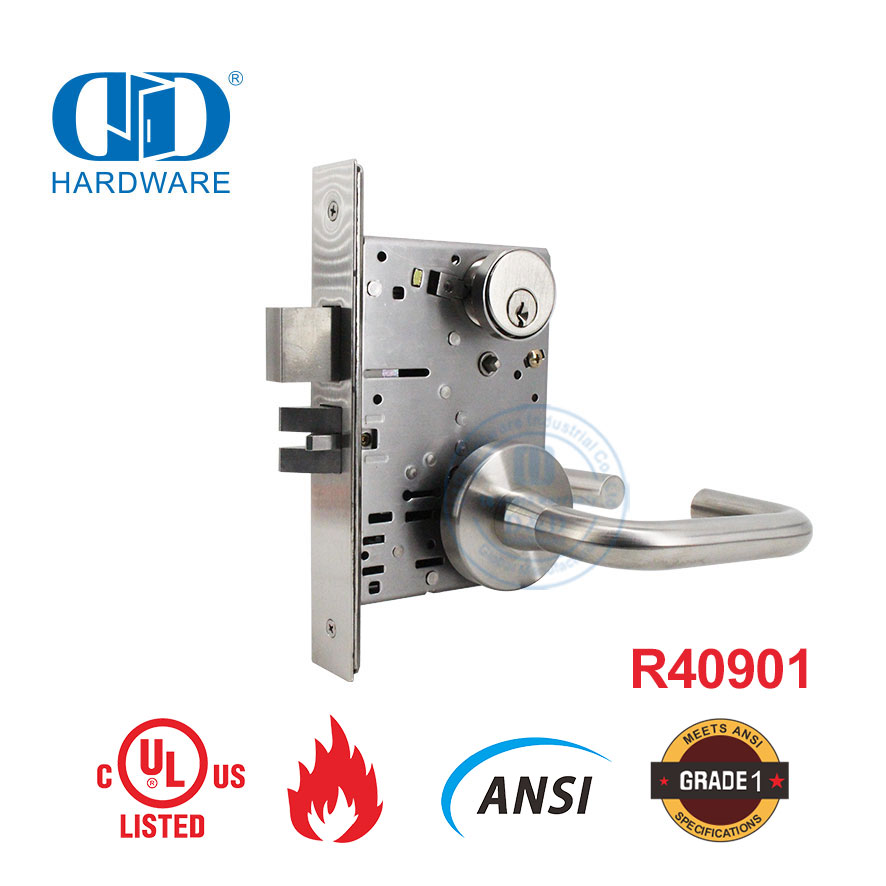
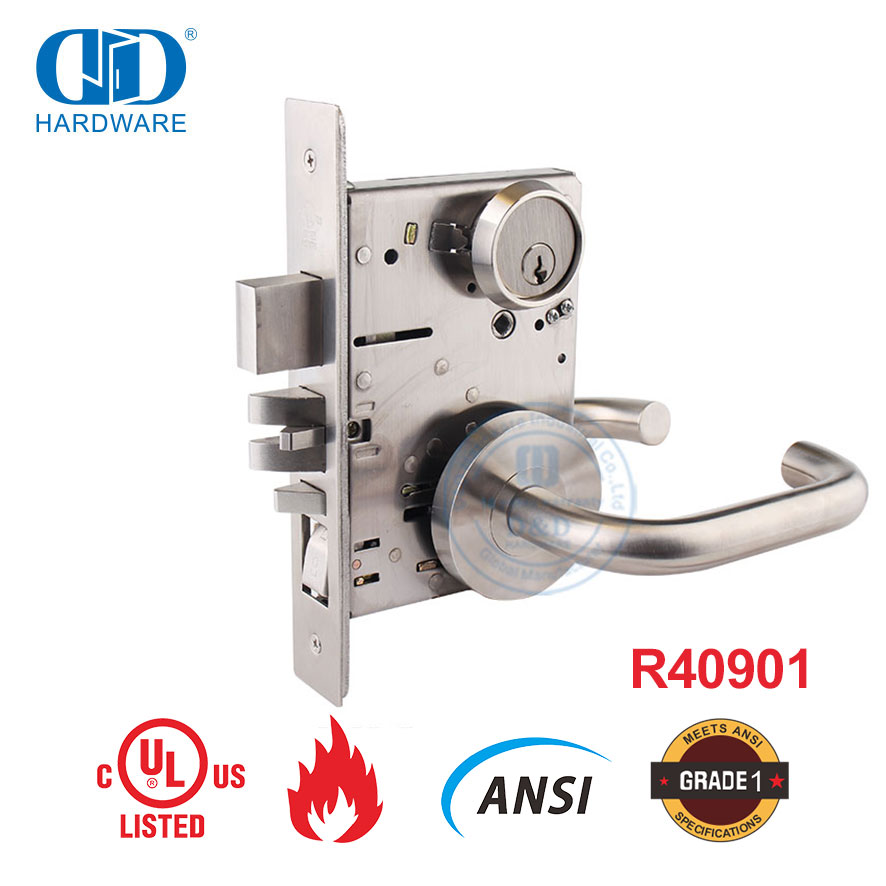
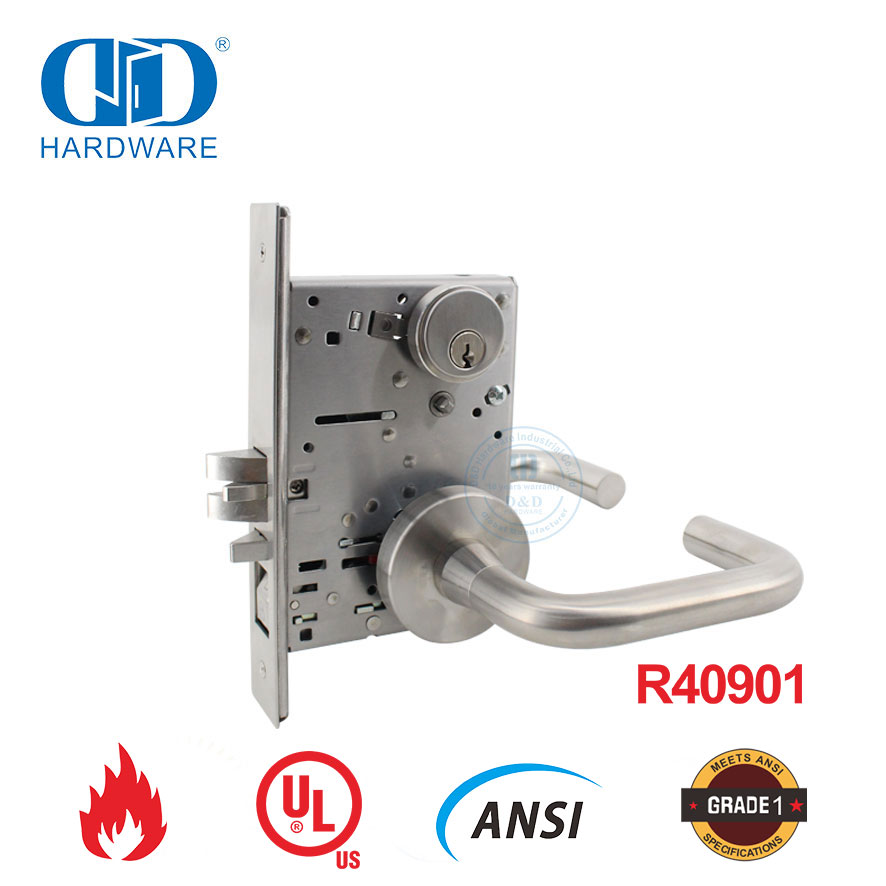

When evaluating a mortise lock for healthcare projects, several factors should be considered:
Fire Certification
Look for recognized testing such as UL 10C.
Application Compatibility
Ensure the lock is designed for commercial fire door assemblies.
Positive Latching Performance
Reliable latching is essential for fire containment.
Durability
Healthcare facilities require long-term operational reliability.
System Compatibility
The lock should work seamlessly with hinges, closers, cylinders, and other fire door hardware.
Selecting a lock based solely on appearance or cost can lead to long-term performance issues.
What is a UL Fire Rated Mortise Lock?
A UL Fire Rated Mortise Lock is a lock tested under UL fire standards and approved for use in fire-rated door assemblies.
Why are mortise locks commonly used in hospitals?
Mortise locks provide superior durability, secure latching, and reliable performance in high-traffic healthcare environments.
What certification does the D&D mortise lock have?
Our mortise lock is certified to UL 10C Fire Rated 3 Hours under File No. R40901.
How does a mortise lock improve fire door safety?
It helps maintain positive latching, allowing the fire door to remain closed and effective during a fire event.
Can a standard lock be used on a fire-rated door?
Only locks tested and approved for fire-rated applications should be used on fire door assemblies.
Where are UL Fire Rated Mortise Locks commonly installed?
Typical applications include patient room doors, hospital corridors, stairwell doors, medical facilities, hotels, office buildings, and other commercial fire door projects.

Hospital fire door systems must perform reliably under some of the most demanding conditions found in commercial construction. While doors, hinges, and closers are all important, the locking system plays a central role in maintaining fire compartment integrity and occupant safety.
A certified UL Fire Rated Mortise Lock helps ensure that fire doors remain securely latched, properly functioning, and compliant with fire safety requirements.
At D&D Hardware Factory, we are committed to manufacturing high-performance fire door hardware solutions. Our UL 10C Fire Rated Mortise Lock (File No. R40901) is designed to support the safety, durability, and compliance requirements of modern hospital projects and other commercial fire door applications.
When fire door performance matters, choosing a trusted UL Fire Rated Mortise Lock Manufacturer can make a significant difference in the long-term reliability of the entire fire door system.
Click here for additional details on door hardware.
Now contact us.
Contact information for David Jian
Contact number: 0086-139 2903 7292
Email address: sales@danddhardware.com


