
Certified for Safety. Trusted by Leaders Worldwide.
Pls inquire to sales@danddhardware.com
\\: +86 139 2903 7292

 English
 Author: D&D HARDWARE Publish Time: 2026-06-22 Origin: D&D HARDWARE


Supermarket doors are some of the hardest-working components in any retail building. A single high-traffic entrance can see thousands of open-close cycles every day, while exit doors must guarantee fast, safe egress during an emergency. Choosing the wrong hardware doesn't just lead to early failures and costly callbacks—it can put occupants at risk and leave a project out of code compliance.
For door manufacturers, hardware brands, contractors, and procurement teams sourcing for retail projects, getting these specifications right is non-negotiable. This guide breaks down exactly how to choose the right supermarket door lock for both entry and exit doors, covering lock types, safety requirements, durability, and what to look for in a supplier. Use it as a practical commercial door lock buying guide for your next retail build or refit.

It's tempting to treat every opening the same, but entry and exit doors serve fundamentally different functions—and that difference drives the hardware specification.
A commercial entry door lock is built primarily for security and controlled access. It needs to resist forced entry, integrate with access control, and survive relentless daily use without losing alignment. A supermarket exit door lock, on the other hand, is a life-safety device first. Its job is to let people out quickly and intuitively during a fire, power outage, or evacuation—even when the door is locked from the outside.
Mixing these requirements up creates real problems. An exit door secured with a standard keyed lock can become a deadly bottleneck in an emergency. An entry door fitted with lightweight residential hardware will wear out within months. Specifying each opening according to its actual function is the foundation of a safe, compliant, and durable retail installation.

Entry doors take the brunt of customer traffic, so the lock has to be engineered for endurance and security. When evaluating an entry door lock for retail stores, prioritize these factors:
ANSI/BHMA Grade 1 rating: Grade 1 is the minimum acceptable standard for exterior and high-traffic commercial doors. These locks are tested to one million or more operational cycles, far beyond what lighter-duty hardware can handle.
Forced-entry resistance: The lock body and bolt must withstand prying, torque, and impact. A robust mortise lock distributes stress across the door edge rather than a single bore hole.
Access control compatibility: Many supermarkets now run electrified hardware tied to card readers, keypads, or cloud-based credential systems. Wi-Fi-enabled smart locks are projected to make up around 40% of commercial deployments by 2026, so future-proofing matters.
High-security cylinders: Look for anti-pick, anti-drill, and anti-bump cylinders rated to ANSI Grade 1 or EN 1303 to add another layer of protection at vulnerable entry points.
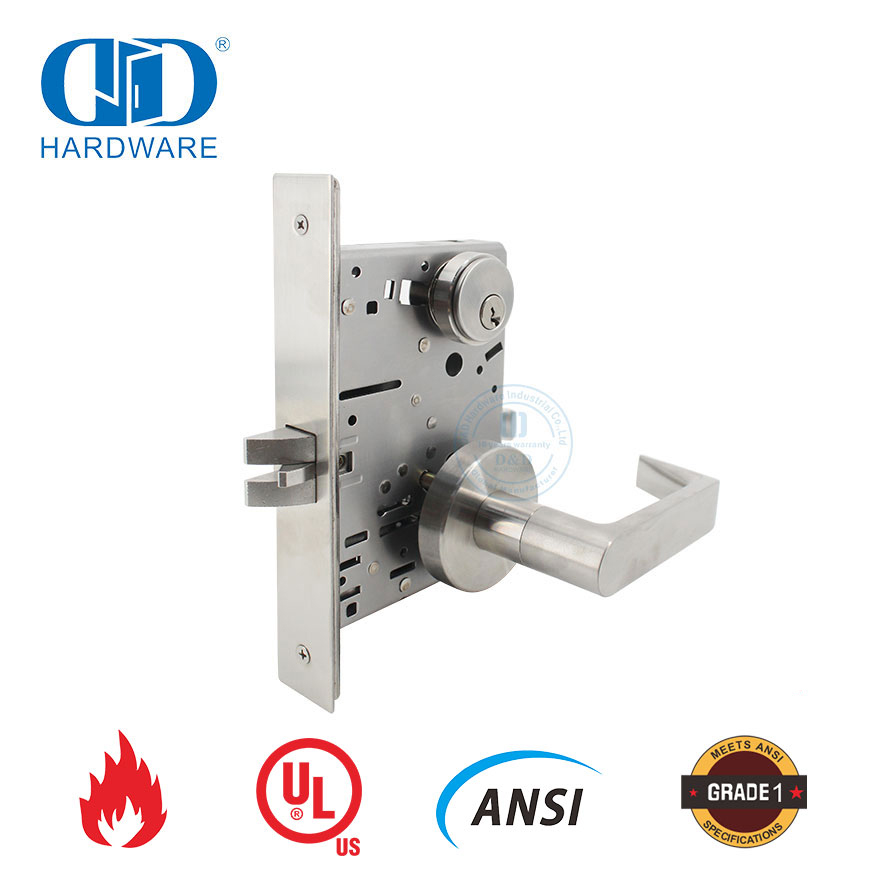
A commercial door lock for supermarkets at the main entrance has to balance smooth daily operation with serious resistance to intrusion. That's why deadbolts and heavy-duty mortise locks dominate this application.
Exit doors are governed by one overriding principle: free and immediate egress. Whatever hardware you specify, occupants must be able to leave without keys, codes, or special knowledge.
Panic bar exit devices—also called crash bars or push bars—are the standard solution. When pushed, the bar instantly retracts the latch and releases the door, even if it remains locked from the outside. This makes them ideal for the high-occupancy environments supermarkets create during peak hours.
When specifying exit door hardware for supermarkets, keep these points front of mind:
Choose the right device type. Rim panic bars suit single doors and double doors without a center mullion. Vertical rod devices secure double doors at top and bottom. Mortise panic bars offer extra strength with cleaner aesthetics.
Match the fire rating to the opening. Doors on a fire-rated egress path require fire-rated panic hardware that keeps the door positively latched during a fire event.
Confirm ADA compliance. Operating force and bar height must meet accessibility standards so children, seniors, and people with disabilities can exit safely.
Consider alarmed or electrified options. Alarmed panic bars deter unauthorized exits and theft, while electrified models integrate with building security and fire alarm systems.
Panic bars and ADA-compliant lever handles are mandatory at egress points in grocery environments—this isn't an area where compromise is an option.
One of the most common questions in any retail store door lock decision is whether to use a mortise lock or a cylindrical lock. Both have their place, but they perform very differently.
A cylindrical lock installs through a single bore hole in the door face. It's faster to install and lower in upfront cost, which makes it a reasonable choice for interior, low-traffic openings like office or stockroom doors. The trade-off is strength: with the mechanism anchored at one point, it's more vulnerable to forced entry and wears faster under heavy use.
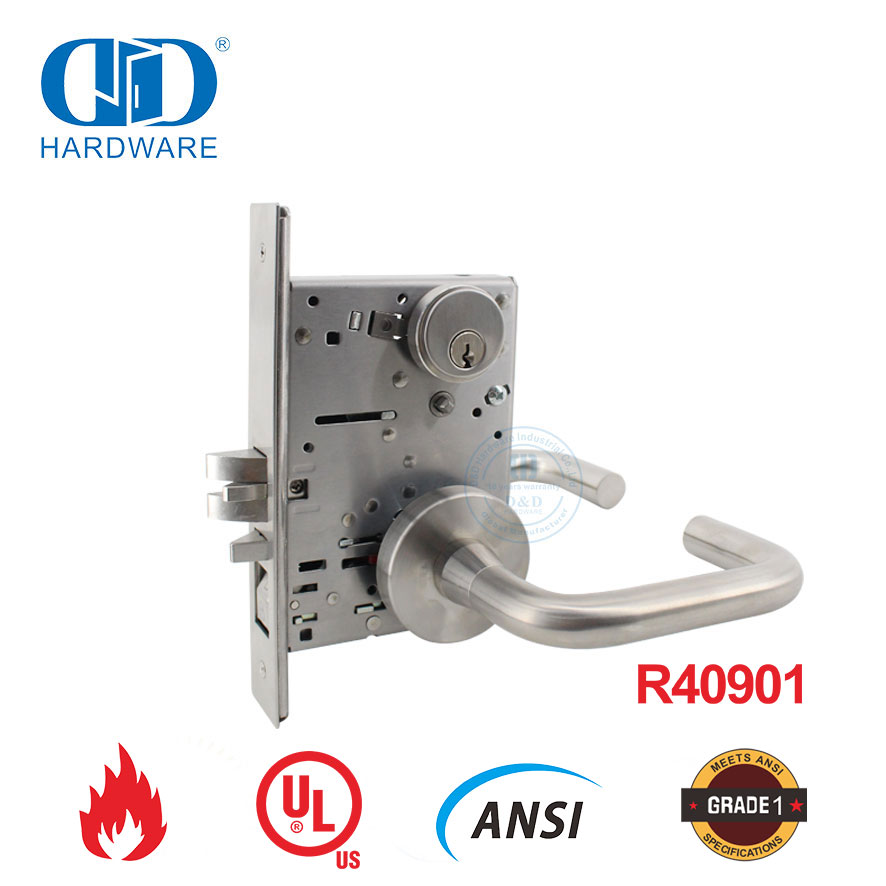
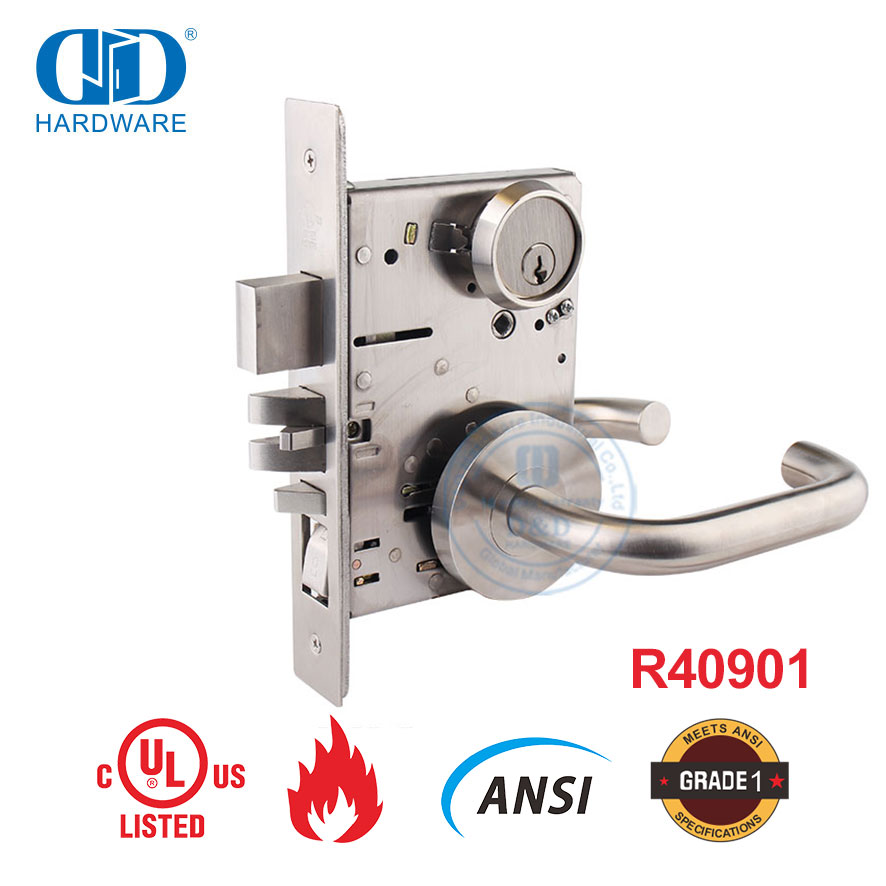
A mortise lock is embedded into a pocket cut into the door edge, with the lock body sitting entirely inside the door. This design distributes load across the door, accommodates longer bolts and more robust internal components, and stands up to the constant cycling that defines supermarket entrances. For exterior and high-traffic retail doors, the mortise lock is the stronger, longer-lasting choice—often outlasting the door itself when properly installed.
The practical takeaway: use mortise locks for main entrances and high-security exterior openings, and reserve cylindrical locks for lighter interior applications where budget and quick installation are the priorities.
Compliance isn't optional, and inspectors take retail egress seriously. A supermarket that fails inspection for missing or non-compliant exit hardware faces fines, insurance complications, and potential legal liability if an incident occurs.
Several standards shape what you can and can't specify:
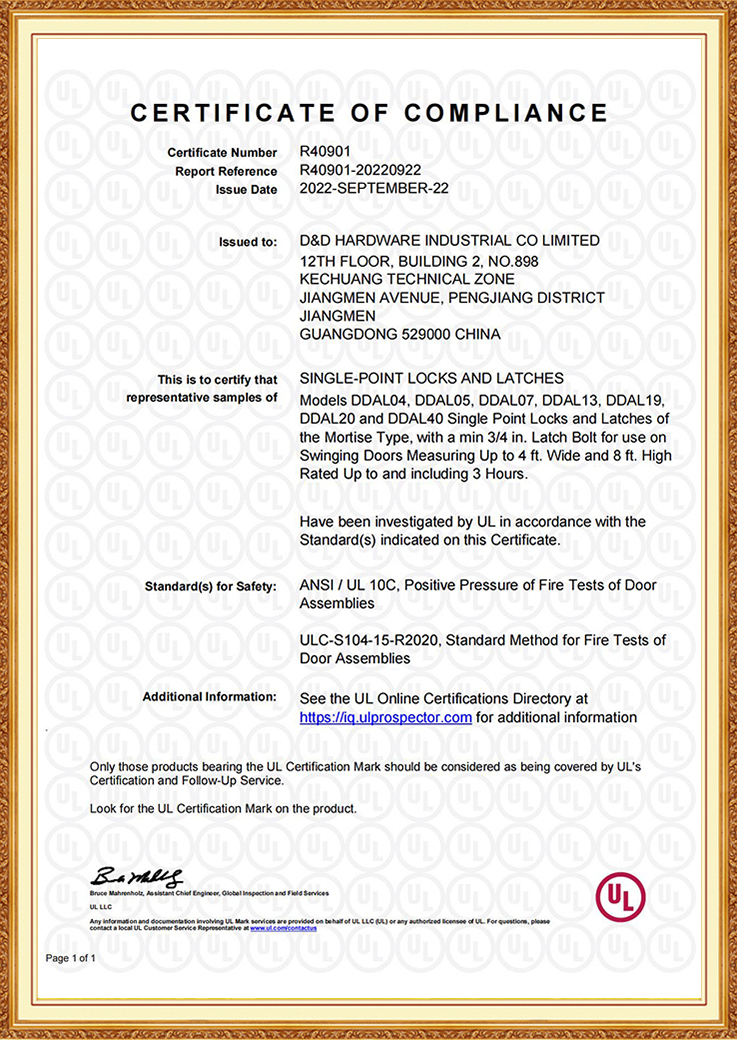
UL 10C / fire ratings: Locks and panic devices on fire-rated assemblies must carry the appropriate fire rating—up to 3 hours for the most demanding openings—so they remain functional and latched during a fire.
NFPA 80 and the IBC: These codes dictate where fire doors are required and how their hardware must perform, including positive latching and self-closing behavior.
ADA requirements: Egress hardware must meet accessibility rules for operating force and reach.
EN standards (for export markets): European specifications such as EN 1125 for panic exit devices and EN 1634 for fire-rated solutions apply where products ship internationally.
Don't overlook supporting hardware. Door closers play a critical role here, ensuring fire-rated and high-traffic doors close and latch reliably every time. A fire door is only as good as its weakest component, so every piece—lock, panic device, closer, and hinges—needs to be rated for the assembly as a whole.
Material selection determines how well a supermarket door lock holds up against constant use, cleaning chemicals, moisture, and temperature swings—especially on exterior doors and near loading areas.
Stainless steel (SUS 304): The go-to material for high-traffic retail hardware. It resists corrosion, handles heavy cycling, and maintains a clean appearance over years of use.
Hardened steel and brass internals: Cam mechanisms, latch springs, and deadbolt gears made from these alloys keep their tolerances and prevent the rattling and misalignment that plague cheaper hardware.
Corrosion-resistant finishes: Satin stainless (US32D) and similar finishes are well suited to exterior exposure. For demanding environments, look for hardware tested to standards like EN 1670 for corrosion resistance.
Beyond performance, finish consistency matters for brand presentation. Supermarkets want hardware that looks professional and uniform across every opening, so specifying a single trusted finish across entry and exit doors keeps the storefront polished.
Even the best specification falls apart without a supplier who can deliver certified, consistent products on schedule. When sourcing hardware for a retail project, evaluate potential partners against these criteria:
Verified certifications: Insist on documented CE, UL, and ANSI/BHMA certifications, with file numbers you can verify. These prove the hardware actually performs to the grades claimed.
Full product range: A supplier offering mortise locks, panic exit devices, cylindrical locks, door closers, and hinges lets you source a complete, compatible package from one place—simplifying procurement and ensuring components work together.
Quality management systems: Look for ISO 9001-certified manufacturing, which signals consistent, repeatable production quality.
OEM and customization capability: For door manufacturers and hardware brands, the ability to customize finishes, functions, and branding is a major advantage.
Factory-direct pricing and reliable logistics: Sourcing directly from a manufacturer removes intermediary markups and gives you better control over lead times and supply continuity.

1
D&D Hardware Industrial Co., Ltd. has manufactured commercial door hardware for over 18 years, supplying CE, UL, and ANSI/BHMA certified mortise locks, panic exit devices, door closers, and hinges to retail and commercial projects worldwide. With ISO 9001-certified production, OEM manufacturing, and factory-direct pricing, D&D Hardware is built to support procurement teams and contractors who need certified quality without intermediary markups.
Choosing the right supermarket door lock comes down to matching each opening to its true function—security at the entrance, safe egress at the exit—and backing those choices with certified hardware and a dependable supplier. Get those decisions right, and you'll deliver a retail project that's safe, compliant, and built to last. To explore a full range of certified entry and exit door hardware for your next supermarket project, contact the D&D Hardware team.
Click here for additional details on door locks.
Now contact us.
Contact information for David Jian
Contact number: 0086-139 2903 7292
Email address: sales@danddhardware.com


