
Certified for Safety. Trusted by Leaders Worldwide.
Pls inquire to sales@danddhardware.com
\\: +86 139 2903 7292

 English
 Author: D&D HARDWARE Publish Time: 2026-06-15 Origin: D&D HARDWARE


TL;DR:
A commercial mortise lock is embedded directly into the door body, making it significantly more resistant to forced entry than surface-mounted alternatives. For high-traffic commercial exterior doors, mortise locks offer superior structural strength, durability, and compatibility with access control systems—making them the preferred exterior door lock for most commercial buildings.
Security decisions for commercial buildings rarely get as much attention as they deserve. The right exterior door lock can be the difference between a secure facility and a costly breach. Yet many building managers default to whatever is cheapest or most familiar—often a cylindrical lockset that simply isn't built for commercial demands.
The commercial mortise lock tells a different story. Engineered for heavy use, embedded installation, and long-term reliability, it has become the benchmark for commercial building door lock performance worldwide. This guide breaks down exactly what makes mortise locks so effective, where they outperform other lock types, and what to look for when specifying one for a commercial exterior door.

A mortise lock is installed by cutting a precise rectangular pocket—called a mortise—into the edge of the door. The lock body sits entirely within this cavity, flush with the door's surface. This embedded design is what sets it apart from cylindrical or rim locks, which are mounted through or onto the door face.
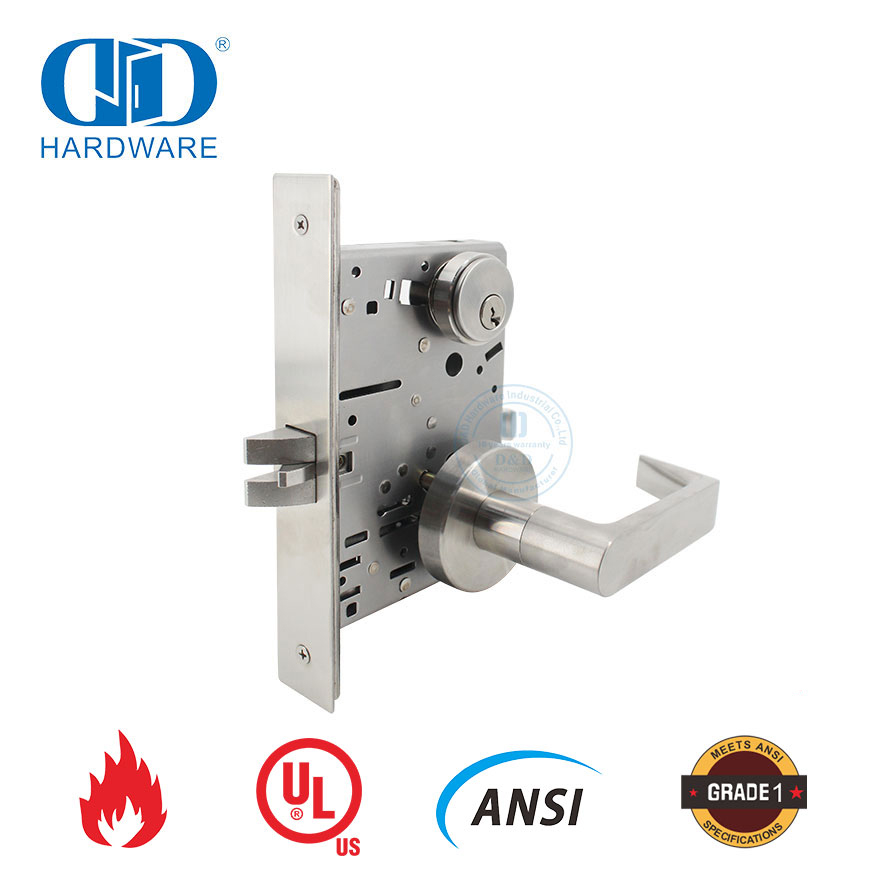
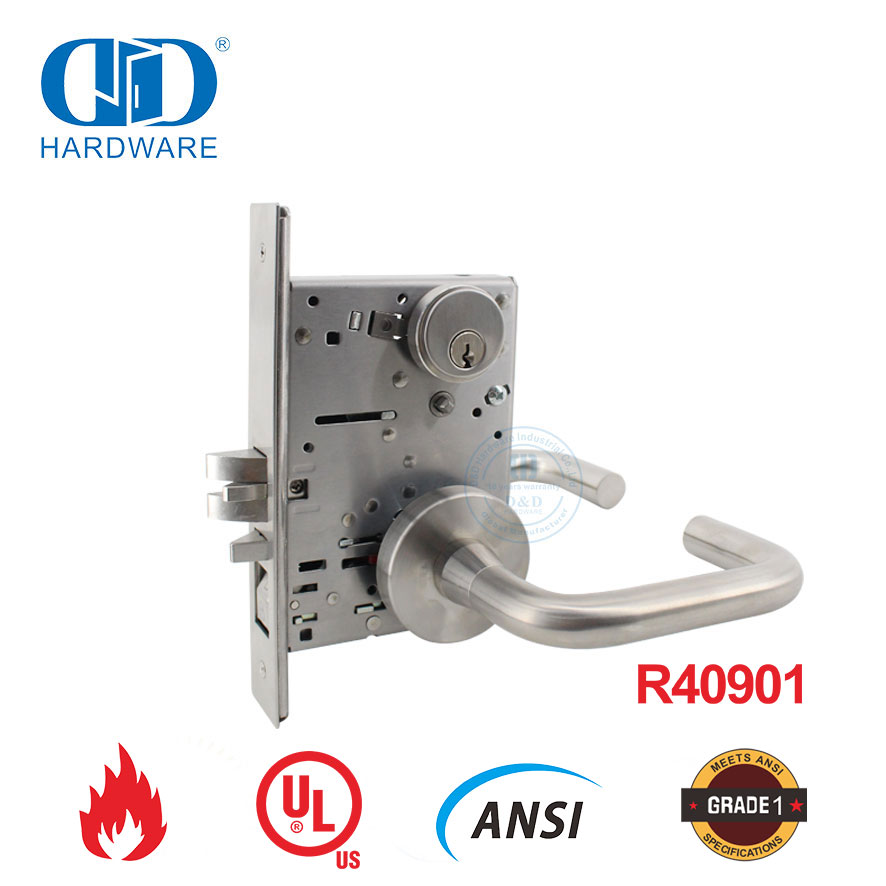
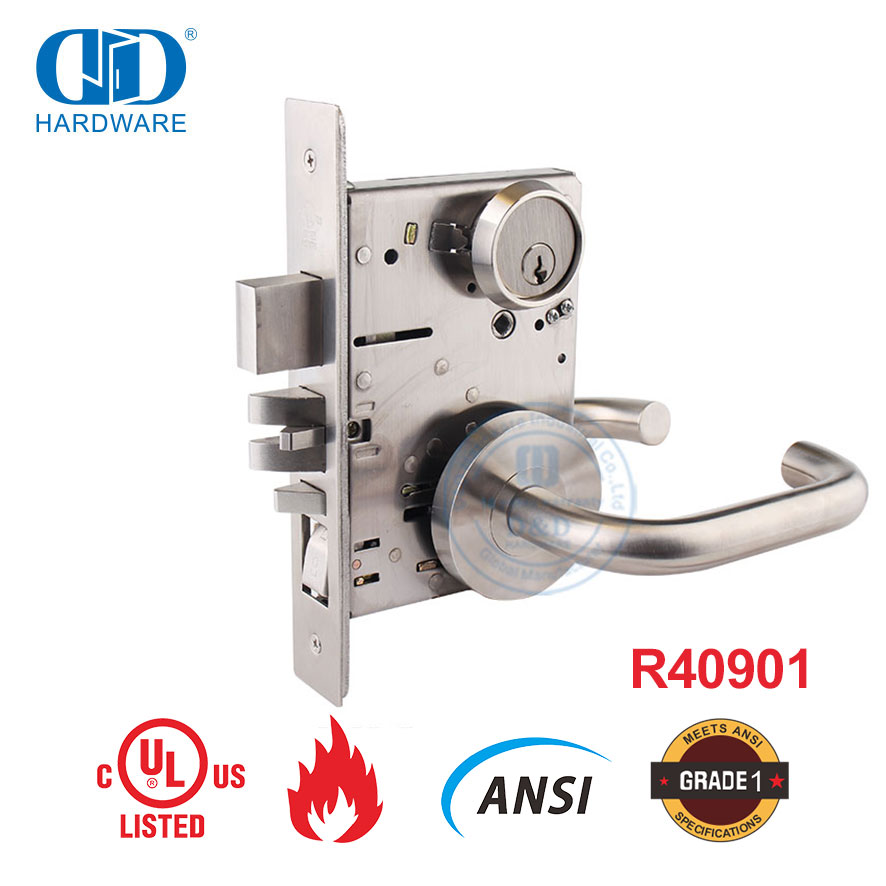
The commercial mortise lock body typically houses multiple components in one unified case: a spring latch for everyday entry, a deadbolt for high-security locking, and often an auxiliary latch to prevent the door from being lopped. This multi-point mechanism is activated through a single cylinder and trim assembly, giving facility managers more control with less hardware.
Because the lock body is recessed into the door, it cannot be easily pried, leveraged, or kicked free. The door and frame absorb the force—not the lock housing.
Cylindrical locks are common in residential and light-duty commercial settings. They're faster to install and lower in upfront cost. But the mechanism sits inside a small bore hole, which means the latch and bolt are only anchored at one point. Under lateral stress—a shoulder check or a pry bar—that anchor can fail.
A commercial mortise lock body distributes load across the entire door edge. The larger lock case means longer bolts, more robust internal components, and a frame strike that can be reinforced with extended plates. For an exterior door lock on a busy commercial building, that structural difference is significant.
The American National Standards Institute (ANSI) and the Builders Hardware Manufacturers Association (BHMA) classify locks into three grades:
Grade 1: Heavy-duty commercial use, highest security and cycle testing (250,000 cycles minimum)
Grade 2: Light commercial and multi-family residential
Grade 3: Residential only
For commercial exterior doors—especially those with high foot traffic—Grade 1 is the minimum acceptable specification. Grade 1 mortise locks are tested against door strikes, torque, and cycle endurance far beyond what a cylindrical lock must withstand. In European markets, the equivalent standard is EN 12209, which D&D Hardware's mortise lock range is tested and certified against.
High-traffic entrances experience thousands of open-close cycles every day. A hospital lobby, office building main entry, or retail anchor store may see 500 or more door operations during business hours alone. Over a year, that adds up fast.
Commercial mortise lock bodies are built with this in mind. The internal components—cam mechanisms, latch springs, deadbolt gears—are manufactured from hardened steel and brass alloys designed to maintain precision tolerances after years of constant use. Cheaper alternatives wear out, causing misalignment, rattling, and eventually failure. A quality mortise lock, properly specified and installed, can outlast the door itself.
Not all mortise locks are equal. When specifying an exterior door lock for a commercial building, evaluate these features:
Backset and case size: Match the lock case dimensions to the door thickness. Standard commercial doors range from 1¾" to 2¼" thick. The backset (distance from door edge to keyhole center) must align with the door's prep.
Latch and bolt configuration: Exterior entries typically require a deadbolt combined with a spring latch. Some commercial mortise locks also include a hospital latch or anti-panic function.
Cylinder compatibility: High-security cylinders with anti-pick, anti-drill, and anti-bump protection add another layer of defense. Look for cylinders rated to EN 1303 or ANSI Grade 1.
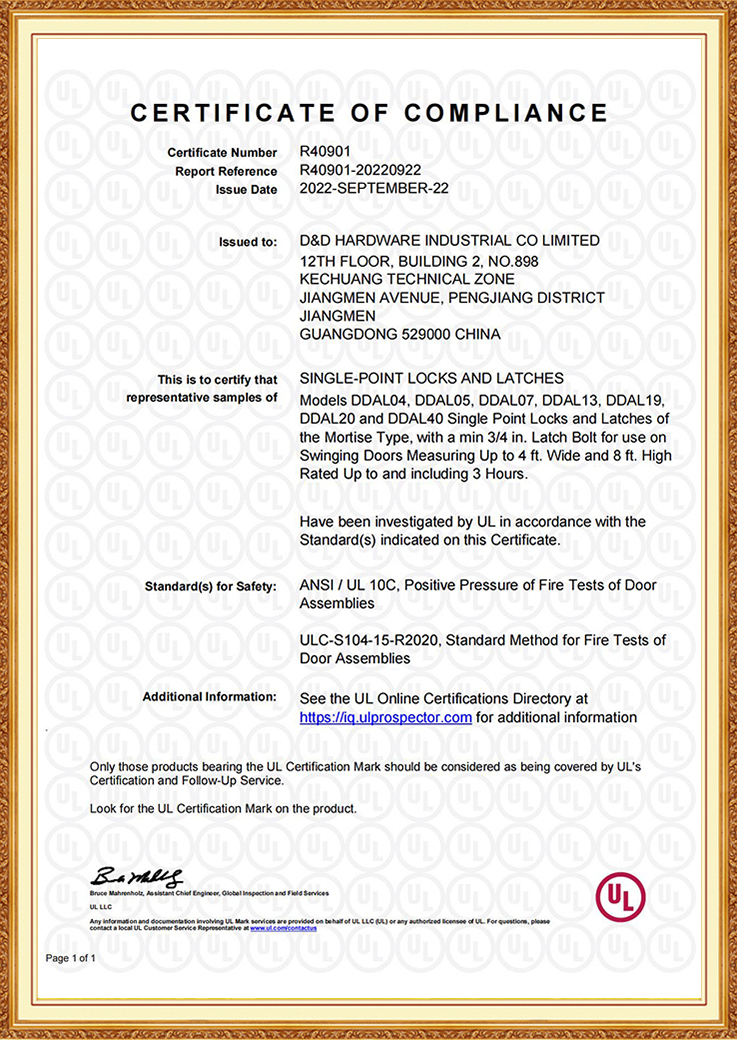
Fire rating: If the door is on a fire egress path, the mortise lock must carry a UL 10C fire rating. This certifies the lock will remain functional through a fire event without compromising the door's integrity.
Finish and corrosion resistance: Exterior applications demand finishes that resist moisture, UV exposure, and temperature swings. Satin stainless steel (US32D) and aluminum finishes are commonly specified for outdoor use.

1
The mortise lock is the standard choice across a wide range of commercial applications:
Office building main entries and stairwell doors, where security and fire compliance must coexist
Hotels, where high cycle counts and electronic access integration are routine
Hospitals and healthcare facilities, where infection control and hands-free operation add extra specification requirements
Retail and mixed-use buildings, where the exterior door lock must handle peak traffic without degradation
Schools and government buildings, where Grade 1 performance and keyway control are often mandated
In each of these settings, a commercial building door lock must do more than keep intruders out. It must operate reliably for thousands of users per day, integrate with electronic access control, comply with fire codes, and hold up through seasonal weather changes. Few lock types check all those boxes as consistently as the mortise lock.
Specification is only half the equation. The other half is sourcing from a manufacturer with verified quality systems and the certifications to back them up.
D&D Hardware Industrial Co., Ltd. has manufactured door hardware for over 18 years, supplying mortise locks, hinges, door closers, and panic exit devices to commercial projects worldwide. D&D Hardware's commercial mortise lock bodies carry CE, UL, ANSI/BHMA, and EN 12209 certifications, and the company operates under an ISO 9001-certified quality management system.
For specifiers and procurement teams sourcing directly from a factory, D&D Hardware offers OEM manufacturing, factory-direct pricing, and global shipping—removing intermediary markups without sacrificing product quality or compliance documentation.
A commercial exterior door is only as secure as the lock installed in it. For buildings where security, durability, and code compliance are non-negotiable, the commercial mortise lock body remains the strongest, most reliable option available.
Specify to the right ANSI/BHMA grade, confirm fire-rating requirements, and choose a certified supplier who can provide full product documentation. Get those three decisions right, and the lock will take care of everything else.
To explore a full range of certified commercial mortise lock bodies and exterior door lock solutions, visit D&D Hardware.
A mortise lock is embedded into a pocket cut into the door edge, distributing load across the door body and providing a larger, more robust mechanism. A cylindrical lock installs through a single bore hole and is less resistant to forced entry. For commercial exterior doors, mortise locks offer superior security and durability.
Commercial exterior doors should use a Grade 1 mortise lock, which meets the highest ANSI/BHMA performance standards, including a minimum of 250,000 operational cycles and resistance to door strike, torque, and abuse testing.
Yes, if the door is part of a fire-rated assembly or egress path, the mortise lock must carry a UL 10C fire rating. This ensures the lock performs as required during a fire event without compromising the door's fire resistance.
Yes. Many commercial mortise lock bodies are designed to accept electrified trim or electrified components, making them compatible with card readers, keypads, and building access management systems.
A Grade 1 commercial mortise lock is tested to a minimum of 250,000 cycles. In practice, well-manufactured mortise locks from certified suppliers can last 10–20 years or more in heavy commercial use when correctly installed and maintained.
Click here for additional details on door locks.
Now contact us.
Contact information for David Jian
Contact number: 0086-139 2903 7292
Email address: sales@danddhardware.com


