
Certified for Safety. Trusted by Leaders Worldwide.
Pls inquire to sales@danddhardware.com
\\: +86 139 2903 7292

 English
 Author: D&D Hardware Publish Time: 2025-12-24 Origin: D&D HARDWARE


Fire resistance is an absolutely critical requirement for concealed hinges that are utilized in fire - rated door assemblies. In the European context, EN 1634 - 1 stands as the authoritative standard employed to assess how door components perform when directly exposed to fire. This standard plays a pivotal role in ensuring the safety and integrity of buildings in the event of a fire, and understanding its implications for 3D concealed door hinges is of utmost importance.
EN 1634 - 1 is a comprehensive and rigorous European standard that evaluates the fire resistance of doorsets and their associated hardware. The testing process is designed to closely replicate the conditions of a real - building fire. During the test, the door assembly, which includes the hinges, is subjected to extremely harsh fire conditions. The temperature in the test chamber rises rapidly and exceeds 1,000°C, creating an intense and hostile environment.
The key requirement for the door assembly during this test is to maintain its integrity. This means that the door must remain in place, not allowing the passage of flames or excessive smoke. For a concealed hinge, achieving a 132 - minute fire rating is a significant accomplishment. It implies that the hinge remained fully functional and structurally stable for over two hours under these extreme heat conditions. This is a testament to the hinge's ability to withstand the intense thermal stress and continue to perform its essential role in supporting the door.

Although hinges may seem like relatively small and insignificant components compared to the overall door assembly, they play a decisive and crucial role during a fire. Firstly, as the materials of the door leaf and frame expand due to the high temperatures, the hinges are responsible for supporting the door leaf. They need to be strong enough to hold the door in place despite the physical changes caused by the heat.
Secondly, hinges prevent the door from collapsing or detaching from the frame. If a hinge were to fail, the door could come loose, creating a large opening for flames and smoke to pass through. This would compromise the entire fire - protection system of the building, putting lives and property at great risk.
Thirdly, hinges help maintain the proper alignment of the door. In a fire situation, maintaining door alignment is essential for limiting the spread of smoke and flames. A misaligned door may not close properly, allowing smoke and fire to seep through the gaps, which could lead to the rapid spread of the fire throughout the building. Therefore, the failure of a single hinge can cause the entire fire door system to fail, regardless of the fire rating of the door leaf itself.

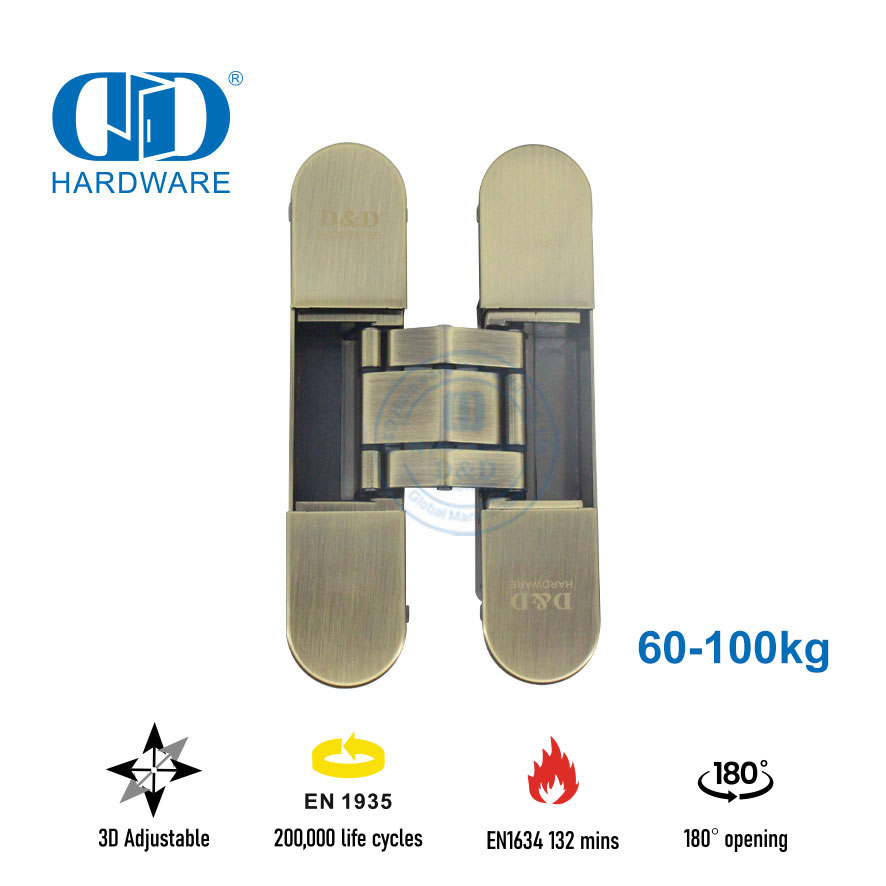
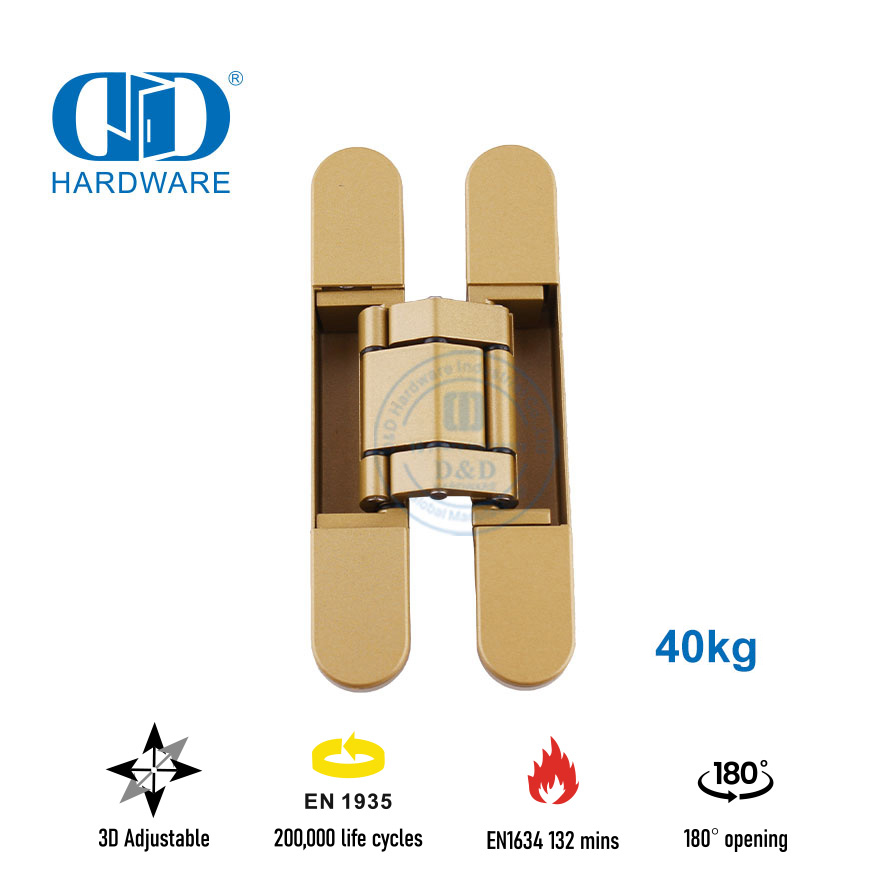
Concealed hinges face even stricter fire - performance challenges compared to their exposed counterparts. One of the main reasons is that they are embedded inside the door and frame. This means that they are surrounded by materials that can conduct heat, and they have limited space for heat dissipation. As a result, they experience concentrated thermal stress, which can be much more intense than what exposed hinges encounter.
Another challenge is that the internal mechanisms of concealed hinges must resist deformation under high temperatures. These internal components, such as springs, pins, and bearings, are crucial for the hinge's smooth operation. However, in a fire, these components can be subjected to extreme heat, which can cause them to warp, melt, or lose their elasticity. If the internal mechanisms deform, the hinge may not be able to function properly, leading to door failure.
Passing EN 1634 with a 132 - minute result is a clear indication that the hinge design, materials, and internal structure have been carefully engineered to survive prolonged fire exposure without compromising the performance of the door. It shows that the manufacturer has taken into account the unique challenges faced by concealed hinges in a fire and has developed a product that can meet these challenges effectively.

The 132 - minute fire resistance level offered by an EN 1634 - certified concealed hinge has significant application value in various building scenarios. High - rise buildings, for example, are particularly vulnerable to the rapid spread of fire due to their height and the large number of occupants. In such buildings, fire - rated doors with reliable hinges are essential for creating fire compartments that can contain the fire and smoke, providing occupants with more time to evacuate safely.
Fire compartments are areas within a building that are separated by fire - resistant walls and doors. These compartments are designed to limit the spread of fire and smoke, protecting other parts of the building and its occupants. An EN 1634 - certified concealed hinge ensures that the fire doors in these compartments can perform as intended, maintaining their integrity for the specified 132 minutes.
Escape routes and stairwells are also critical areas where fire - resistant doors with reliable hinges are necessary. In the event of a fire, these areas need to remain clear of smoke and flames to allow occupants to evacuate safely. A 132 - minute fire - rated concealed hinge provides the assurance that the doors in these escape routes will remain functional and prevent the spread of fire, facilitating a safe evacuation.
Commercial and public fire door systems, such as those in shopping malls, hospitals, and schools, also benefit greatly from EN 1634 - certified concealed hinges. These buildings often have a high volume of traffic and a large number of people at any given time. Fire - resistant doors with reliable hinges are essential for protecting lives and property in these environments.
An EN 1634 - certified concealed hinge provides documented assurance to architects, builders, and building owners that it can be safely integrated into certified fire door assemblies. This documentation is crucial for compliance with building regulations and for ensuring the overall safety of the building. It gives confidence that the fire door system will perform as expected in the event of a fire, providing a reliable barrier against the spread of flames and smoke.
D&D concealed door hinge - BS EN1935 200,000 cycles test, EN1634 fire rated 132mins, EN1670 corrosion resistance 48 hours
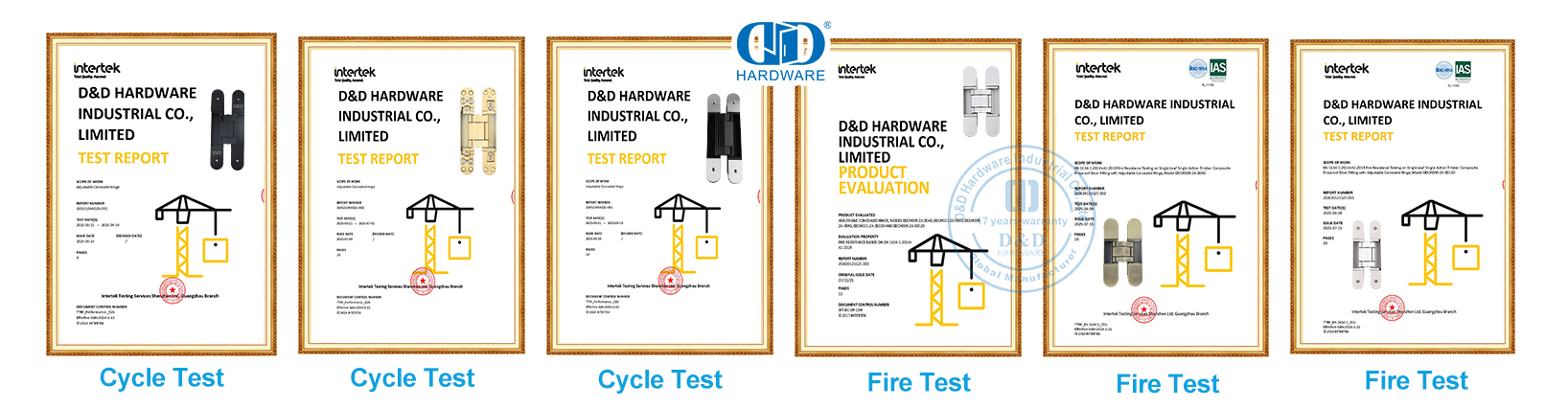
In conclusion, the 132 - minute fire rating under EN 1634 for 3D concealed door hinges is a significant achievement that demonstrates the hinge's ability to withstand extreme fire conditions. It addresses the critical role that hinges play in fire - rated door assemblies and the unique challenges faced by concealed hinges. With its wide application value in various building types, an EN 1634 - certified concealed hinge is an essential component for ensuring the safety and integrity of buildings in the face of fire.
Click here for additional details on concealed door hinges.
Now contact us.
Contact information for David Jian
Contact number: 0086-139 2903 7292
Email address: sales@danddhardware.com


