
Certified for Safety. Trusted by Leaders Worldwide.
Pls inquire to sales@danddhardware.com
\\: +86 139 2903 7292

 English
 Author: D&D Hardware Publish Time: 2025-12-23 Origin: D&D HARDWARE


Installing or replacing an exterior door is more than just picking a slab that looks good. The hardware that holds it in place—specifically the hinges—plays a critical role in security, functionality, and longevity. If you’ve ever struggled with a door that drags, squeaks, or refuses to close properly, the culprit is often undersized or incorrect hinges.
Exterior doors are typically heavier and thicker than interior doors, which means they require robust hardware to support their weight and withstand the elements. Choosing the right hinge size ensures your door operates smoothly for years to come. But with various dimensions, thicknesses, and materials available, finding the perfect match can feel overwhelming.
In this guide, we will break down exactly how to determine the correct hinge size for your exterior door, covering everything from height and width to material selection and load-bearing capacity. Whether you are a DIY enthusiast or a professional contractor, this information will help you ensure a secure and long-lasting installation.
Before diving into measurements, it is important to understand why exterior door hinges differ from interior ones. Exterior doors—usually made of solid wood, steel, or fiberglass—are significantly heavier than hollow-core interior doors. They also face environmental stressors like wind, rain, and temperature fluctuations.
Because of this, exterior door hinges are generally:
Larger: To distribute weight more effectively.
Thicker: To prevent bending or sagging over time.
More Durable: Often made of stainless steel, brass, or bronze to resist rust and corrosion.
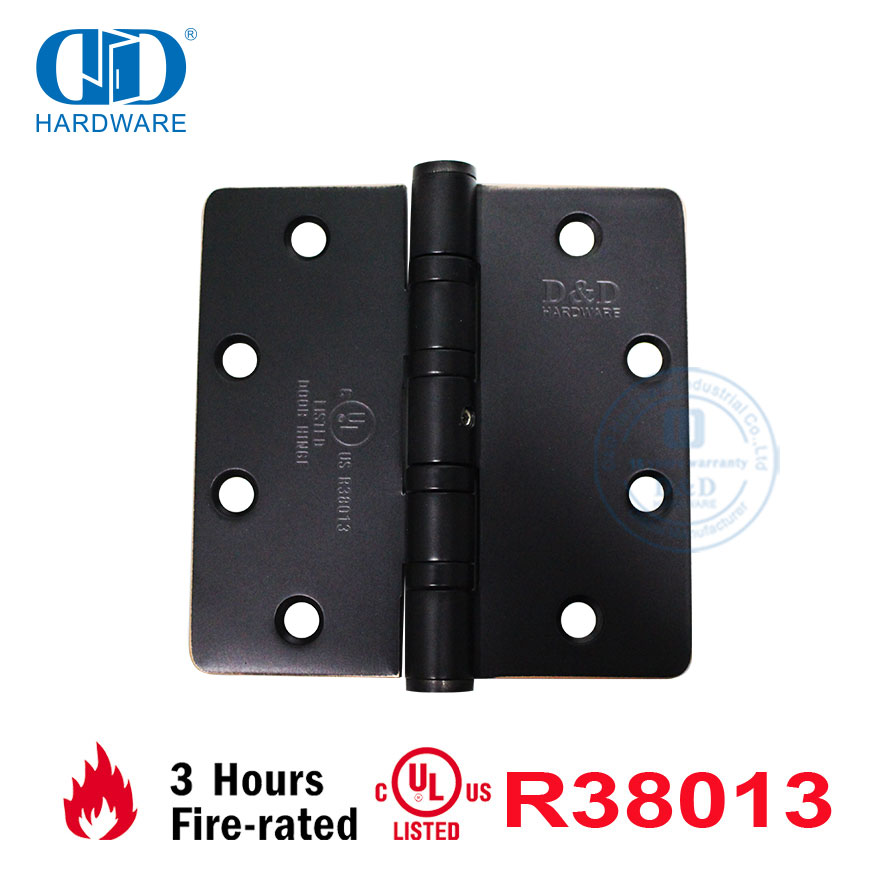
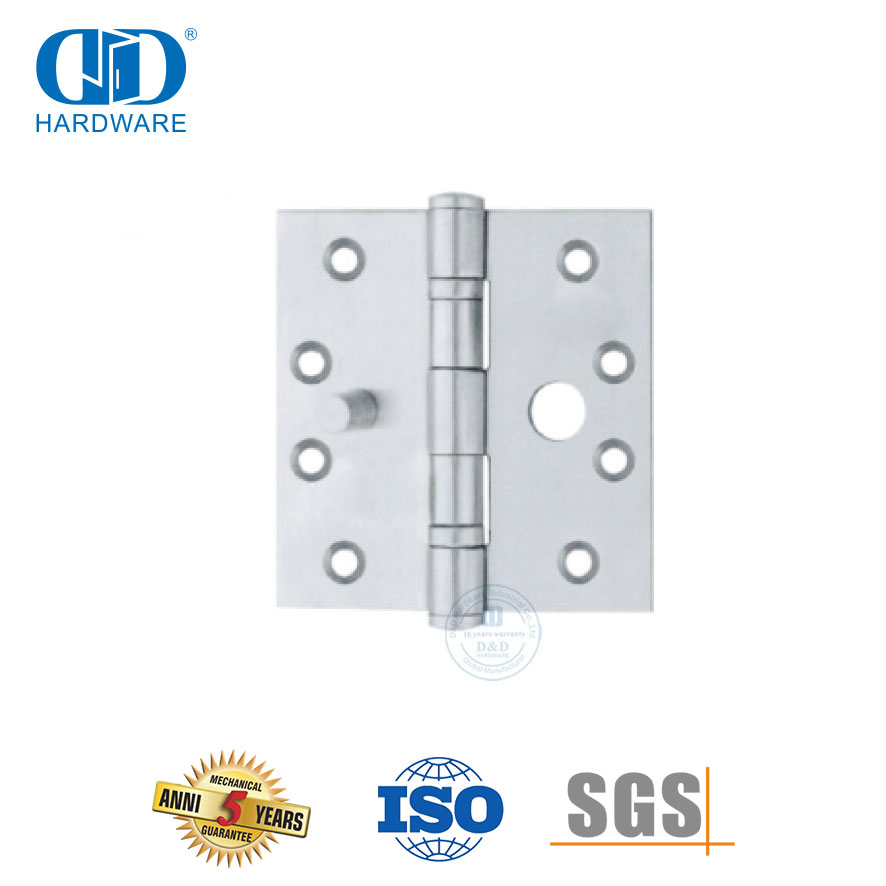
Secure: Frequently featuring non-removable pins (NRP) to prevent intruders from removing the door from the outside.
1
The height of the hinge is the most critical measurement. It is directly related to the thickness and width of the door. Standard residential doors usually require specific hinge sizes, but commercial or custom entryways may need larger hardware.
The following table outlines the recommended hinge height based on door thickness and width:
Door Thickness | Door Width | Recommended Hinge Height |
|---|---|---|
1-3/8" | Up to 32" | 3-1/2" |
1-3/8" | 32" to 36" | 4" |
1-3/4" | Up to 36" | 4-1/2" |
1-3/4" | 36" to 48" | 5" |
2" to 2-1/2" | Up to 42" | 5" Heavy Duty or 6" |
For most standard residential exterior doors, which are typically 1-3/4 inches thick, a 4-1/2 inch hinge is the industry standard. Using a smaller 3-1/2 inch hinge (common for interior doors) on a heavy exterior entry door will likely lead to sagging and alignment issues.
While height supports the weight, hinge width ensures the door can swing open past the trim or casing without binding. If the hinge is too narrow, the door might hit the frame before opening fully. If it is too wide, it may not look aesthetically pleasing and could exert unnecessary leverage on the screws.
To calculate the necessary hinge width, you need to consider three factors:
Door Thickness: The actual thickness of the door slab.
Backset: The distance from the face of the door to the edge of the hinge leaf.
Clearance Required: The space needed to clear the trim or molding.
1
The General Rule:
For a standard 1-3/4" thick door, a 4" or 4-1/2" width is standard. If you have thick casing or trim around the door frame, you may need a "wide throw" hinge to allow the door to open 180 degrees.
Here is a quick reference for hinge width based on door thickness:
Door Thickness | Typical Hinge Width |
|---|---|
1-3/8" | 3-1/2" to 4" |
1-3/4" | 4" to 4-1/2" |
2" | 4-1/2" to 5" |
2-1/4" | 5" to 6" |

The number of hinges required depends on the height of the door. While weight is a factor, the height dictates how many points of contact are needed to keep the door straight and prevent warping.
Doors up to 60 inches: 2 hinges
Doors 60 to 90 inches: 3 hinges (Standard for most entry doors)
Doors 90 to 120 inches: 4 hinges
Most standard exterior doors are 80 inches tall (6 feet, 8 inches) and require three hinges. If your door is taller (8 feet or more), you should install four hinges to maintain stability.
Since exterior door hinges are exposed to the elements, the material you choose is just as important as the size. Ordinary steel hinges can rust quickly if exposed to moisture, leading to squeaking and eventual failure.
Stainless steel is the gold standard for exterior door hinges. It offers exceptional rust resistance and durability. For coastal areas or regions with high humidity, Grade 316 stainless steel is recommended for superior corrosion resistance. Manufacturers like D&D Hardware Industrial Co., Ltd. specialize in ANSI/UL-certified stainless steel hinges designed for fire-rated and heavy-duty applications.
Solid brass is highly resistant to corrosion and is often chosen for its aesthetic appeal. However, it is a softer metal than steel, so it requires regular maintenance (lubrication) to prevent wear on heavy doors.
Bronze hinges offer a classic look and excellent durability. They are naturally resistant to corrosion and develop a unique patina over time.
Physical Vapor Deposition (PVD) is a finishing process that creates a highly durable surface on the hinge. PVD finishes protect against tarnishing and scratching, making them a great low-maintenance option for exterior hardware.
Exterior doors generally swing inward, meaning the hinge barrel is inside the house. However, some exterior doors swing outward (common in hurricane zones or commercial buildings). If the hinge barrel is exposed on the outside, a burglar could simply pop the hinge pin out and remove the door.
To prevent this, you must use Non-Removable Pin (NRP) hinges or security stud hinges. These hinges have a set screw inserted into the barrel that is only accessible when the door is open, making it impossible to remove the pin while the door is closed and locked.
D&D Door Hinge Certification:
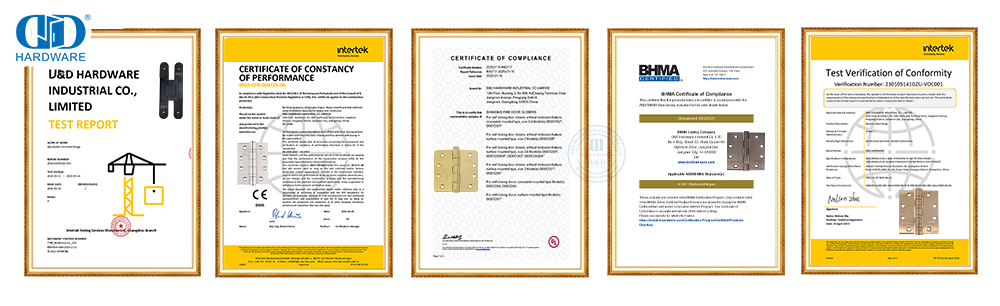
️✔ CE Door Hinge - BS EN1935 200,000 cycles test, EN1634 Fire Rated 192mins/260mins, EN1670 Corrosion Resistance 240 hours.
️✔ UL Door Hinge - UL/cUL Listed, UL 10C Fire Rated 3 Hours, File No.R38013
✔ BHMA Door Hinge - ANSI/BHMA 156.1 and ANSI/BHMA 156.18
✔ ANSI Door Hinge - ANSI Grade 1 2,500,000 cycles test, ANSI Grade 2 1,500,000 cycles test
✔ CE Concealed Hinge-BS EN1935 200,000 cycles test, EN1634 Fire Rated 132mins, EN1670 Corrosion Resistance 48 hours.
Generally, no. Most exterior doors are 1-3/4 inches thick and weigh significantly more than interior doors. A 3.5-inch hinge is typically designed for 1-3/8 inch interior doors. Using them on an exterior door can cause the door to sag, drag on the floor, or fail to latch properly.
To measure your current hinges, keep the door open and measure the height of the hinge plate along the edge of the door. Then, measure the width across both leaves when the hinge is fully open flat. Finally, check the radius of the corners (square, 1/4" radius, or 5/8" radius) to ensuring the new hinge fits the existing mortise.
Ball-bearing hinges have lubricated bearings between the hinge knuckles. They reduce friction, allowing heavy doors to open smoothly and quietly. For any solid-core exterior door, ball-bearing hinges are highly recommended as they last longer and prevent the "black dust" (ground metal) often seen with standard plain-bearing hinges.
Selecting the correct size for your exterior door hinges is essential for the safety and functionality of your entryway. By matching the hinge height and width to your door's thickness and weight, you ensure smooth operation and prevent costly damage to your door frame.
Remember the key takeaways: for a standard 1-3/4" exterior door, aim for a 4-1/2" hinge height, consider ball-bearing models for durability, and always choose rust-resistant materials like stainless steel.
If you are looking for high-quality, certified door hardware, companies like D&D Hardware provide a wide range of solutions, including ANSI and UL-certified hinges suitable for residential and commercial projects. Proper hardware is an investment in your home's security and curb appeal.
Click here for additional details on door hinges.
Now contact us.
Contact information for David Jian
Contact number: 0086-139 2903 7292
Email address: sales@danddhardware.com


