
Certified for Safety. Trusted by Leaders Worldwide.
Pls inquire to sales@danddhardware.com
\\: +86 139 2903 7292

 English
 Author: D&D Hardware Publish Time: 2026-03-02 Origin: D&D HARDWARE


Commercial building panic bars serve a critical purpose: allowing quick, easy exit during emergencies. But beyond basic safety, these devices must also meet Americans with Disabilities Act (ADA) requirements to ensure accessibility for everyone. Understanding these requirements is essential for building owners, facility managers, and contractors responsible for code compliance.
Panic bars, also known as panic exit devices or push bars, are horizontal bars installed on doors that allow people to exit by pushing against the bar. They're commonly found on emergency exits in supermarkets, office buildings, schools, hospitals, and other commercial facilities with high foot traffic.
These devices come in two main types: standard panic bars for interior doors and fire exit hardware for exterior doors. Both serve the same primary function—providing rapid egress during emergencies—but fire exit hardware undergoes additional testing to ensure it maintains the door's fire rating.
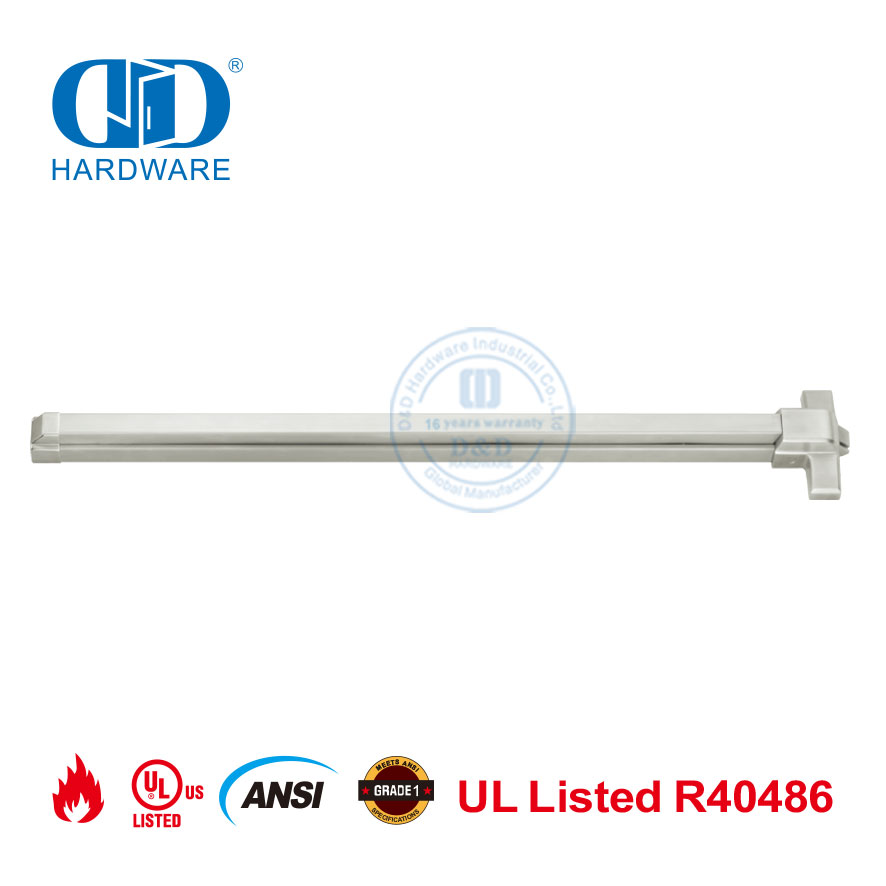
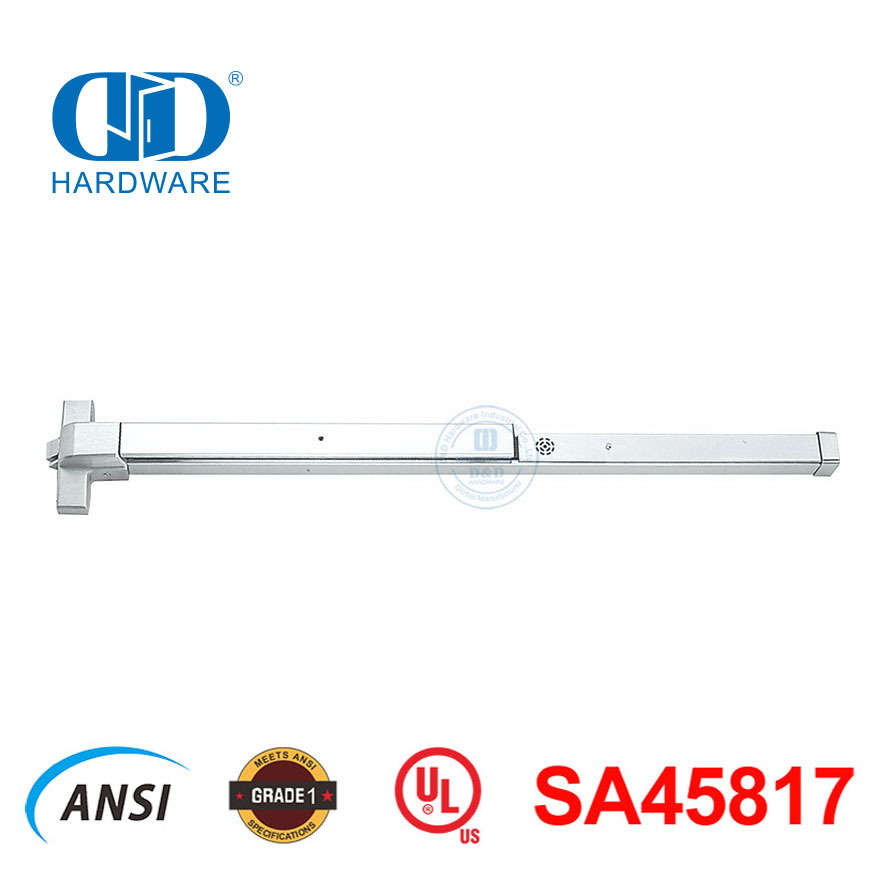
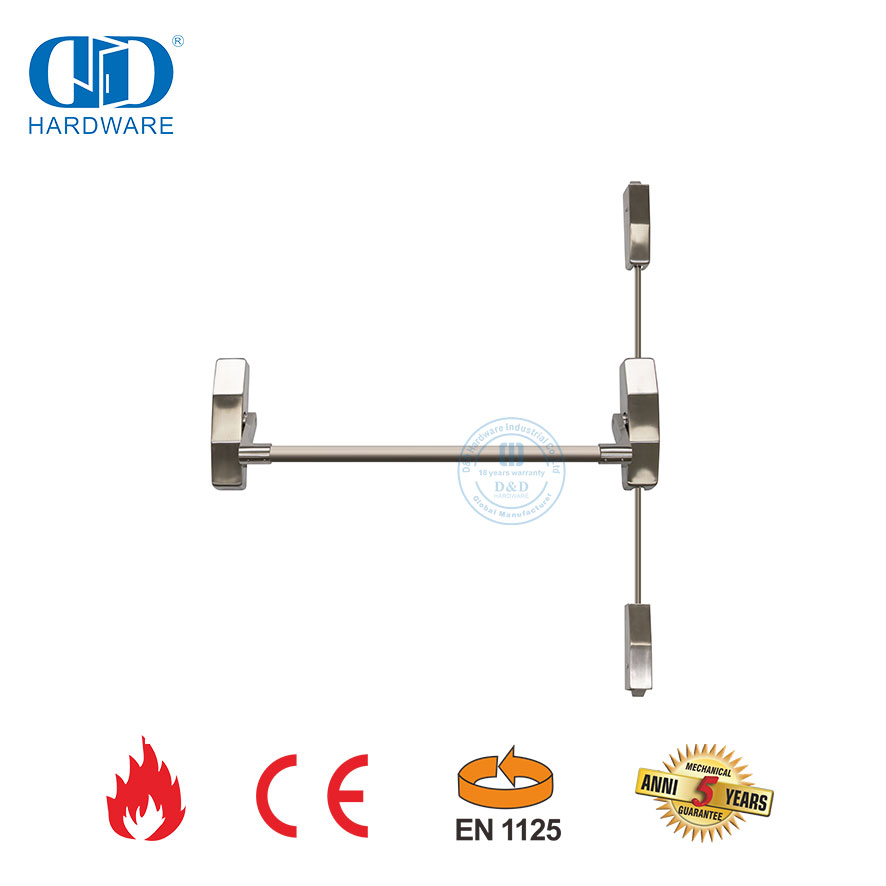
The ADA establishes specific standards to ensure panic bars can be operated by individuals with various disabilities. Here are the key requirements:
Panic bars must require no more than 5 pounds of force to operate. This ensures that individuals with limited strength or mobility can still exit quickly during an emergency. The device should release the latch with minimal effort, allowing the door to open smoothly.
The panic bar must be mounted between 34 and 48 inches above the floor. This height range accommodates wheelchair users and individuals of varying statures, ensuring everyone can reach and operate the device comfortably.
ADA-compliant panic bars must be operable with one hand and shouldn't require tight grasping, pinching, or wrist twisting. The horizontal bar design naturally meets this requirement, as users can simply push against it with their body weight or an open palm.
When the door is fully open, it must provide a minimum clear opening width of 32 inches. This dimension ensures wheelchair users and individuals using mobility aids can pass through safely.
For entrance doors, panic bars must balance security with accessibility. While these doors need to prevent unauthorized entry from the outside, they must allow unrestricted exit from the inside. Many commercial building panic bars include features like:
Lever trim on the exterior for authorized entry
Alarm functions to deter unauthorized use
Integration with access control systems
Supermarkets present unique challenges due to high traffic volumes and diverse customer needs. Panic bars for supermarkets should be:
Heavy-duty enough to withstand frequent use (ANSI Class 1 devices are tested to 500,000 cycles)
Easy to maintain and clean
Compatible with automatic door systems where applicable

Quality panic bars should meet several standards beyond ADA requirements:
UL Listed: Fire exit hardware should carry UL 10C certification, indicating it has been fire-rated for up to 3 hours. This certification ensures the device won't compromise the door's fire resistance.
ANSI/BHMA Standards: Grade 1 panic bars represent the highest quality level, suitable for high-traffic commercial applications. These devices undergo rigorous cycle testing to verify durability.
Local Building Codes: Always verify compliance with local fire and building codes, as requirements can vary by jurisdiction.
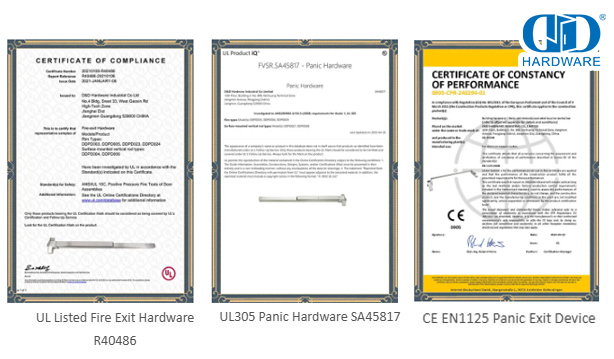
D&D Panic Exit Hardware Certification:
✔️ Panic Exit Device-BS EN1125 200,000 cycles test, EN1634 Fire Rated 132/240mins, EN1670 Corrosion Resistance 240 hours.
✔️ Fire Exit Hardware- UL 10C Fire Rated 3 Hours, File No.R40486
✔️ Panic Hardware-UL305, File No.SA45817
When selecting panic bars for your facility, consider:
Door Type: Match the device to your door material (metal, wood, or glass) and whether it's a fire-rated door.
Traffic Level: High-traffic areas require Grade 1 devices that can withstand heavy use.
Security Needs: Determine whether you need alarm functions or specific access control features.
Aesthetic Requirements: Modern panic bars come in various finishes to complement your building's design.
Trim Options: Consider whether you need exterior lever trim for authorized entry.
1
Installing ADA-compliant panic bars is just the first step. Regular maintenance ensures continued compliance and reliable operation:
Test panic bars monthly to verify they operate smoothly with minimal force
Inspect mounting hardware and tighten any loose components
Clean and lubricate moving parts according to manufacturer specifications
Replace worn or damaged devices promptly
1
For over 17 years, D&D Hardware has specialized in manufacturing commercial door hardware that meets international standards, including ADA requirements. Our panic bars feature:
UL 10C fire rating (3 hours)
ANSI Class 1 certification (500,000 cycle testing)
Multiple finish options
Compatibility with various door types
Ready to ensure your facility meets ADA requirements? Browse our selection of commercial building panic bars or contact our team for personalized guidance on selecting the right solution for your needs.
Click here for additional details on panic exit device.
Now contact us.
Contact information for David Jian
Contact number: 0086-139 2903 7292
Email address: sales@danddhardware.com


