
Certified for Safety. Trusted by Leaders Worldwide.
Pls inquire to sales@danddhardware.com
\\: +86 139 2903 7292

 English
 Author: D&D Hardware Publish Time: 2026-02-27 Origin: D&D HARDWARE


A door closer that slams shut or doesn't close properly can be frustrating. Maybe your office door bangs loudly every time someone leaves, or your front door won't latch on its own. The good news? Most door closer issues can be fixed with a simple adjustment.
Door closers are hydraulic devices designed to control how a door opens and closes. They use a spring mechanism combined with hydraulic fluid to ensure doors close smoothly and securely. When properly adjusted, they provide consistent closing speeds while preventing damage to the door, frame, and hardware.
This guide will walk you through adjusting both standard hydraulic door closers and specialized models, helping you achieve the perfect closing action for your needs.
Before you begin adjusting, identify which type of door closer you have. The most common types include:
Surface-mounted door closers attach to the top of the door and frame. These are the most common in commercial buildings and are visible when the door is closed.


Concealed door closers are hidden within the door or frame, offering a cleaner appearance. They're popular in modern architectural designs and residential settings.
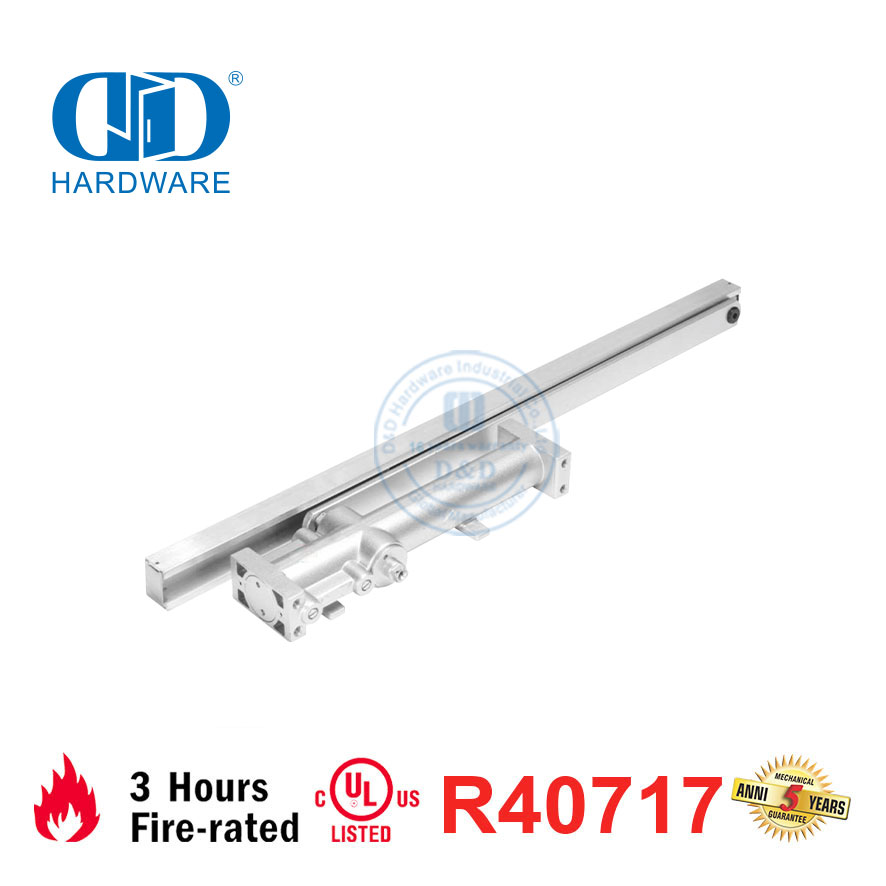

Floor-spring closers are installed in the floor beneath the door. These are typically used for glass doors and heavy commercial entrances.

Most adjustable door closers feature adjustment valves on the body of the closer. These small screws control different aspects of the door's movement.

Gathering the right tools before you start will make the adjustment process smoother:
Flathead or Phillips screwdriver (depending on your closer model)
Ladder or step stool (for reaching overhead closers)
Owner's manual for your specific door closer model
Having your closer's manual on hand is helpful because adjustment procedures can vary between manufacturers. If you don't have the original manual, most manufacturers provide downloadable versions on their websites.
Hydraulic door closers typically have two or three adjustment valves that control closing speed and latching action. Here's how to adjust them:
Look for small screws on the body of the door closer. These are usually labeled or indicated in the product manual. Most closers have:
A closing speed valve (controls the main closing action)
A latching speed valve (controls the final few inches of closing)
A backcheck valve (optional, controls resistance when opening)
The closing speed valve controls how fast the door moves from its fully open position to about 3 inches from closing. Turn the valve clockwise to slow down the closing speed, or counterclockwise to speed it up.
Make small adjustments—typically no more than a quarter turn at a time. Test the door after each adjustment to see how it performs.
The latching speed valve controls the final 3 inches of door travel. This is crucial for ensuring the door latches properly without slamming. A faster latching speed helps the door overcome resistance from weatherstripping or latches.
Turn clockwise to slow the latch action, or counterclockwise to speed it up. For exterior doors, a slightly faster latch speed often works best.
Some door closers include a backcheck function that prevents the door from opening too quickly or forcefully. This protects walls, adjacent doors, and the closer itself from damage.
Adjust the backcheck valve to add resistance when opening the door. This is particularly useful in high-traffic areas or windy locations.

Healthcare facilities have unique requirements for door hardware. Door closers for general hospitals must balance accessibility with infection control and fire safety.
Hospital door closers often need to:
Close slowly enough for patients using mobility aids
Provide adequate force to overcome air pressure differences between rooms
Meet fire safety codes for automatic closing
Function reliably with frequent daily use
When adjusting door closers in healthcare settings, consult with facility management to ensure compliance with local building codes and ADA requirements. D&D Hardware offers door closers specifically designed for healthcare applications, tested to international standards including BS EN1154 and UL certification.

Door closes too quickly: Turn the closing speed valve clockwise to add hydraulic resistance. Make small adjustments and test repeatedly.
Door doesn't latch: Increase the latching speed by turning the latch valve counterclockwise. Ensure nothing is blocking the door's path.
Door slams at the end: Slow down the latching speed by turning the valve clockwise. The door should close firmly but not violently.
Door won't stay open: Check if your closer has a hold-open feature. Some models include a friction adjustment or positive hold-open stop.
Hydraulic fluid leaking: A leaking door closer cannot be repaired and must be replaced. Oil spots around the closer body indicate it's time for a new unit.
Sometimes adjustment isn't enough. Consider replacing your door closer if:
Hydraulic fluid is leaking from the unit
Adjustment valves are stripped or won't turn
The door closer is more than 10-15 years old
Previous adjustments have had no effect
The closer is damaged or corroded
Modern door closers like those from D&D Hardware meet current fire safety standards and offer improved performance over older models. They're available in various finishes including matt black, antique brass, silver, and gold to match your door hardware.
Regular maintenance extends the life of your door closer and ensures consistent performance:
Check adjustment settings every six months
Clean the closer body to prevent dirt buildup
Inspect mounting screws and tighten if loose
Lubricate pivot points annually (unless specified otherwise by the manufacturer)
Watch for signs of wear or damage
For commercial applications, consider scheduling professional inspections annually to maintain compliance with fire codes and accessibility standards.
Adjusting a door closer is a straightforward process once you understand the basic principles. Start with small adjustments, test the results, and make incremental changes until you achieve the desired closing action.
For specialized applications like hospitals, fire-rated doors, or high-security areas, working with quality hardware makes a difference. D&D Hardware manufactures door closers that meet international standards including BS EN1154 and UL certification, suitable for education, healthcare, hotel, government, and commercial applications.
D&D Fire Rated Door Closer :
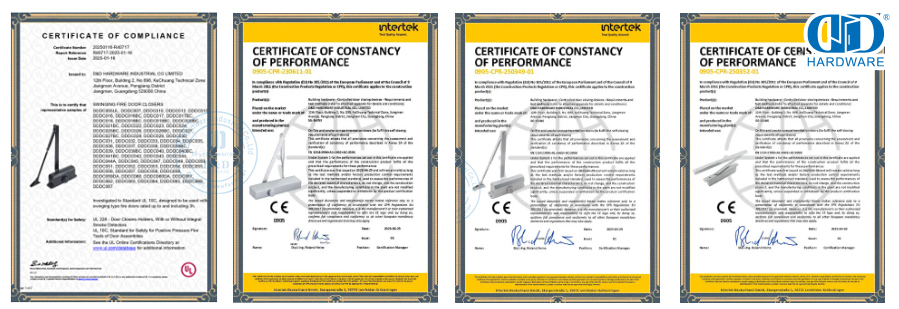
CE Door Closer - BS EN1154 500,000 cycles test, EN1634 Fire Rated 120/180mins, EN1670 Corrosion Resistance 96 hours.
UL Door Closer - UL Listed, UL 10C Fire Rated 3 Hours, UL File No.R40717
Need help selecting the right door closer for your project? Contact D&D Hardware at sales@danddhardware.com or call +86 139 2903 7292 for expert guidance on door hardware solutions.
Click here for additional details on door closers.
Now contact us.
Contact information for David Jian
Contact number: 0086-139 2903 7292
Email address: sales@danddhardware.com


