
Certified for Safety. Trusted by Leaders Worldwide.
Pls inquire to sales@danddhardware.com
\\: +86 139 2903 7292

 English
 Author: D&D Hardware Publish Time: 2026-05-14 Origin: D&D HARDWARE


How We Apply Fire Rated Concealed Hinges in Modern Commercial Building Projects
In modern commercial architecture, fire doors are no longer viewed as purely functional products. Today’s projects demand a combination of:
▪Fire safety
▪Clean architectural appearance
▪Long-term durability
▪Smooth door operation
This is exactly why concealed hinges are increasingly specified in commercial fire door applications.
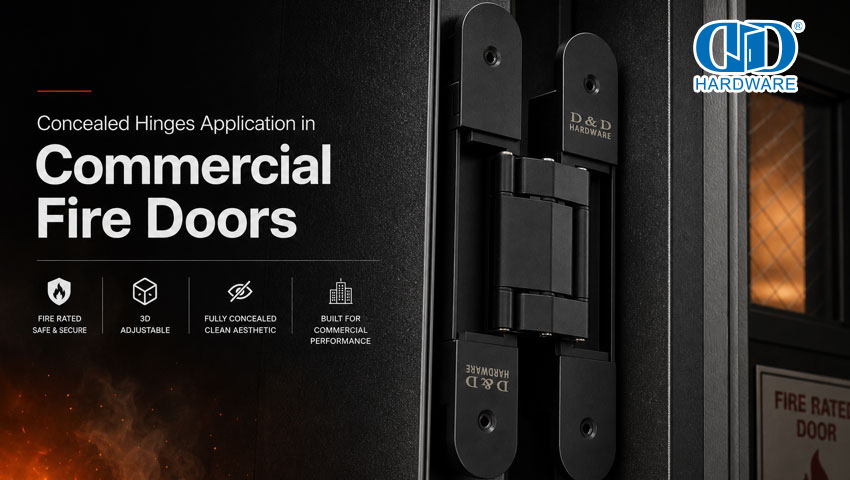
Unlike traditional visible butt hinges, concealed hinges are installed inside the door and frame, creating a cleaner and more premium appearance while maintaining the required structural performance.
From our experience in commercial projects, concealed hinges are now widely used in:
▪Hotels
▪Office buildings
▪Healthcare facilities
▪Educational buildings
▪Luxury apartments
▪Commercial corridors
▪Fire-rated wooden doors

In these environments, designers and contractors are looking for hardware solutions that combine minimalist aesthetics with certified fire performance.
The biggest difference is visibility.
Traditional butt hinges remain exposed after installation, while concealed door hinges are hidden completely when the door is closed.
However, concealed hinges are not selected for aesthetics alone.
They also provide:
▪More modern architectural integration
▪Better tamper resistance
▪Smooth door movement
▪Adjustable positioning capability
▪Cleaner door lines for premium interiors
For fire-rated applications, concealed hinges must also maintain:
▪Structural stability under high temperatures
▪Reliable door alignment
▪Consistent closing performance
This makes certified concealed hinges significantly more complex than standard decorative hinges.

In commercial fire door projects, concealed hinges are part of the fire door assembly. Their performance directly affects the integrity of the entire system.
For this reason, certification is critical.
Our concealed hinge solutions are certified to:
▪BS EN1935
▪200,000 cycles durability testing
▪EN1634 fire rated up to 132 minutes
▪EN1670 corrosion resistance 48 hours
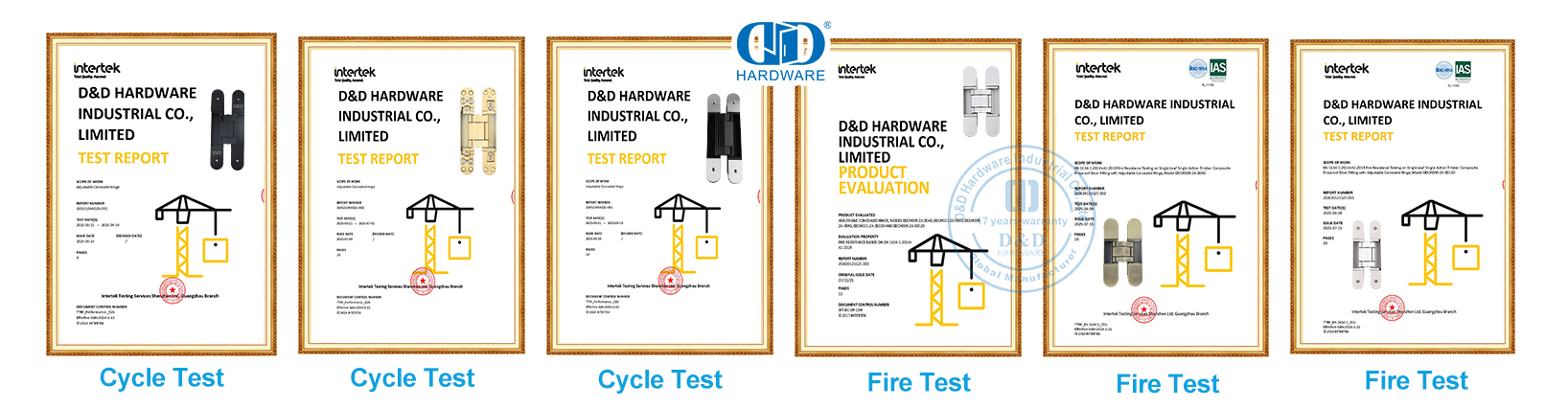
These certifications ensure that the hinges can withstand:
▪High-frequency use
▪Fire exposure conditions
▪Long-term commercial operation
Without proper certification, concealed hinges may:
▪Fail inspection
▪Lose alignment over time
▪Affect fire door closing performance
▪Compromise overall fire safety compliance
Different commercial doors require different load capacities.
We currently provide two concealed hinge series for commercial fire door projects:
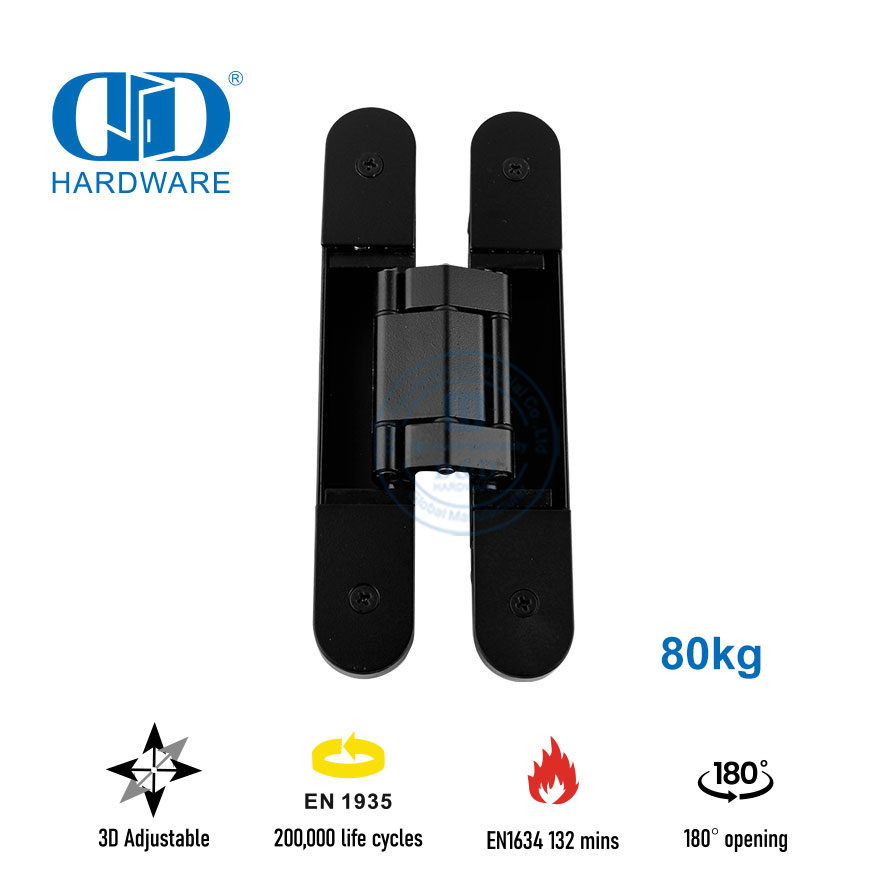
DDCH008 Series
Available load capacities:
▪ 40KG
▪ 80KG
▪120KG
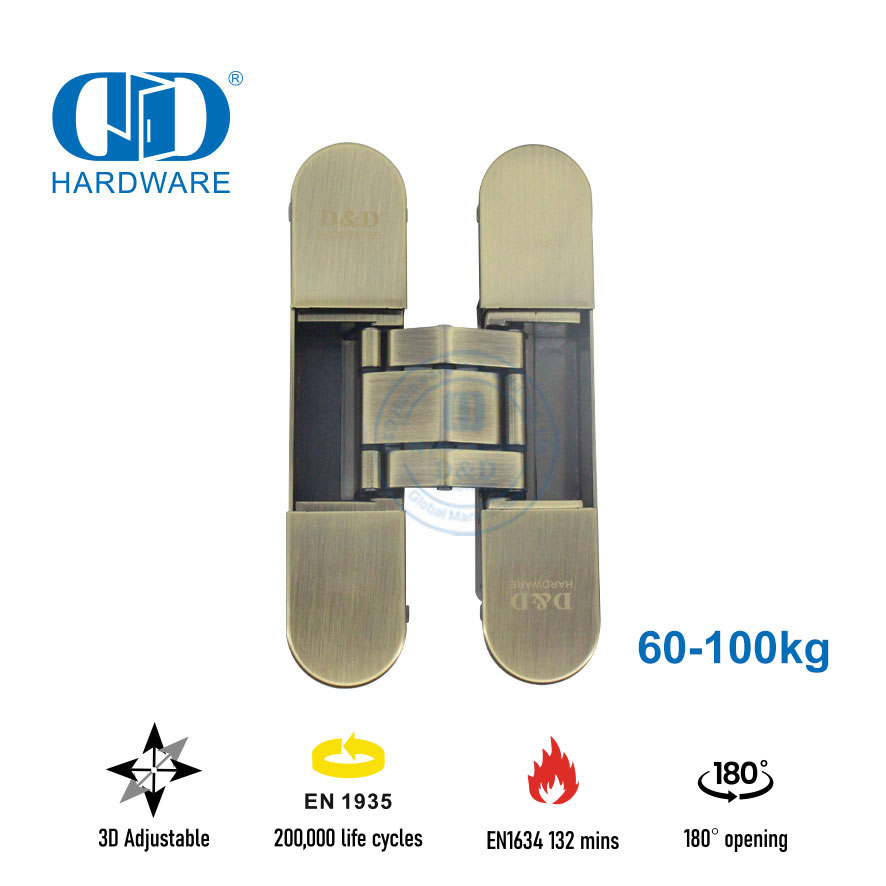
DDCH011 Series
Available load capacities:
▪ 60KG
▪100KG
This allows concealed hinges to be configured according to:
▪Door weight
▪Door size
▪Application environment
▪Traffic frequency
Selecting the correct load capacity is essential for maintaining:
▪Smooth operation
▪Door alignment
▪Long-term durability
Commercial fire doors often need to satisfy both:
▪Fire safety requirements
▪Architectural design expectations
Concealed hinges help solve this challenge by creating:
▪Minimalist visual appearance
▪Hidden hardware design
▪Smooth opening movement
This is especially important in projects where visible hardware may interrupt the interior design language.
Hotels are one of the most common applications for concealed hinges.
Guest room corridors typically require:
▪Fire-rated wooden doors
▪Quiet operation
▪Premium aesthetics
▪Consistent door alignment
Visible hinges can negatively affect the visual quality of luxury interiors.
Concealed hinges provide:
▪Cleaner appearance
▪Smooth opening and closing
▪Better integration with modern hotel design
At the same time, fire-rated certification ensures compliance with hospitality fire safety requirements.
Modern office projects increasingly favor:
▪Flush door systems
▪Minimalist interiors
▪Hidden hardware design
Concealed hinges are commonly used in:
▪Executive offices
▪Meeting rooms
▪Corridor fire doors
▪Entrance transition areas
In high-end office environments, concealed hinges improve:
▪Overall architectural consistency
▪Door appearance
▪Perceived product quality
Additionally, adjustable concealed hinges simplify door alignment during installation.
Healthcare buildings require hardware solutions that combine:
▪Reliability
▪Safety
▪Cleanability
▪Quiet operation
Concealed hinges help reduce exposed hardware surfaces and create a cleaner door appearance, which is increasingly preferred in modern healthcare interiors.
Typical applications include:
▪Patient room doors
▪Corridor doors
▪Administrative areas
▪Fire-rated internal partitions
Smooth door movement and stable alignment are especially important in hospitals where doors are used continuously throughout the day.

One of the most common mistakes in commercial projects is underestimating door weight.
Commercial fire doors are often:
▪Larger
▪Heavier
▪Higher traffic
Incorrect hinge selection may cause:
▪Door sagging
▪Misalignment
▪Poor latching
▪Increased closer pressure
▪Reduced hardware lifespan
This is why load capacity must always be matched to:
▪Door dimensions
▪Door material
▪Usage frequency
For example:
▪DDCH008 120KG is suitable for heavier commercial fire doors
▪DDCH011 100KG provides a balance between concealed appearance and heavy-duty support
Door alignment is one of the biggest challenges during installation.
Concealed hinges with adjustment capability help installers:
▪Correct alignment issues
▪Reduce installation time
▪Improve door operation consistency
This becomes especially important in:
▪Large-scale hotel projects
▪Commercial office buildings
▪Fire-rated timber door systems
Adjustability also helps compensate for:
▪Building movement
▪Long-term door settlement
▪Installation tolerances
Over the years, we have seen several recurring issues in commercial fire door projects.
1. Selecting Decorative Hinges Instead of Fire-Rated Hinges
Non-certified products cannot meet fire door requirements.
2. Incorrect Load Capacity Selection
Underspecified hinges often lead to door sagging.
3. Poor Door Preparation Accuracy
Concealed hinges require precise machining and installation.
4. Ignoring Door Closer Compatibility
Improper closer force can affect hinge lifespan.
5. Using Concealed Hinges in Unsuitable Door Structures
Door construction must support concealed hinge installation.
From our project experience, commercial buildings are shifting toward:
▪Minimalist design language
▪Hidden hardware systems
▪High-end architectural finishes
Concealed hinges support these trends while maintaining:
▪Fire compliance
▪Durability
▪Functional reliability
Compared with traditional visible hinges, concealed hinges offer a more modern and integrated solution for commercial interiors.
1. Can concealed hinges be used on fire-rated doors?
Yes. Concealed hinges can be used on fire-rated doors if they are properly certified under standards such as EN1634.
2. What certifications are important for concealed hinges?
Important certifications include:
BS EN1935
EN1634 fire testing
EN1670 corrosion resistance
These certifications verify durability and fire performance.
3. Why are concealed hinges popular in hotels and offices?
They provide a cleaner and more modern appearance by hiding the hinge completely when the door is closed.
4. How do I choose the correct concealed hinge load capacity?
Load capacity should be selected based on:
▪Door weight
▪Door size
▪Usage frequency
▪Door material
Incorrect selection may cause long-term alignment problems.
5. Are concealed hinges suitable for high-traffic commercial applications?
Yes, provided they are tested for commercial durability, such as 200,000 cycle testing under EN1935.
6. What is the advantage of adjustable concealed hinges?
Adjustable concealed hinges simplify installation and help maintain precise door alignment over time.
Click here for additional details on concealed door hinges.
Now contact us.
Contact information for David Jian
Contact number: 0086-139 2903 7292
Email address: sales@danddhardware.com


