
Certified for Safety. Trusted by Leaders Worldwide.
Pls inquire to sales@danddhardware.com
\\: +86 139 2903 7292

 English
 Author: D&D Hardware Publish Time: 2025-12-19 Origin: D&D HARDWARE


Is there anything more annoying than an exterior door that refuses to close properly? Perhaps it scrapes against the frame with a jarring noise, or maybe there is a visible gap letting in a cold draft. Over time, the heavy weight of an exterior door can cause it to sag, or your home’s foundation might settle slightly, throwing the frame out of alignment.
While your first instinct might be to call a carpenter or replace the door entirely, the solution is often much simpler. Adjusting your exterior door hinges can typically resolve alignment issues, stop squeaks, and ensure a tight weather seal. This guide answers the most common questions about door adjustment, helping you get your entry point back in working order.
Before you start turning screws, you need to confirm that the hinges are actually the culprit. While humidity can cause wood to swell, misalignment is usually a hardware issue. If you notice the following symptoms, your hinges likely need attention:
The Drag: The door rubs against the floor or the top of the jamb.
The Gap: You can see daylight through the top or side of the door when it is closed.
The Ghost: The door swings open or closed on its own.
The Stick: You have to pull up on the handle or push hard to get the latch to click.
1
Use the table below to diagnose the specific alignment issue based on where the door is sticking.
Symptom | Likely Diagnosis | Required Adjustment |
|---|---|---|
Door rubs the top of the jamb | The top hinge is too tight, or the bottom hinge is loose/sagging. | Tighten bottom hinge; loosen top hinge. |
Door rubs the floor | The top hinge is loose or bent, causing the door to lean. | Tighten top hinge; replace screws with longer ones. |
Door rubs the side (latch side) | The hinges are set too deep (mortised too deep). | Shim the hinges to push the door away from the hinge side. |
Door creates a gap at the top | The bottom hinge is pulling the door too tight. | Loosen the bottom hinge or shim the top hinge. |

You don't need a workshop full of expensive equipment to adjust exterior door hinges. In fact, you likely have everything you need in a standard junk drawer.
Screwdriver: A Phillips head is standard, but some older hinges use flatheads.
Hex Key (Allen Wrench): Essential for modern adjustable hinges.
3-Inch Wood Screws: These are crucial for fixing sagging doors by anchoring the hinge into the wall stud, not just the door frame.
Level: To check the vertical alignment (plumb) of the door.
Cardboard or Wood Shims: Used behind the hinge plate to push the door outward.
1

Standard butt hinges—the most common type found on older homes—don't have built-in adjustment screws. However, you can still manipulate them to fix alignment issues.
Tightening the Screws
The most common issue is simply loose screws. Open the door and tighten every screw on both the door side and the frame side. If a screw spins without tightening, the wood hole is stripped. To fix this, remove the screw, insert a wooden matchstick or toothpick with a drop of wood glue into the hole, let it dry, and re-drive the screw.
The "Long Screw" Trick
If tightening doesn't stop the sag, you need more support. Remove the center screw from the top hinge (on the jamb side). Replace it with a 3-inch long screw. This long screw will penetrate through the door jamb and bite into the structural stud of the house, pulling the door back into alignment with significant force.
Shimming the Hinge
If the door has a large gap on the latch side, you need to push the door closer to the lock.
Loosen the hinge screws on the jamb side (do not remove them fully).
Slide a thin piece of cardboard or a plastic shim behind the hinge plate.
Tighten the screws back down.
This pushes the hinge plate out slightly, moving the door horizontally.
1
Many newer homes feature adjustable exterior door hinges (also called "set screw" hinges). These are incredibly convenient because they allow for vertical and horizontal movement without removing screws or adding shims.
These hinges typically have visible adjustment screws, often hidden under removable plastic caps.
Vertical Adjustment (Up and Down)
If your door is dragging on the floor or hitting the top header:
Locate the vertical adjustment screw (usually on the bottom or center of the hinge barrel).
Use your hex key to turn the screw. Clockwise typically raises the door, while counter-clockwise lowers it.
Crucial Tip: Adjust all hinges equally. If you raise the top hinge, you must raise the bottom and middle hinges the exact same amount to distribute the weight.
1
Horizontal Adjustment (Side to Side)
If the gap between the door and the frame is uneven:
Locate the horizontal adjustment screw (usually found on the face of the hinge leaf).
Turning clockwise will generally pull the door closer to the hinge side of the frame.
Turning counter-clockwise pushes the door away, closing the gap on the latch side.
1
Adjustment Type | Target Screw Location | Goal |
|---|---|---|
Vertical | Center/Bottom of Barrel | Lift door off the floor or lower it from the header. |
Horizontal | Hinge Face | Center the door in the opening; ensure latch alignment. |
Compression | Hinge Back (Rare) | Squeeze the door tighter against the weather stripping. |
Sometimes, adjustment isn't enough. Hinges are mechanical parts that bear massive weight every day. If you notice red dust around the pin (a sign of metal grinding on metal), bent knuckles, or severe rust, the hinge has failed.
Using high-quality replacements is vital for security and longevity. Manufacturers like D&D Hardware specialize in stainless steel door hinges that are fire-rated and resistant to corrosion. If you live in a coastal area or a region with high humidity, upgrading to ball-bearing stainless steel hinges can prevent the door from sagging again in the future.

While WD-40 is a great solvent/cleaner, it is not a long-term lubricant. It can actually attract dust and grime, which grinds down the hinge mechanism over time. Instead, use a silicone spray or white lithium grease. These lubricants stay in place and provide smooth operation without attracting dirt.
Ideally, you want a uniform gap of about 1/8th of an inch (roughly the thickness of a nickel) around the top and sides of the door. This allows for seasonal expansion and contraction of the wood without causing the door to stick, while still being tight enough to engage the weather stripping.
This is due to thermal expansion and humidity. Wood absorbs moisture in the humid summer months, causing the door to swell. If it only sticks slightly, you might wait until winter to see if it shrinks back. However, if it prevents the door from latching, you should tighten the hinges or perform a minor adjustment to accommodate the swelling.
A properly adjusted door is about more than just convenience; it is a matter of home efficiency and security. A door that sits square in the frame creates a proper seal against the elements and ensures your deadbolt engages fully to keep your home safe.
If you have tried tightening, shimming, and adjusting your current hardware without success, the metal itself may be fatigued. In that case, sourcing durable, architectural-grade replacements from a reputable manufacturer is your best next step. With a screwdriver, a hex key, and a little patience, you can ensure your door swings smoothly for years to come.
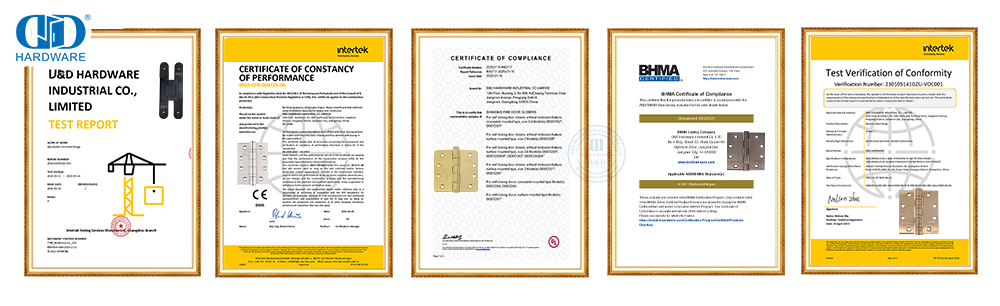
D&D Door Hinge Certification:
️✔ CE Door Hinge - BS EN1935 200,000 cycles test, EN1634 Fire Rated 192mins/260mins, EN1670 Corrosion Resistance 240 hours.
️✔ UL Door Hinge - UL/cUL Listed, UL 10C Fire Rated 3 Hours, File No.R38013
✔ BHMA Door Hinge - ANSI/BHMA 156.1 and ANSI/BHMA 156.18
✔ ANSI Door Hinge - ANSI Grade 1 2,500,000 cycles test, ANSI Grade 2 1,500,000 cycles test
✔ CE Concealed Hinge-BS EN1935 200,000 cycles test, EN1634 Fire Rated 132mins, EN1670 Corrosion Resistance 48 hours.
Click here for additional details on door hinges.
Now contact us.
Contact information for David Jian
Contact number: 0086-139 2903 7292
Email address: sales@danddhardware.com


