
Certified for Safety. Trusted by Leaders Worldwide.
Pls inquire to sales@danddhardware.com
\\: +86 139 2903 7292

 English
 Author: D&D HARDWARE Publish Time: 2026-03-23 Origin: D&D Hardware


Healthcare facilities face a constant battle against the invisible threat of surface-transmitted infections. Every day, thousands of patients, doctors, nurses, and visitors pass through the corridors of clinics and hospitals. They touch the same surfaces, opening and closing doors as they move from waiting areas to treatment rooms. Because of this high volume of traffic, standard commercial hardware simply cannot meet the rigorous demands of a clinical environment.
A specialized door handle for medical institutions does much more than open a door. It acts as a critical line of defense in infection control, supports the physical limitations of vulnerable individuals, and withstands decades of constant, heavy use. Facility managers and hospital architects must carefully evaluate their hardware choices to ensure they align with strict health and safety standards.
Choosing the right equipment requires a deep understanding of material science, ergonomic design, and institutional workflows. This comprehensive guide outlines the essential factors you must prioritize—including hygiene, durability, and accessibility—when selecting a door handle for hospital environments.

Infection control is the primary concern for any medical facility. Healthcare-associated infections (HAIs) pose a significant risk to patient recovery and overall public health. Since doors are high-touch points, they serve as common vectors for cross-contamination.
To combat this, manufacturers engineer medical-grade hardware specifically to resist the growth and spread of bacteria. Traditional materials that might look aesthetically pleasing in an office building often fail in a clinical setting because they harbor pathogens or degrade under rigorous cleaning protocols.
Stainless steel is the gold standard for hospital hardware. It is naturally non-porous, meaning bacteria and viruses have a difficult time adhering to and surviving on its surface. Furthermore, medical institutions use highly caustic chemical cleaners and industrial-grade disinfectants to sanitize rooms multiple times a day. Stainless steel, particularly Grade 304 and 316, resists corrosion and rust even when subjected to these harsh cleaning agents.
Many modern handles feature specialized antimicrobial coatings. These coatings frequently incorporate silver-ion technology, which actively interrupts the cellular reproduction of bacteria. When microbes land on the surface of the hardware, the silver ions break down their cell walls, neutralizing the threat between manual cleaning cycles. This continuous self-sanitizing feature drastically reduces the microbial load on the handle, protecting both staff and patients.
Hospitals operate twenty-four hours a day, seven days a week. The hardware installed in these buildings experiences a level of wear and tear that far exceeds normal commercial applications. A broken door handle is not just an inconvenience in a hospital; it is a potential safety hazard that can delay critical care.
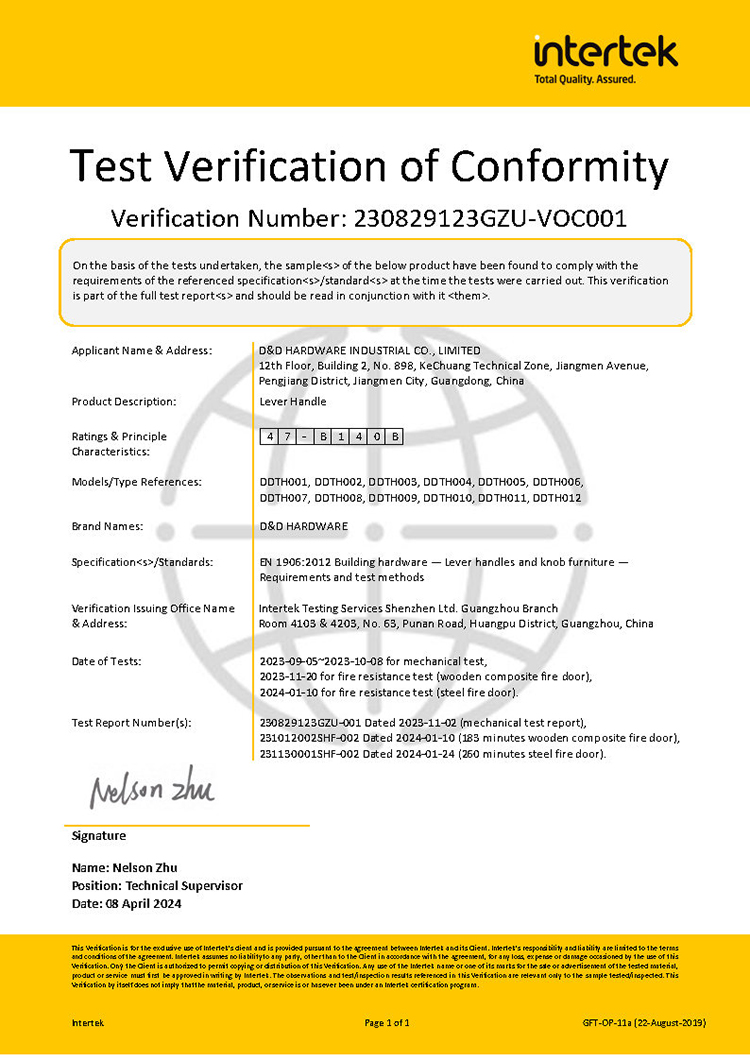
When sourcing a door handle for medical institutions, durability certifications are essential. For example, the BS EN1906 Grade 4 classification denotes hardware that has been tested to withstand at least 300,000 operating cycles. This classification ensures the hardware can survive the high-frequency use typical of public, commercial, and institutional buildings.
Facilities looking for this level of reliability often turn to specialized suppliers. Products like the EN1906 Lever Handle from D&D Hardware provide the heavy-duty construction required for these demanding environments, offering famous branded quality at factory costs.
D&D Door Handle-BS EN1906 300,000 cycles test, EN1634 Fire Rated 183/260mins, EN1670 Corrosion Resistance 240 hours.
A healthcare facility serves individuals with varying degrees of physical capability. From elderly patients with arthritis to individuals recovering from major surgery, the physical environment must accommodate everyone. Door hardware plays a massive role in creating an accessible, inclusive space.
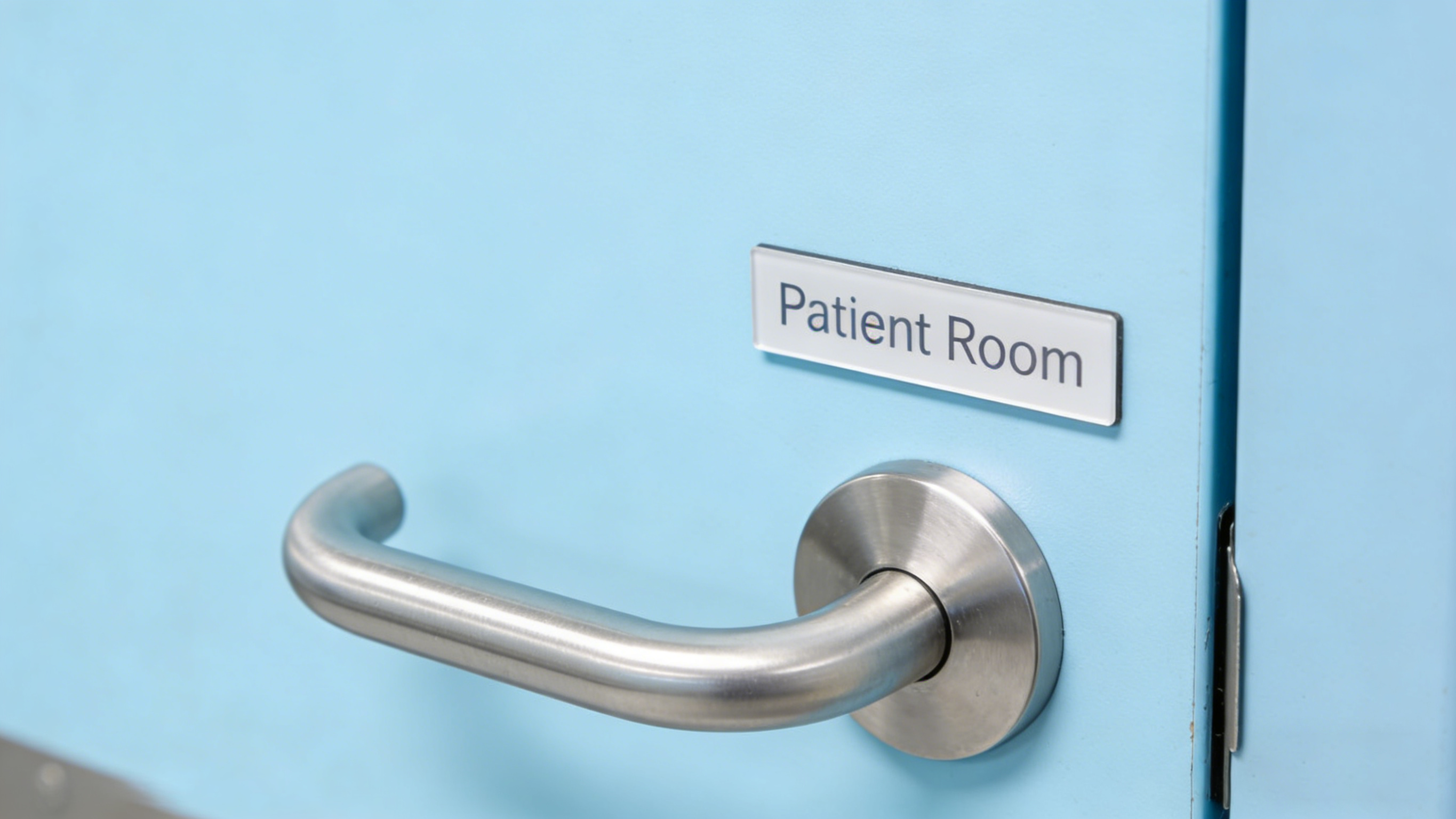
The Patient Room door handle requires specific design considerations. It must be effortless to operate for someone with limited grip strength or manual dexterity. Lever handles are universally preferred over traditional round knobs because they do not require tight grasping or twisting of the wrist. A patient can simply push down on a lever using the weight of their hand or arm to open the door.
In specific areas of the hospital, such as behavioral health or psychiatric units, the Patient Room door handle must also feature anti-ligature designs. These specialized handles slope downward and lack any gaps or protruding parts, preventing individuals from attaching cords or ropes to harm themselves.
Medical staff face their own unique challenges when moving through a hospital. Nurses and doctors frequently transport medication trays, push stretchers, or carry medical equipment, leaving their hands completely occupied.
To accommodate this, many facilities install push-pull handles or elbow-operated levers. An elbow-operated door handle for hospital corridors allows staff to open doors without using their clean hands, maintaining sterile conditions after they have scrubbed in for procedures. Push-pull hardware takes this a step further, allowing a user to lean their body weight against the handle to easily swing the door open, facilitating rapid movement during emergency situations.
The hardware you select for your clinic or hospital directly impacts the safety, efficiency, and comfort of everyone inside the building. Standard hardware is entirely insufficient for the rigorous demands of healthcare environments.
By prioritizing non-porous materials like stainless steel, seeking out antimicrobial coatings, and insisting on highly durable, cycle-tested mechanisms, you can significantly reduce maintenance costs and infection rates. Furthermore, implementing accessible designs like lever handles and push-pull mechanisms ensures that your facility remains welcoming and functional for individuals of all physical abilities.
Take the time to audit your current facility hardware. Assess whether your high-traffic areas feature equipment capable of handling the heavy load while supporting your infection control protocols. Partnering with experienced, certified hardware manufacturers ensures your medical institution remains a safe, healing environment for years to come.
Click here for additional details on door handles.
Now contact us.
Contact information for David Jian
Contact number: 0086-139 2903 7292
Email address: sales@danddhardware.com


