
Certified for Safety. Trusted by Leaders Worldwide.
Pls inquire to sales@danddhardware.com
\\: +86 139 2903 7292

 English
 Author: D&D Hardware Publish Time: 2025-10-15 Origin: D&D HARDWARE


Installing a new exterior door or replacing an old one? One of the most common questions homeowners face is determining the right number of hinges needed for proper support and functionality. The answer isn't as straightforward as you might think—it depends on several factors including door weight, height, and intended use.
Getting the hinge count wrong can lead to sagging doors, gaps that compromise energy efficiency, and premature wear on your door frame. Too few hinges and your door won't support its own weight properly. Too many can be overkill and unnecessary expense.
This guide will walk you through everything you need to know about exterior door hinges, from standard recommendations to special circumstances that might require additional support. By the end, you'll have the confidence to make the right choice for your specific door installation.
Most residential exterior doors require three hinges for optimal performance. This has been the industry standard for decades and works well for the majority of installations.
The three-hinge configuration provides:
· Even weight distribution across the door frame
· Proper alignment to prevent sagging
· Adequate support for daily opening and closing
· Balance between functionality and cost-effectiveness
Door manufacturers typically design standard exterior doors with three hinge locations pre-mortised into both the door and frame. This makes installation straightforward for most homeowners and contractors.
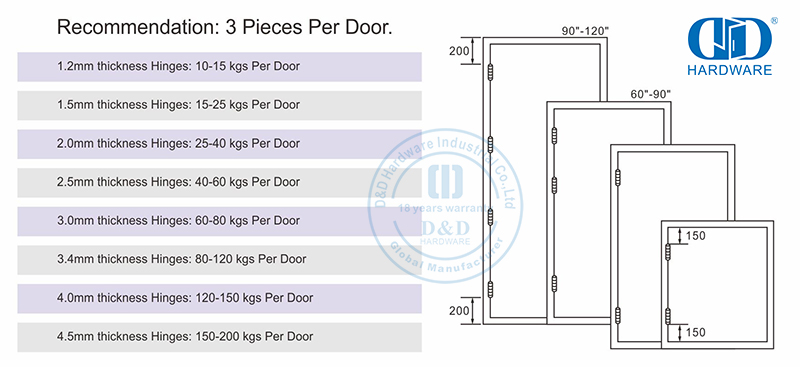
Several situations call for additional exterior door hinges beyond the standard three:
Solid wood doors, steel doors with foam cores, and decorative doors with glass panels often exceed 150 pounds. These heavy duty door hinges installations typically require four hinges to distribute the weight properly.
Standard residential doors measure 80 inches tall, but many modern homes feature taller entries. Doors exceeding 80 inches in height should use four hinges to maintain proper alignment along the extended frame.
Commercial properties or busy residential entrances that see frequent use benefit from the extra support of four hinges. The additional hinge reduces stress on each individual pivot point.
Homes in areas with extreme temperature fluctuations may need four hinges to accommodate expansion and contraction of the door materials without warping.
While less common, some exterior door installations can function with just two hinges:
Lightweight hollow-core doors under 100 pounds may work with two heavy-duty hinges, though this isn't recommended for long-term durability. Screen doors and storm doors frequently use two-hinge configurations successfully.
However, most building codes and door manufacturers recommend against two-hinge installations for primary exterior doors due to structural and security concerns.

Proper spacing of your exterior door hinges is crucial for optimal performance:
· Top hinge: 5-7 inches from the top of the door
· Bottom hinge: 10-11 inches from the bottom of the door
· Middle hinge: Centered between the top and bottom hinges
· Top hinge: 5-7 inches from the top
· Bottom hinge: 10-11 inches from the bottom
· Two middle hinges: Evenly spaced in the remaining space
This spacing ensures even weight distribution and prevents stress concentration at any single point.

Choosing the right hinge type is as important as getting the quantity correct:
These premium hinges feature ball bearings between the hinge knuckles, reducing friction and extending lifespan. Ideal for heavy doors and high-traffic areas.
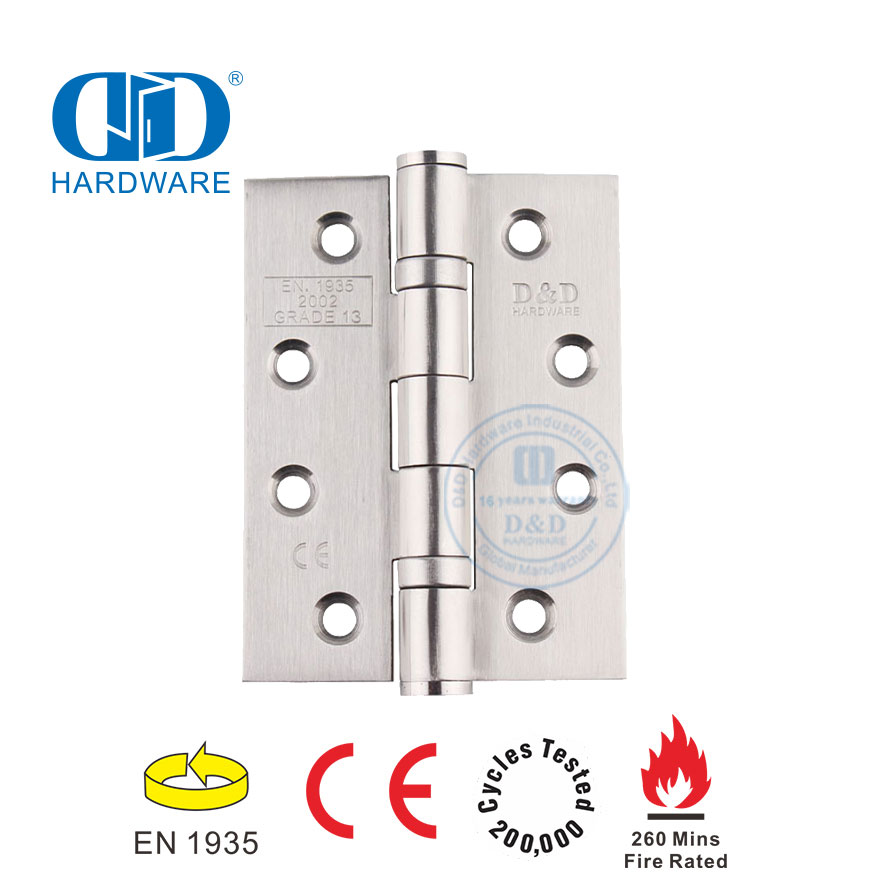
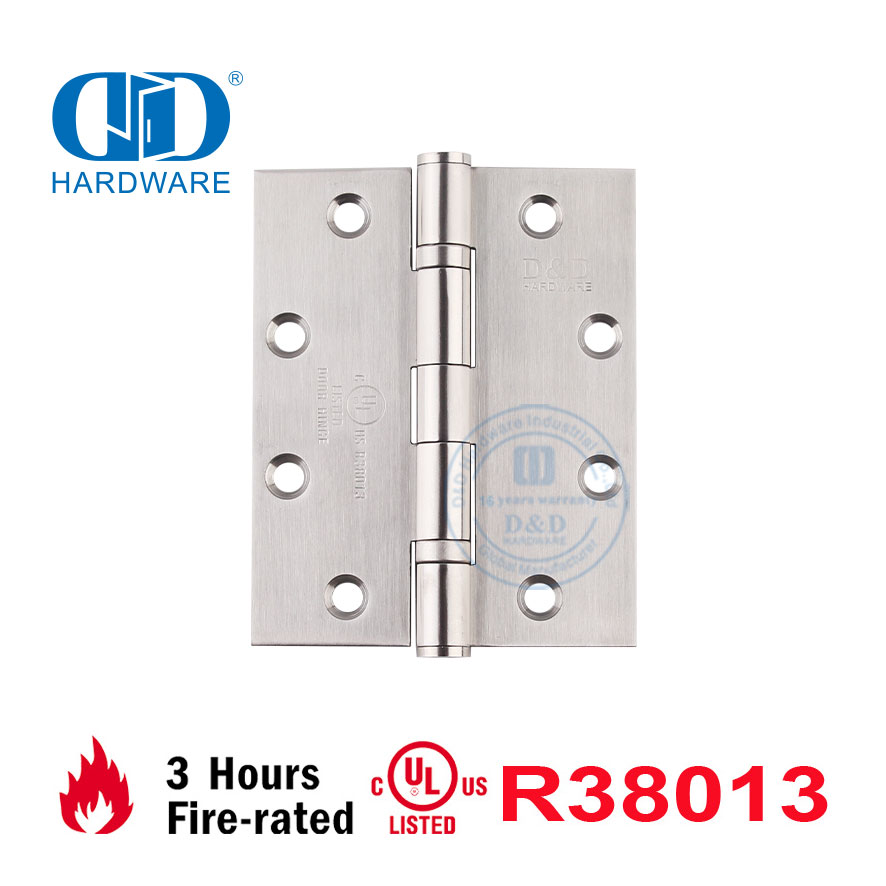

Standard hinges without ball bearings work well for most residential applications. They're cost-effective and adequate for doors under 150 pounds.


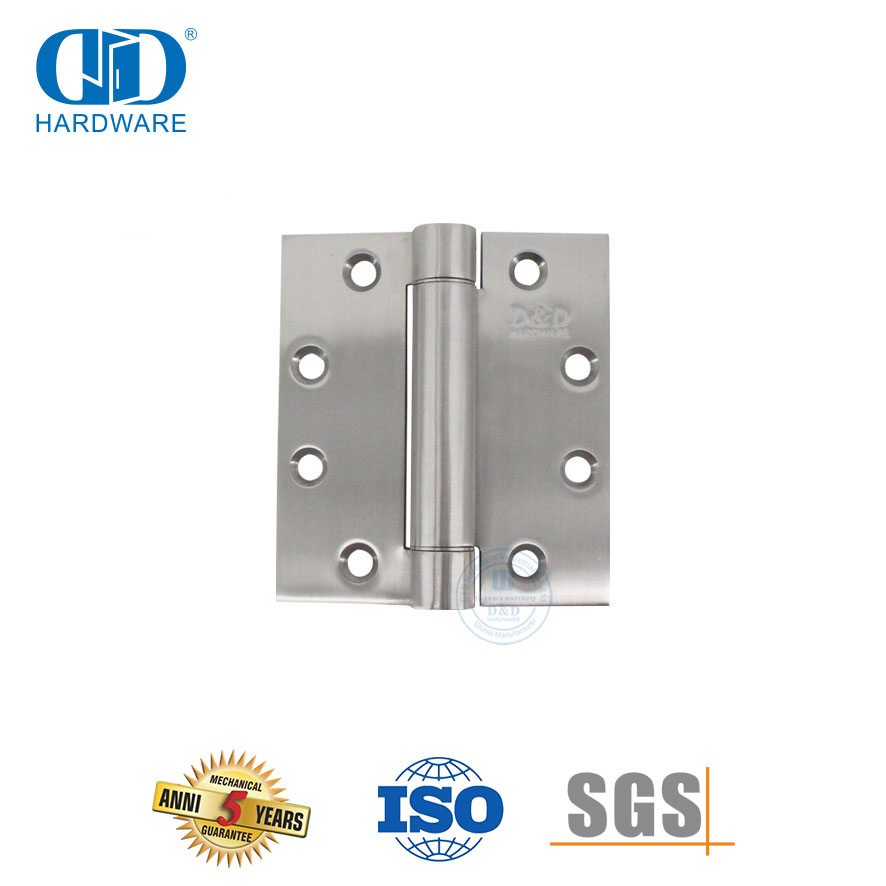
Self-closing hinges that automatically return the door to a closed position. Useful for security doors and areas requiring consistent closure.
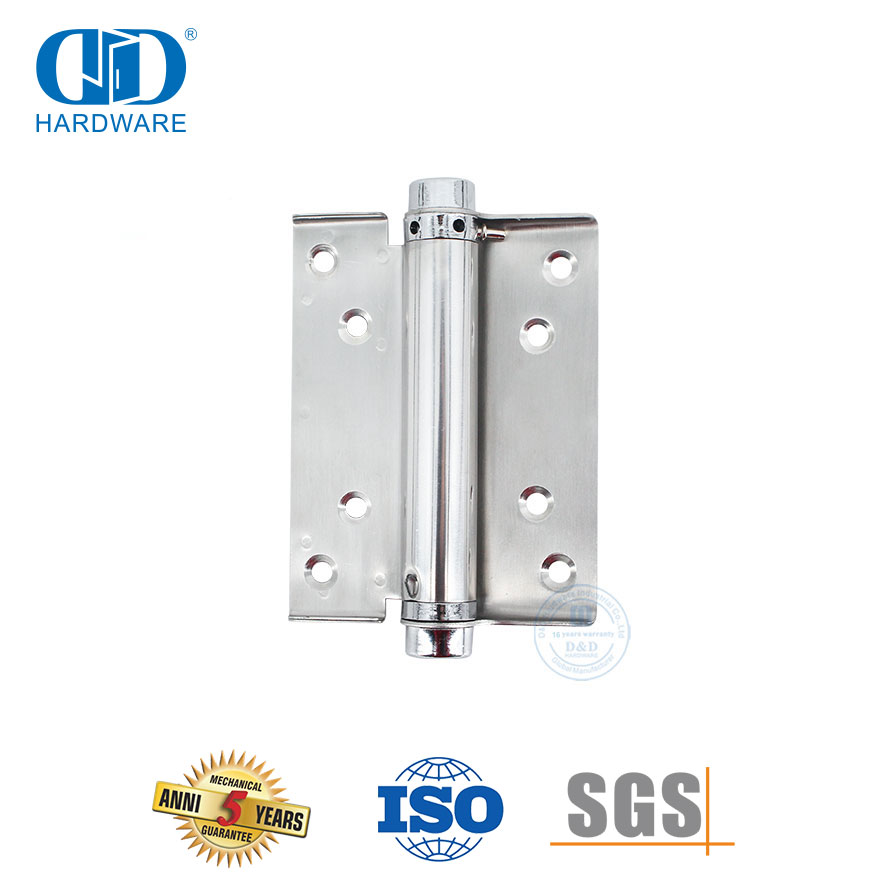
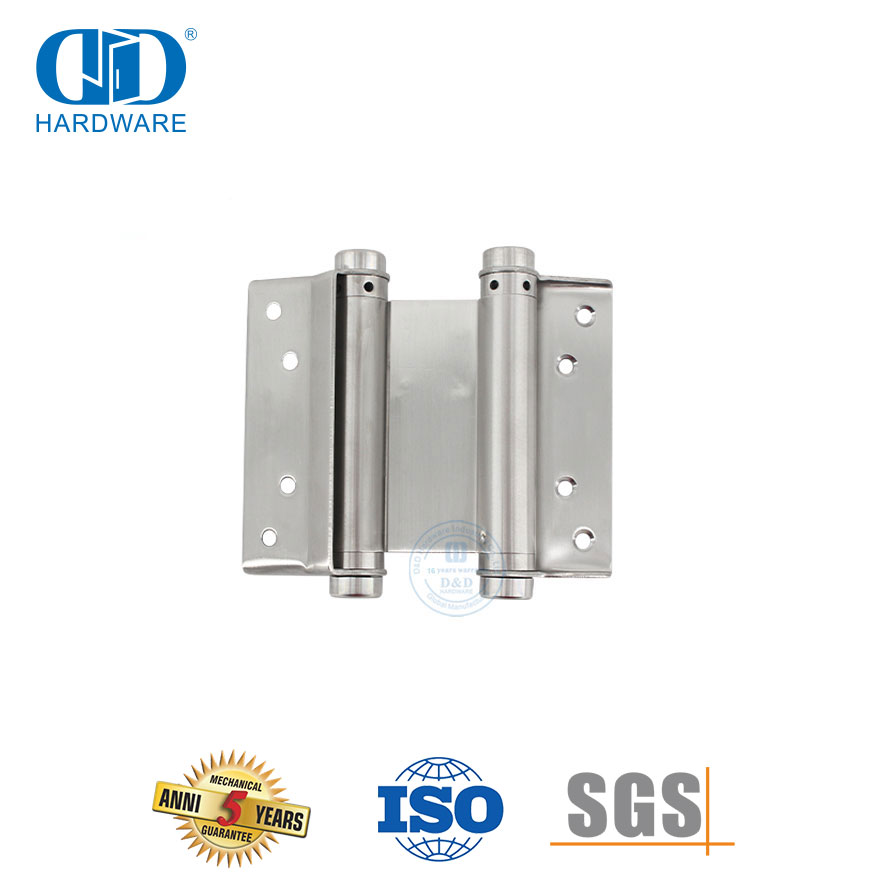
Reinforced hinges designed for doors exceeding standard weight limits. Feature thicker gauge metal and larger knuckles for superior strength.

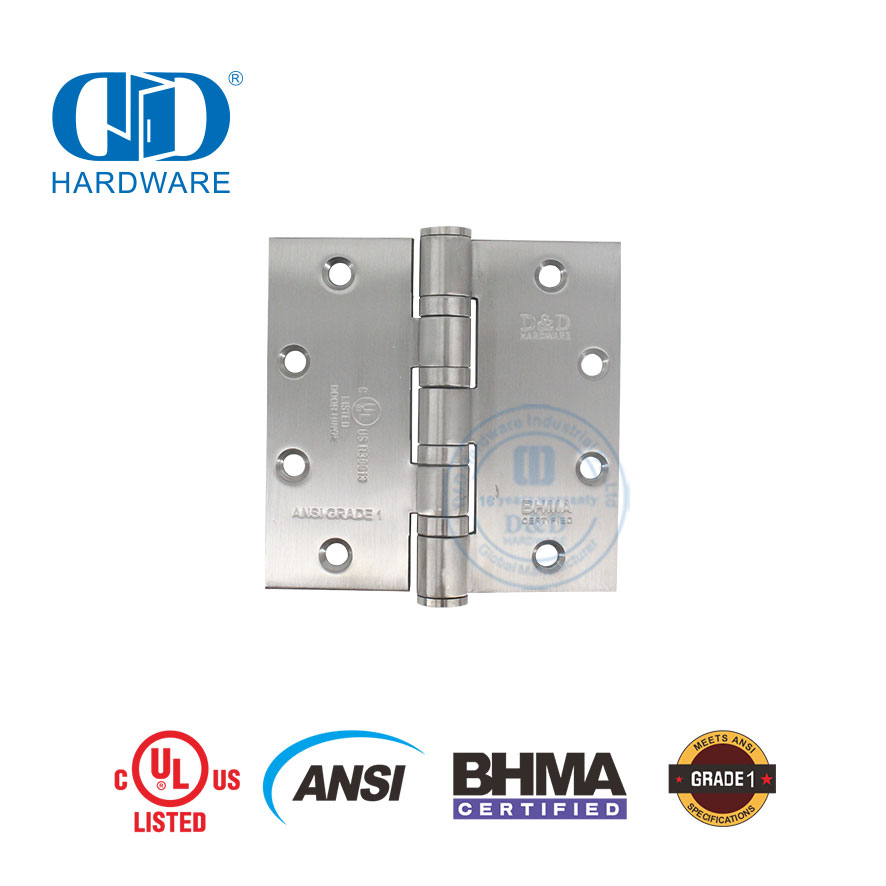

D&D Door Hinge Certification:
️✔ CE Door Hinge - BS EN1935 200,000 cycles test, EN1634 Fire Rated 192mins/260mins, EN1670 Corrosion Resistance 240 hours.
️✔ UL Door Hinge - UL/cUL Listed, UL 10C Fire Rated 3 Hours, File No.R38013
✔ BHMA Door Hinge - ANSI/BHMA 156.1 and ANSI/BHMA 156.18
✔ ANSI Door Hinge - ANSI Grade 1 2,500,000 cycles test, ANSI Grade 2 1,500,000 cycles test
✔ CE Concealed Hinge-BS EN1935 200,000 cycles test, EN1634 Fire Rated 132mins, EN1670 Corrosion Resistance 48 hours.

While hinge replacement might seem straightforward, exterior doors require precise alignment for proper weather sealing and security. Mistakes can compromise your home's energy efficiency and safety.
When adding hinges to an existing door, ensure new hardware matches the finish and style of existing pieces for aesthetic consistency.
After installation, test the door's balance by opening it halfway and releasing it. A properly hinged door should stay in position without swinging open or closed on its own.

Insufficient hinges for door weight leads to premature sagging and alignment issues. Always err on the side of more support rather than less.
Improper spacing creates uneven stress distribution, causing some hinges to bear more weight than others and fail prematurely.
Mismatched hinge sizes between door and frame create gaps and security vulnerabilities.
Using indoor hinges outdoors results in rapid corrosion and failure due to weather exposure.
Regular maintenance extends hinge life and ensures smooth operation:
· Lubricate annually with a few drops of machine oil or spray lubricant
· Check for loose screws quarterly and tighten as needed
· Inspect for rust or corrosion especially in coastal or humid climates
· Clean debris from hinge pins and knuckles regularly
The number of hinges your exterior door needs depends on your specific situation. Most homeowners will find three hinges adequate for standard residential doors. However, don't hesitate to upgrade to four hinges if your door is particularly heavy, tall, or subject to frequent use.
Consider consulting with a professional door installer if you're unsure about your specific requirements. The modest cost of professional advice can prevent costly mistakes and ensure your exterior door provides years of reliable service.
Remember that quality hinges are an investment in your home's security, energy efficiency, and curb appeal. Choose hinges rated for exterior use with appropriate weight capacity for your door.
Click here for additional details on door hinges.
Now contact us.
Contact information for David Jian
Contact number: 0086-139 2903 7292
Email address: sales@danddhardware.com


