
Certified for Safety. Trusted by Leaders Worldwide.
Pls inquire to sales@danddhardware.com
\\: +86 139 2903 7292

 English
 Author: D&D Hardware Publish Time: 2026-03-16 Origin: D&D HARDWARE


Walk through the entrance of a hospital, then walk through the front door of your apartment. Chances are, the door handles feel completely different—and that's by design. The hardware on commercial buildings is built to different standards than the handles on your bedroom or bathroom door. Knowing the difference matters, whether you're a contractor specifying hardware for a new build, a property manager replacing worn-out fixtures, or a homeowner trying to choose the right room door handle.
This post breaks down the key differences between commercial and residential door handles, covering materials, standards, design, and how to choose the right handle for your specific application.
The terms commercial and residential don't just describe where a handle is used—they describe how it's built and what it's built to withstand.
Commercial door handles are designed for high-traffic environments: office buildings, hotels, hospitals, schools, and public facilities. These handles must endure thousands of uses per day, resist heavy wear, and often need to comply with strict safety and accessibility codes.
Residential door handles, by contrast, are built for lower-traffic settings like homes, apartments, and private rooms. They prioritize aesthetics and ease of use over heavy-duty durability, though quality still matters—especially for entrance doors and apartment door handles that see more frequent use.

One of the most measurable differences between commercial and residential handles is cycle count—how many open-and-close operations the handle is tested to withstand.
Commercial-grade lever handles, such as those certified to BS EN 1906 Grade 4, are tested to a minimum of 200,000 to 300,000 cycles. D&D Hardware's EN1906 lever handles, for example, are tested to 300,000 cycles, making them suitable for contract, public, and institutional buildings. Residential handles are typically tested to lower cycle counts, which is perfectly adequate for private homes where a door might be opened a few dozen times per day.
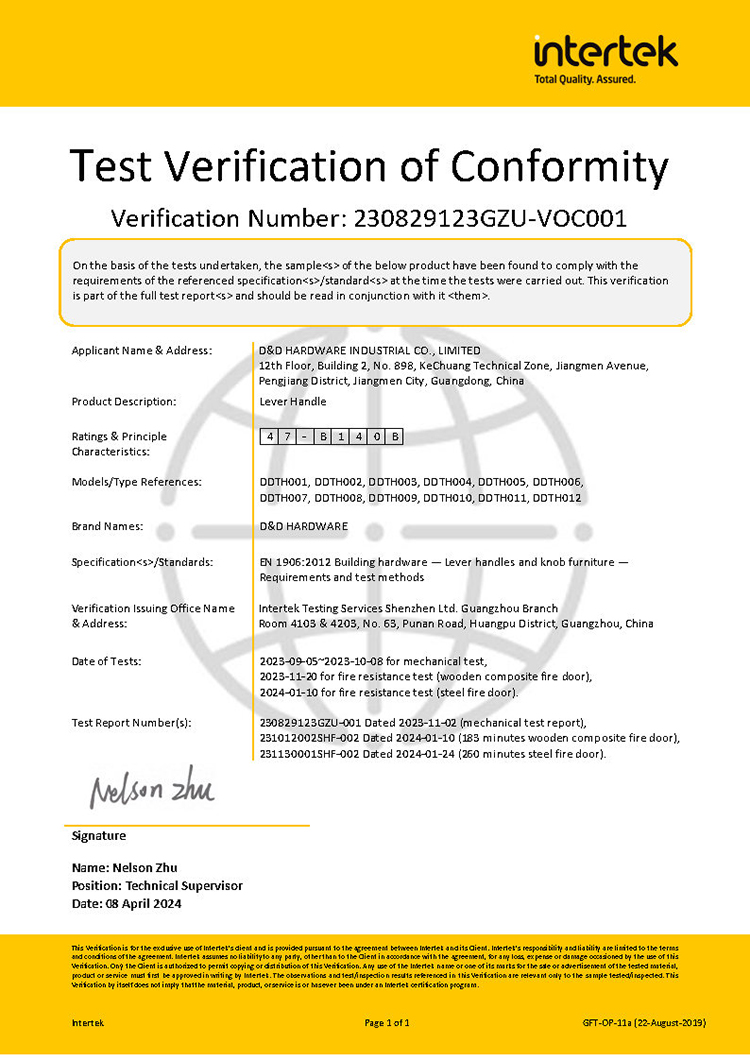
Commercial handles are almost always made from heavy-duty materials. Stainless steel (SUS 304) is the industry standard for commercial applications—it resists corrosion, handles constant contact without degrading, and maintains its finish under heavy use.
Residential door handles offer more variety. You'll find handles made from zinc alloy, brass, aluminum, and stainless steel. While lower-cost materials work fine in a private home, they're not suitable for high-traffic commercial environments where handles are touched hundreds of times per day.
For apartment door handles and room door handles in multi-unit residential buildings, stainless steel is also a smart choice. It strikes the right balance between durability and visual appeal—important in shared spaces like hallways and lobbies.
Commercial hardware is subject to strict regulatory standards. In Europe, lever handles for commercial buildings must comply with BS EN 1906, which grades handles based on durability, material quality, and suitability for different environments. Grade 3 covers general commercial use, while Grade 4 covers the most demanding applications.
In the United States, commercial hardware is often required to meet ANSI/BHMA standards. These certifications aren't just about performance—they're also about safety. Fire-rated doors in commercial buildings, for example, require hardware that has been tested and certified for fire resistance.
Residential hardware generally isn't subject to the same regulatory requirements. That said, any door handle for a residential building entrance or apartment building common area should still meet a recognized standard to ensure safety and longevity.
Here's where commercial and residential handles diverge most noticeably in terms of appearance.
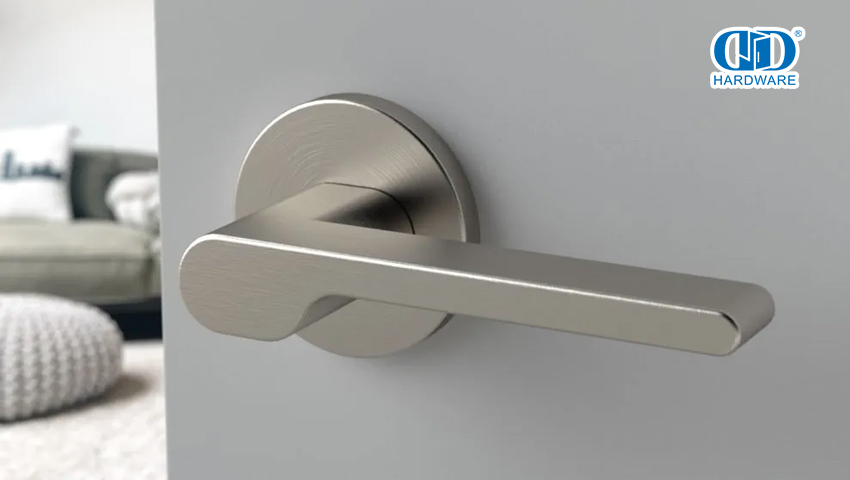
Commercial handles tend to be functional and straightforward. Clean lines, neutral finishes (like satin stainless or brushed nickel), and minimal ornamentation are the norm. The priority is performance and compliance, not decorative appeal.
Residential handles have much more design flexibility. Homeowners can choose from a wide range of styles—from modern minimalist lever handles to traditional ornate knobs. Finishes like matte black, brass, gold PVD, and chrome are all common choices for interior room door handles. Many manufacturers also offer decorative backplates to elevate the look of a handle on a living room or bedroom door.
Commercial doors often require more sophisticated locking mechanisms. Mortise locks are standard in commercial settings because they're integrated directly into the door frame, offering greater security and durability than surface-mounted cylindrical locks. These are commonly paired with commercial-grade lever handles.
Residential applications typically use simpler lock types: passage sets (no lock), privacy sets (simple push-button lock), and entry sets (keyed lock). These are easier to install and maintain, and they're well-suited to the security needs of a private home or apartment.

If you're specifying hardware for a commercial project, look for handles that meet recognized standards like BS EN 1906 Grade 4 or ANSI/BHMA Grade 1. Prioritize stainless steel construction, high cycle ratings, and compatibility with your locking system. For fire-rated doors, make sure all hardware carries the appropriate fire certification.
Consider the environment, too. Hospitals and food-service environments benefit from handles with smooth, easy-to-clean surfaces. High-security areas may require handles compatible with access control systems.
Choosing an apartment door handle or a door handle for a residential building comes down to three things: the location of the door, the level of foot traffic, and your design preferences.
Entrance and lobby doors in apartment buildings should be treated more like commercial applications. Opt for stainless steel handles with a higher durability rating, as these doors are used by multiple residents every day.
Apartment front doors need secure, keyed entry handles. Mortise-style lever handles offer both security and a polished appearance.
Room door handles inside an apartment or home can prioritize aesthetics. A sleek lever handle in a matte black or gold PVD finish can elevate the look of any interior space without requiring heavy-duty construction.
1
Some settings fall in between—boutique hotels, co-working spaces, serviced apartments, and mixed-use developments. In these cases, it's worth erring on the side of commercial-grade hardware. The additional upfront cost of a certified, high-cycle lever handle is far less than the cost of replacing handles that wear out prematurely in a high-traffic environment.
D&D Hardware's EN1906-certified stainless steel lever handles are a good example of hardware that works across both contexts. Tested to 300,000 cycles and available in multiple finishes, they suit everything from office buildings to upscale residential lobbies.
The difference between commercial and residential door handles comes down to durability, standards compliance, materials, and design intent. Commercial handles are engineered for performance under pressure. Residential handles balance function with aesthetics—though the best options do both well.
For any project, start by identifying where the door is located, how frequently it will be used, and whether any regulatory standards apply. From there, choose a handle that meets those requirements without over- or under-specifying for the job.
If you need handles that perform reliably across commercial and residential applications, explore D&D Hardware's EN1906 lever handle range at dnd-hardware.com. Their stainless steel lever handles are certified, durable, and available in a range of finishes to suit almost any project.
Click here for additional details on door handles.
Now contact us.
Contact information for David Jian
Contact number: 0086-139 2903 7292
Email address: sales@danddhardware.com


